

In the United States, garbage disposal units can be found in just over half of all homes, according to one 2020 Consumer Reports survey. These under-the-sink appliances are considered an easy way to remove plate residue, sending small food scraps down the drain.
Yet garbage disposal units are a relative rarity in other areas, including just north of the border where bans on the use of garbage disposal units are common. Municipalities across Ontario, including Toronto, Ottawa, Markham, Vaughan, and Guelph, have banned the installation of garbage disposal units, or garburators as they’re better known in Canada. Other communities – including Vancouver, Edmonton, and Calgary – discourage their use.
How can a device be so popular in one area and vilified in another? The answer, it turns out, is simple and hints at the need for alternative methods for the disposal of food waste.
What are garbage disposal units?
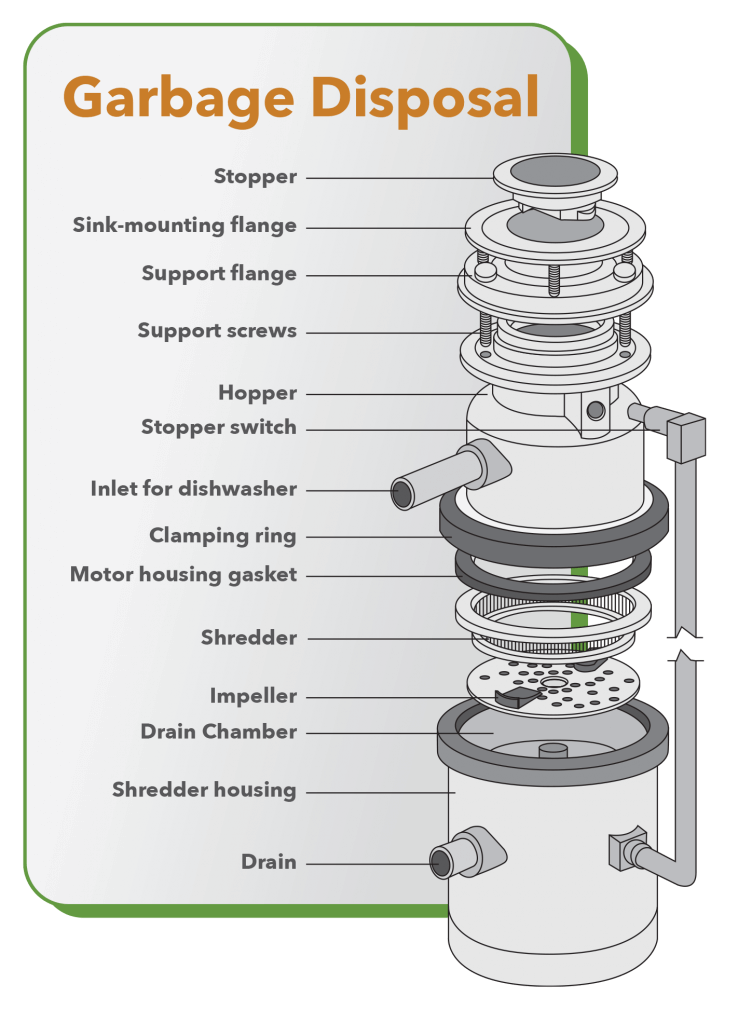
A garbage disposal unit is an electrically powered device mounted beneath the kitchen sink to physically break down solid food waste.
It is made up of multiple components, many of which are delicate and susceptible to damage.
With the flip of a switch, a spinning disc, called an impeller plate, is activated within the disposal unit.
As the plate spins, large food particles are thrust to the outside of the unit’s grinding chamber, where blunt metal teeth or impellers smash the food into particles small enough to be washed down the drain.
Not all foods can go into a garbage disposal unit. These appliances are meant to break down small food scraps. Soft fruit and vegetables, for example, are generally acceptable.
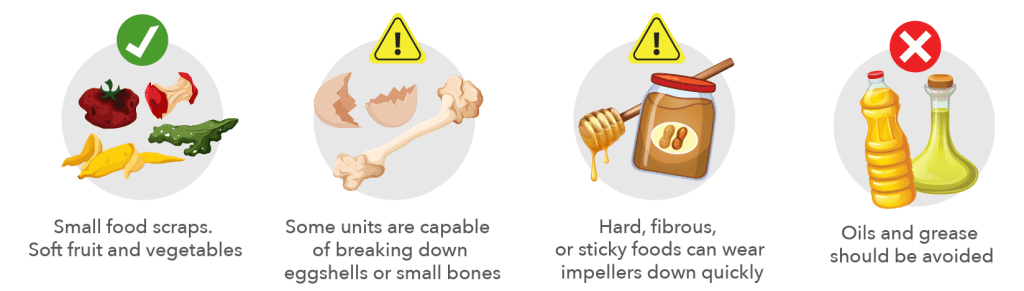
Some units are capable of breaking down eggshells or small bones. Hard, fibrous, or sticky foods can wear impellers down quickly. Oils and grease should be avoided.
Why are garbage disposal units banned?
Garbage disposal units have been around for nearly one hundred years, but they haven’t become a universally beloved solution in that time. In fact, a number of municipalities have bans on the use of garbage disposal units, including a handful of locations in the United States.
Why the restrictions? It turns out that garbage disposal units can actually lead to a number of problems. The biggest challenge is that disposing of foods that are difficult to break down can lead to blockages of sewer pipes. This can lead to expensive repairs and pipe replacements. Even in the event that the waste can be flushed through pipes, excessive levels of solid wastes can make operation more difficult for the wastewater treatment plants.
It was concern for dated pipes that led New York City to ban the installation of garbage disposal units in the 1970s. While this ban on the use of garbage disposal units was later lifted under the logic that wastewater plants were becoming more capable of dealing with solid waste, more cities are revisiting the restriction on the use of garbage disposal units.
Today, several townships in New Jersey continue to enforce bans on the use of garbage disposal units for new construction due to concerns over the impact that food scraps have on wastewater infrastructure. Aside from that, attention in the U.S. tends to focus on grease and oil that is not meant to be disposed of through these in-sink devices anyway.
A better solution for the disposal of food waste
Garbage disposal units have negative environmental impacts, in addition to their impact on wastewater infrastructure. To be effective, these units generally require that water be run while they operate. This can drive up water consumption considerably.
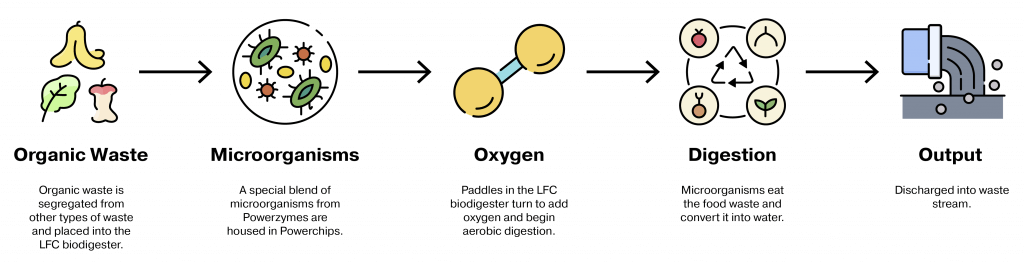
No matter how you look at it, or what you call it, garbage disposal units carry a high environmental impact. It’s for this reason that many organizations are looking for easy-to-use alternatives. This is where aerobic biodigesters provide an advantage. This sealed equipment can be installed in the kitchen, simplifying the disposal of food scraps. Onsite biodigesters turn food waste into water through an all-natural decomposition process that prevents methane emissions.
Moreover, this solution for the disposal of food scraps being embraced by Canadian organizations with major environmental commitments. The Ottawa-based Department of National Defence (DND) has deployed Power Knot’s LFC biodigesters across military bases throughout Canada. This investment was part of DND’s action to support the Canadian government’s commitment to reducing food waste by half by 2030. In Toronto, Runnymede Healthcare Centre installed an LFC biodigester in 2016 as part of the sustainability commitment that has helped it earn a Greening Healthcare Rising Star Award.
Organizations across Canada are finding LFC aerobic biodigesters easy to use solutions for effectively and sustainably managing their food scrap waste. To learn more about how a biodigester can help your organization, contact Power Knot today.