

There are two distinct types of marine pollution. The first type of pollution originates from beaches and surrounding metropolitan areas. The second type of pollution can be found at sea. Garbage patches in the ocean generally contain plastics and materials from cargo and fishing fleets such as nets, ropes, bottles, crates, and other trash.
A study published in the Journal of Maritime & Transportation Science indicates that plastics make up 60-80% of marine debris. Despite global efforts and bans on the disposal of plastic at sea, maritime vessels are still largely responsible for plastic pollution.
In response to global concerns about marine pollution, the International Marine Organization (IMO) in 1973 adopted the International Convention for the Prevention of Pollution from Ships, known as MARPOL 73/78.
Despite the focus on the problem as introduced with these MARPOL regulations, vast garbage patches in the ocean have revealed new sources of pollution.
Plastic pollution on Inaccessible Island
In the last two years, incredible amounts of plastic bottles have been washing up on Inaccessible Island, a volcanic island located in the South Atlantic Ocean.
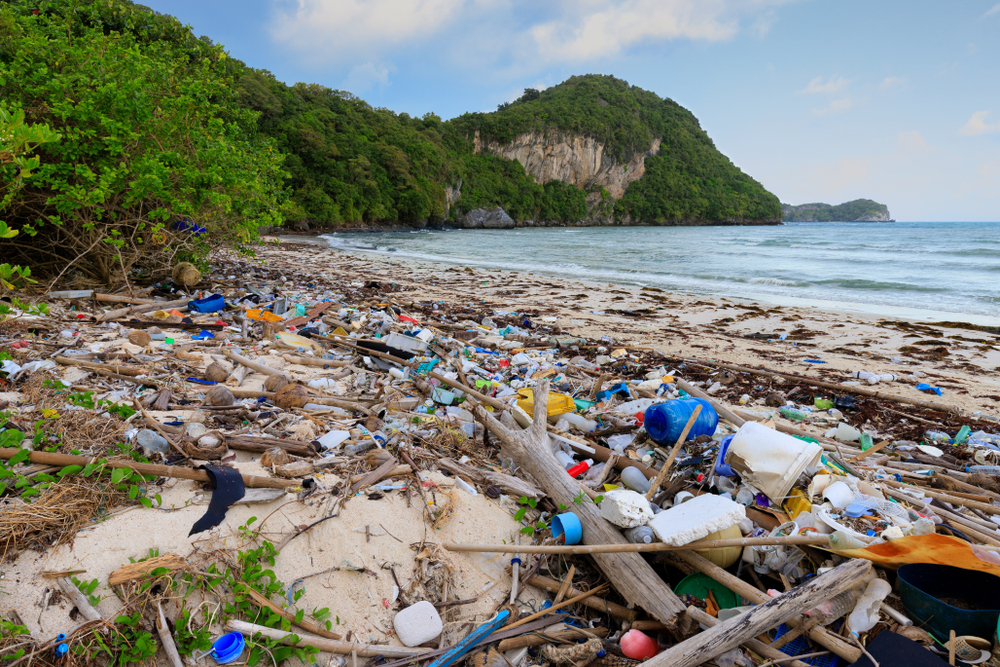
“Many of the plastic bottles had been crushed with their tops screwed on tight, as is customary on board ships to save space,” said Peter Ryan, Director of the FitzPatrick Institute of African Ornithology at the University of Cape Town in South Africa.
The vast amount of trash in a consistent short time span suggests that the bottles have been dumped overboard by merchant ships.
The Great Pacific Garbage Patch
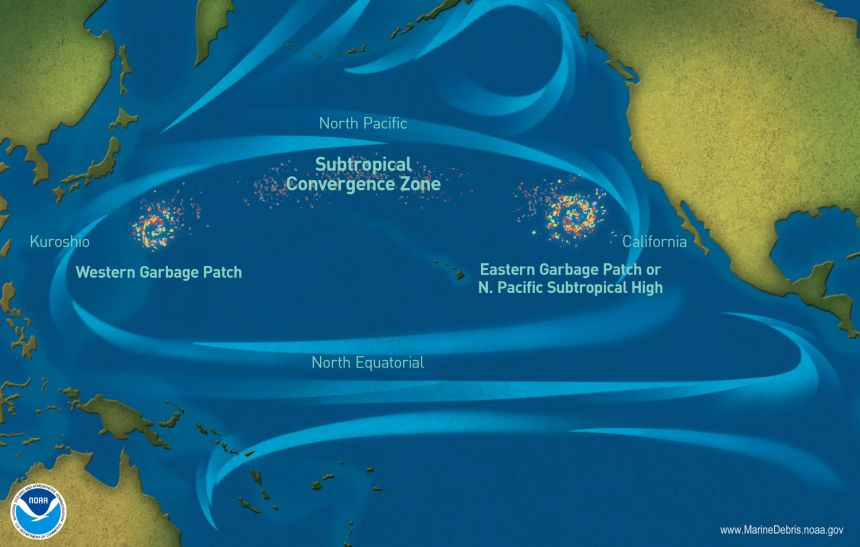
The Great Pacific Garbage Patch is a collection of marine debris in the North Pacific Ocean. While most people envision a pile of floating garbage, most of the plastic in the garage patch is actually invisible to the naked eye. Around 70% of the plastics have sunk to the bottom of the ocean while the remainder exists as floating microplastics.
A 2018 study found that synthetic fishing nets made up nearly half the mass of the Great Pacific Garbage Patch, due largely to ocean current dynamics and increased fishing activity in the Pacific Ocean. Beyond fishing nets, much of the trash consists of ropes, bags, boxes, and other abandoned gear.
Microplastic Mitigation Measures
Evidence ultimately suggests that ships contribute to plastic pollution much more than land based origins. Ships can be responsible for anywhere between 20-70% of the plastic pollution, depending on the region. The plastic pollution causes irreparable damage to the ocean on multiple levels.
Cleaning the ocean is no easy task. The National Ocean and Atmospheric Administration’s Marine Debris Program has estimated that it would take 67 ships one year to clean up less than one percent of the North Pacific Ocean. Due to the remote location, no country is willing to take financial responsibility, muchless bankrupt themselves in the process.
National Geographic scientists and explorers agree that limiting or eliminating our use of disposable plastics and increasing our use of biodegradable resources will be the best way to clean up the Great Pacific Garbage Patch. The best course of correction action is to stop adding plastic to the ocean. Most accidental plastic pollution can be attributed to improper disposal of organic waste or deliberate environmental crimes.
New tools and technology such as food waste biodigesters help prevent plastic pollution as it helps separate non plastics from organic waste during the disposal process. All major cruise ships are currently mandated to use biodigesters as their primary food waste solution.
“[We have] achieved a 24% food waste reduction per person in 2021, making great progress toward its 2022 goal of a 30% food waste reduction per person and its 50% food waste reduction per person by 2030.” said Bill Burke, chief maritime officer for Carnival Corporation.
“At Carnival Corporation, our highest responsibility and top priority is always compliance, environmental protection, and the health, safety and well-being of our guests, the people in the communities we touch and serve, and our shipboard and shoreside personnel. This commitment has guided our sustainability journey and approach over time throughout all aspects of our global operations as we continue to progress our environmental, social and governance focus areas each year.”
Learn more about how Carnival has deployed over 500 food waste digesters onboard here.
The next best solution is education. Bringing awareness and understanding of the severity of plastic pollution can encourage localized action which has a global effect. Education plays a key role in the reduction of environmental crimes, improving the health of the ocean, and promoting active engagement in cleanup and prevention.
In this podcast, Power Knot spoke with Ian Richardson at The ICE Way and answered some questions about Power Knot, the LFC biodigester, and why the maritime industry should care about food waste.
Contact us today for free access to the webinar recording.