

In a new effort to help investors gauge businesses’ climate-related risks, the Securities and Exchange Commission has proposed rule changes that would require companies to include certain climate-related disclosures when they file a Securities Act or Exchange Act registration statement or a periodic Exchange Act report.
“The goal,” said SEC chair Gary Gensler in the March 21, 2022, announcement, “is to provide investors with consistent, comparable, and useful information for making investment decisions, and consistent and clear reporting obligations for issuers.”
While this rule change directly affects the 12,000 companies registered with the SEC, it may potentially have an impact on smaller companies up the value chain that are a contributor of the Scope 3 emissions which the SEC registrants may soon have to report.
How proposed SEC climate disclosure rules affect you
Today, SEC registrants must disclose information around a wide range of potential risk factors to help guide investors’ decisions. The climate-related disclosure rule seems very much an extension of the trend toward leveraging purchasing power to support climate-friendly organizations. With this shift comes a range of new requirements.
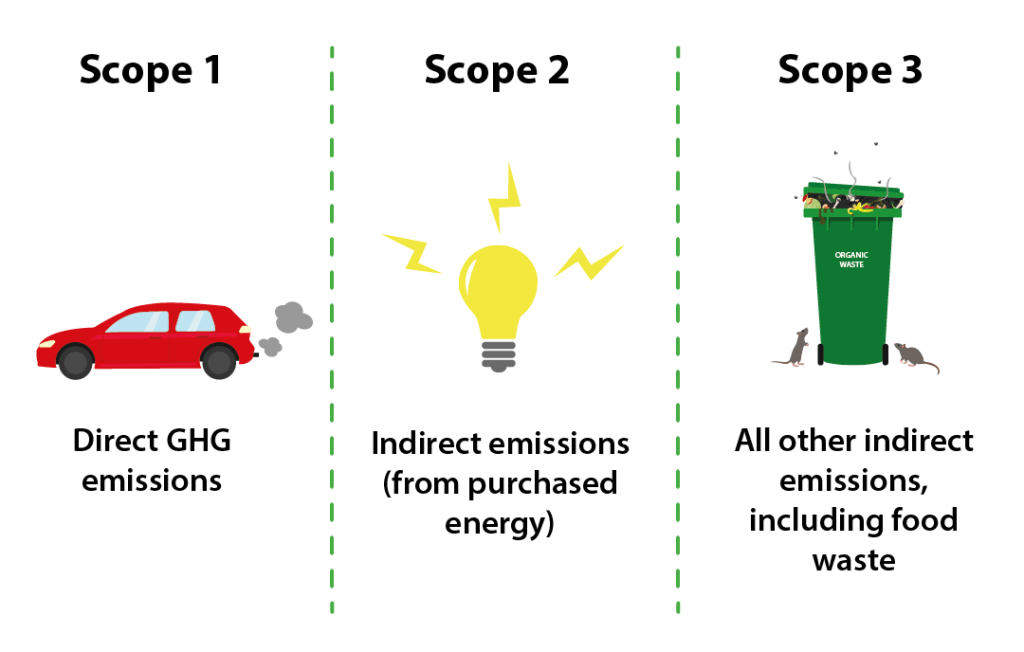
Under the proposed rule, SEC registrants would be required to disclose details on its direct greenhouse gas (GHG) emissions (Scope 1), as well as indirect emissions from purchased energy (Scope 2). However, a registrant might also be required to disclose Scope 3 GHG emissions – those emissions generated by upstream and downstream activities in its value chain – “if material or if the registrant has set a GHG emissions target or goal that includes Scope 3 emissions.”
The proposed rule includes a safe harbor provision for liability from Scope 3 emissions disclosure and an exemption from the Scope 3 emissions disclosure requirement for smaller reporting companies. However, as The National Law Review notes, businesses of all sizes are still likely to be impacted if they are part of the value chain of a company that is required to make Scope 3 disclosures.
While Scope 3 emissions represent the largest potential opportunity for mitigating GHG emissions, they are also among the most difficult to track. This is because Scope 3 emissions require transparency and visibility into operations that are beyond the reporting company’s ownership and direct control. This need for visibility can potentially shake up supply chains and supplier relationships. Fortunately, new technology solutions are available to help companies of all sizes track critical emissions data.
How to prepare for SEC’s climate disclosure requirements
The SEC’s proposed rule change has a deadline for comments of May 20, and the rules account for a phase in period for disclosures. If the rule is approved as is, companies would still have until as late as 2024 to file information on these climate risks. However, assessing these risks is a process that takes time. Companies that position themselves to better mitigate GHG emissions today will be in a more stable, and potentially more competitive, position for the future.
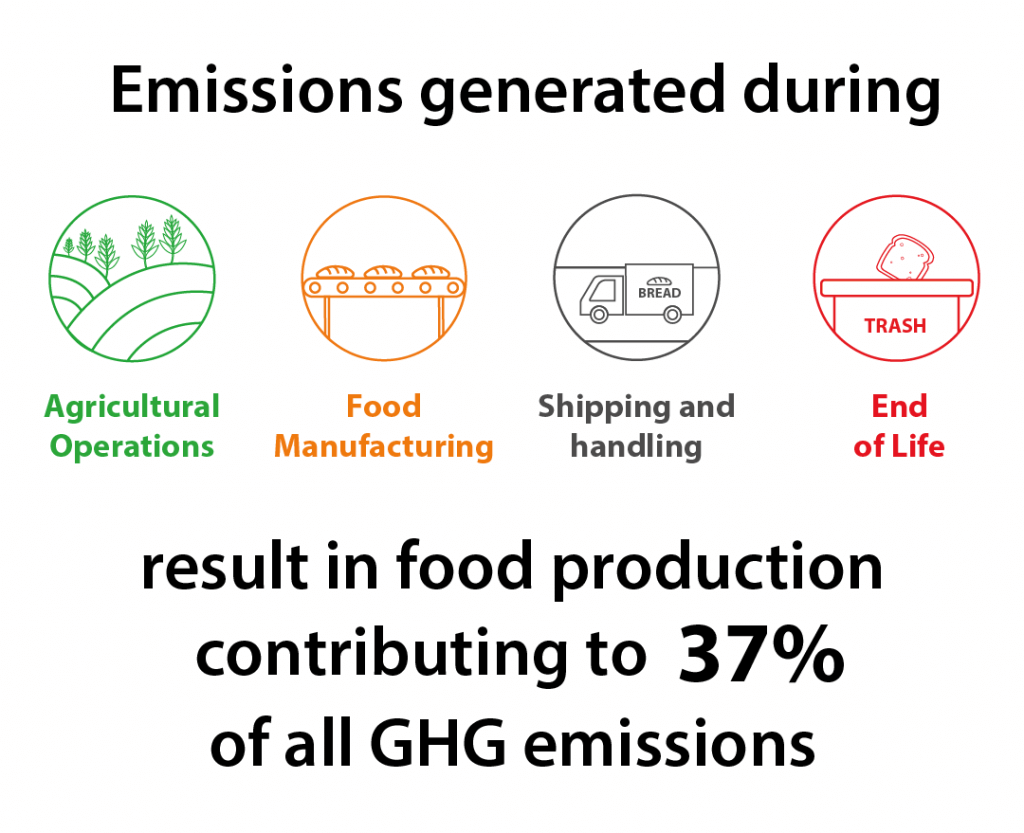
Strategies for mitigating GHG emissions will vary by industry, but organizations that are heavy generators of food-related waste will have to take steps to manage sourcing and waste disposal. Research indicates that food production contributes approximately 37% of global GHG emissions due to emissions generated during agricultural operations, food manufacturing, the transportation of goods to stores and end users, and emissions generated at end of life.
Food service companies that want to position themselves to comply with Scope 3 emissions reporting requirements must first start the process of collecting data on their own emissions. This is an area where an on-site biodigester can help.
How a biodigester can help manage GHG emissions
There are several ways in which an on-site biodigester can help organizations gain greater control over their GHG emissions:
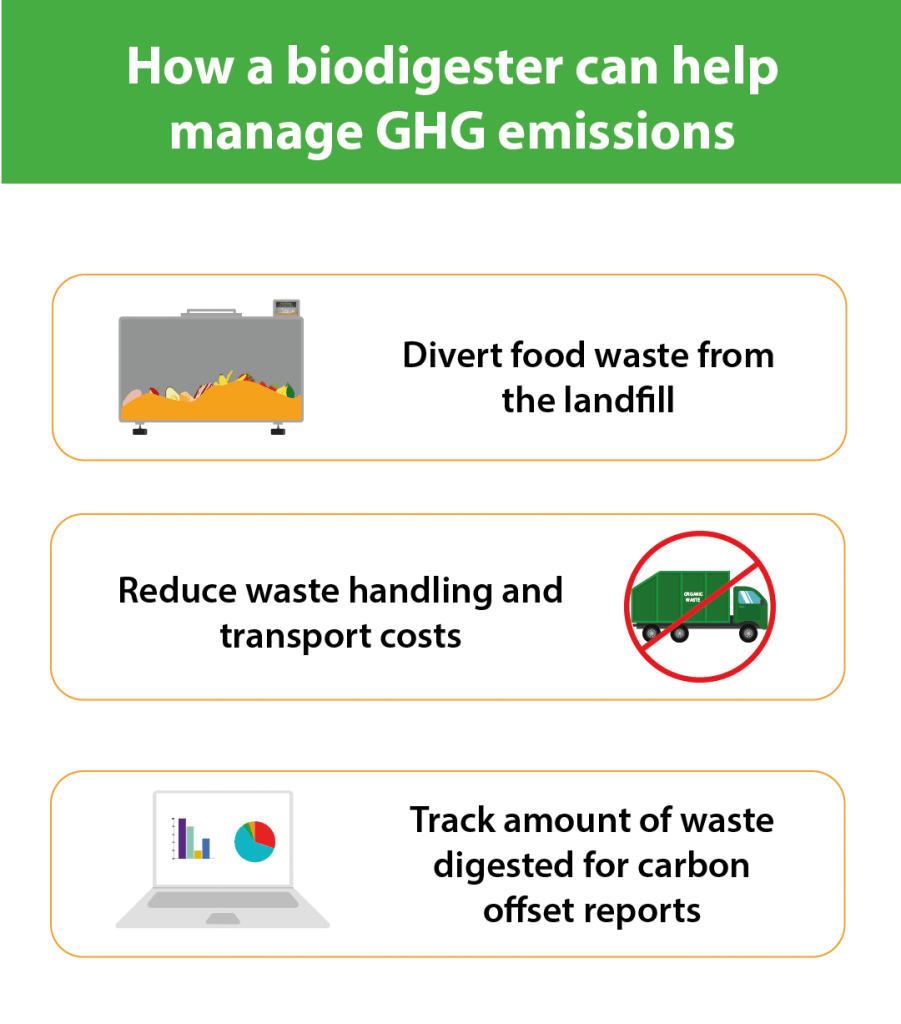
- Biodigesters break down organic waste onsite through an all-natural aerobic decomposition process that prevents the emission of ozone-damaging methane gas.
- Through on-site disposal, biodigesters reduce the emissions generated from transporting waste to the landfill.
- Some biodigesters deliver data on the types of waste digested and amount of food waste consumed. This data can help drive more efficient food purchasing decisions.
While some critics of the SEC climate change rules note that the new proposed rules may be costly, onsite biodigesters are proof that environmentally friendly actions can also be cost-effective. Many on-site biodigester owners have found that the true cost of owning a biodigester is low and that the machine can pay for itself in as little as two years.
Mitigate your emissions today
Whether or not your organization is directly impacted by the proposed SEC climate change rules, it’s a clear step that businesses that do not take climate-friendly action on their own may find they are required to do so by regulations. Organizations that take steps today toward more environmentally responsible sourcing and waste disposal will be better positioned to compete in the future.
To learn more about how you can reduce food-related GHG emissions with an onsite biodigester, contact Power Knot today.