

A food scrap dehydrator is a piece of machinery increasingly found in commercial food preparation areas as a solution for reducing the cost of hauling organic waste to the landfill. These commercial dehydrators use heaters to evaporate the moisture found within food scraps. As they work, a motor and paddles break down the resulting waste to create a powder that may be 10% to 20% of the weight of the original organic material. While this method for the disposal of food waste may simplify the process of disposing of organic waste, it’s not without its challenges.
Among the biggest drawbacks of this solution is that many food waste dehydrators are advertised as composting solutions. As the California Department of Resources Recycling and Recover (CalRecycle) explains quite clearly, dried food waste is not compost.
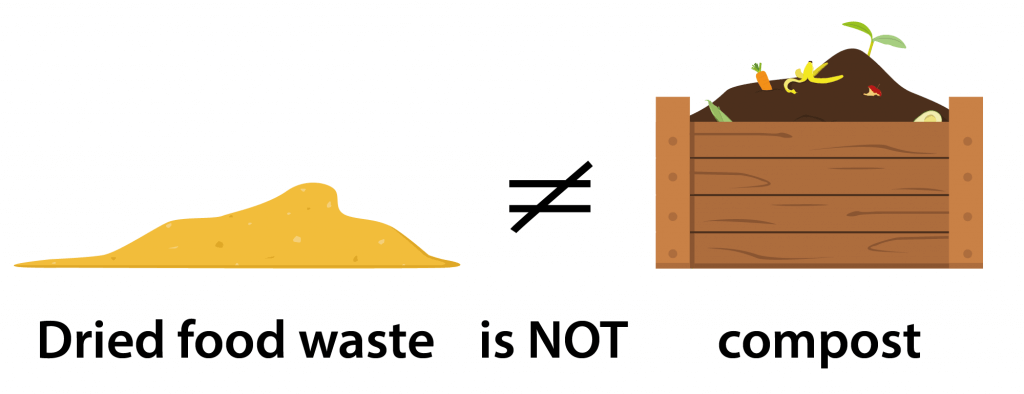
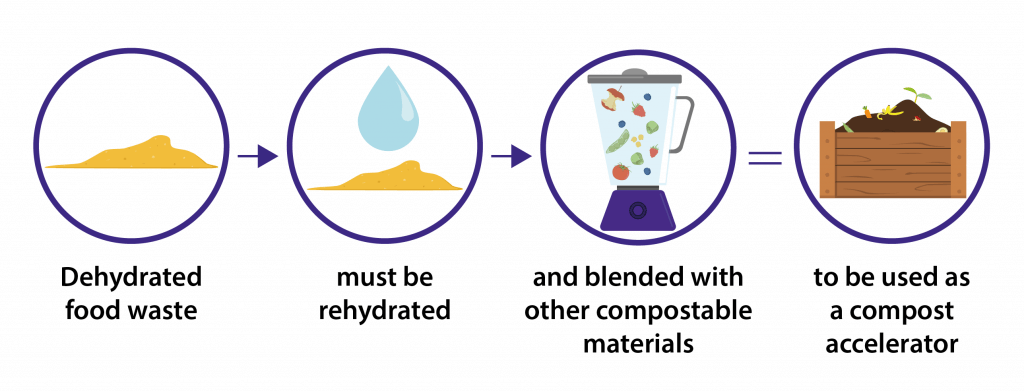
In fact, to effectively use dehydrated food as a compost accelerator, CalRecycle says that dehydrated food waste needs to be re-hydrated and blended with other compostable materials—and even this process is riddled with potential issues.
Below we’ll describe the process of using a food scrap dehydrator and some of the pros and cons of dehydrating food scraps. With a better understanding of how food scrap dehydrators work, commercial food operations can make a more informed decision as to how to best dispose of their food waste.
How to dehydrate food waste
Food scrap dehydrators are typically located close to food preparation area for ease of use. Commercial food dehydrators can generally handle most food scraps as well as fats, oils and grease and some compostable service ware, although there may be limitations to what can be dehydrated with specific machines. The machinery might use paddles, agitator, or grinders to shred this food waste.
Some units use high heat recirculation on a timer-based system to automate the dehydration period. Overall, this dehydration process might take a day or less. While manufacturers continue to evaluate the most energy-efficient solutions, this heating process is more energy intensive than other food waste disposal options.
The dried output from your food scrap dehydrator requires disposal, often at the landfill alongside other waste. In some cases, dehydrated food waste may be used as a soil amendment or as an ingredient in pet food, but pursuing this path requires licensure in many states.
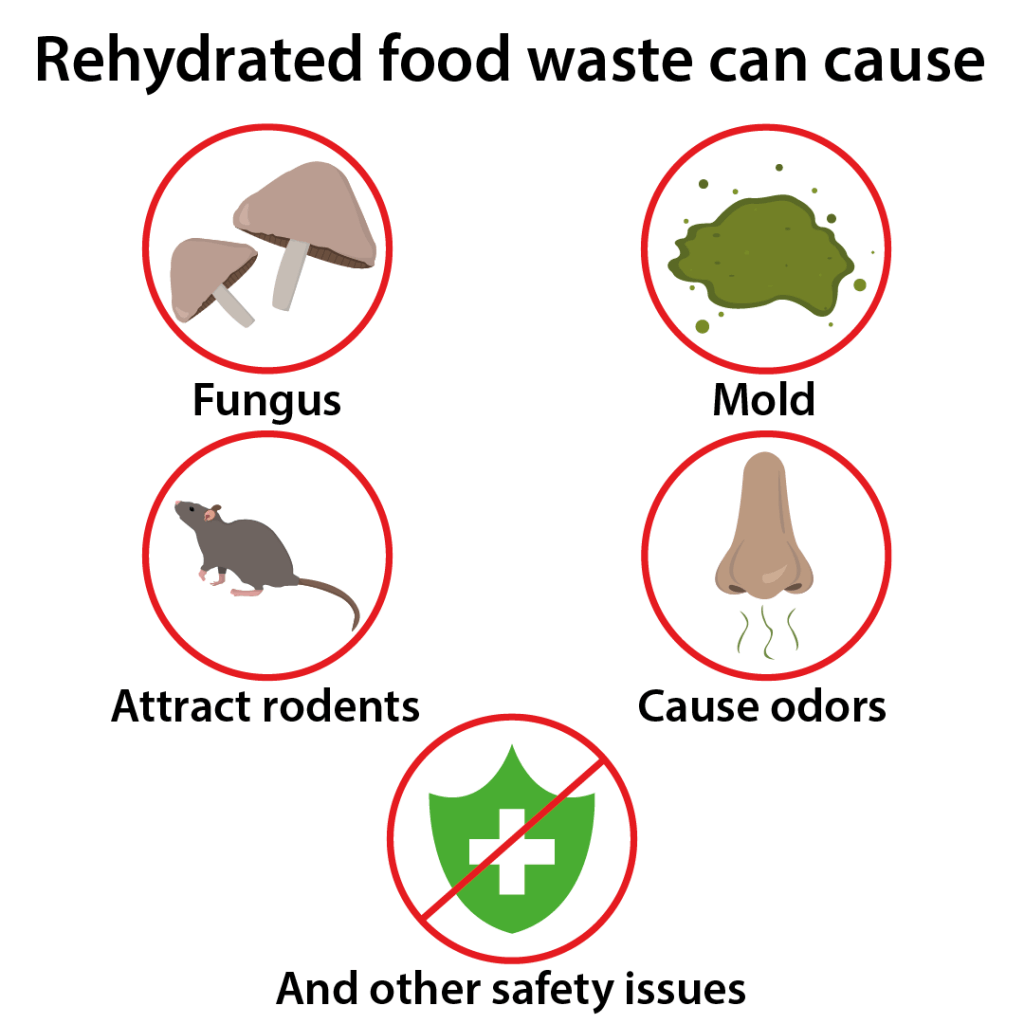
While dried food waste is stored, it must be kept dry. That’s because dehydrated food scraps can reabsorb water, at which point this pulp can grow mold, attract rodents, cause odors, and pose other potential health and safety issues.
Food waste dehydrators’ impact on operations
The biggest benefit of dehydrating food scraps is that the process produces a benign powder that may have 10% to 20% of the weight of the material input. While touted for having zero environmental impact, the truth is these solutions also may have little impact on your operations. This is because that powder is still food waste, only it is now dried. Waste must be removed from the machine and transported to the landfill or to a subsequent processing solution. In the landfill, this residual food waste still decomposes in an anaerobic process that produces dangerous levels of methane gas, a fact that is pushing many municipalities to prohibit food waste from landfills.
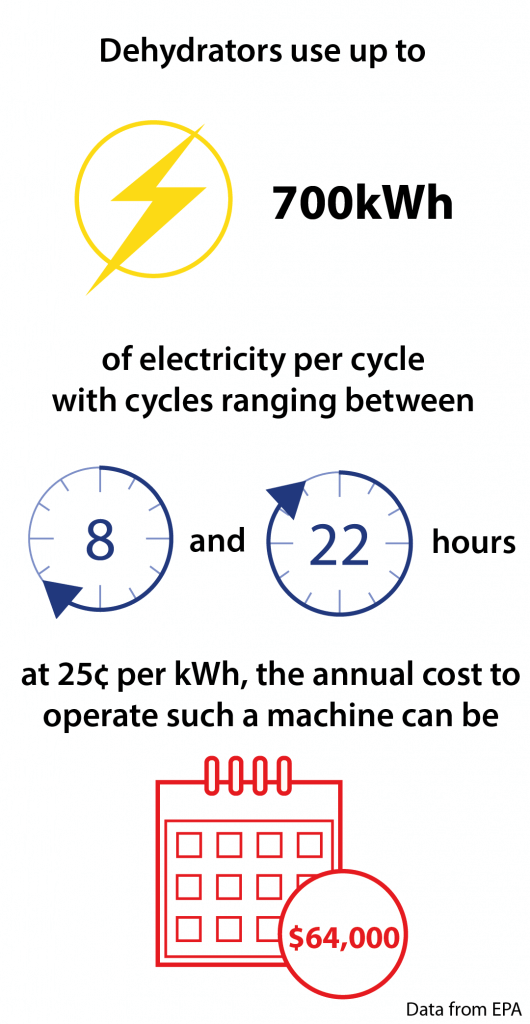
Because dehydrating food scraps reduces the overall weight and volume of organic waste, this process may potentially reduce hauling and disposal costs. However, this cost may be replaced by an uptick in energy usage. Research from the Environmental Protection Agency (EPA) says that dehydrator energy use ranges by model up to 700 kWh of electricity per cycle, with cycles ranging between 8 and 22 hours. At 25¢ per kWh, the annual cost to operate such a machine can be $64,000!
Most importantly, commercial food preparation organizations must recognize that dehydrated food waste is not the same as compost. While some manufacturers of dehydrators suggest the food waste residue can be used as a soil additive or soil amendment, the EPA reports that there remains much to be learned about the stability and suitability of this output as a soil amendment. In fact, a Loyola Marymount University study of unprocessed dehydrated food waste as a composting solution determined this output was not suitable as a soil amendment in part because it is not decomposed to a stable state. Further, the rehydration of this dried material can produce large quantities of fungus.
What to do with food scraps instead of dehydrating
While food scrap dehydrators provide a convenient solution for reducing the amount of food waste transported to landfills, alternative disposal options can keep food waste entirely out of the landfill while simplifying disposal altogether. Many commercial food preparation organizations are finding that onsite biodigesters provide an excellent alternative to food scrap dehydrators.
The dehydration process smells so those machines are not usually situated in a kitchen. However, biodigesters allow the food waste to be disposed of in the kitchen. In this case, however, natural microorganisms introduced into the aerobic biodigester break down food in an oxygen-rich process that does not emit methane and smells. Rather than sending minute food particles down the pipes, the only emission from a biodigester is gray wastewater. Because this waste is sent directly into the wastewater system, it eliminates the hassle of disposing of food scraps outside.
To learn more about how an on-site biodigester can help your organization, contact Power Knot today.