



BeLeaf Medical was founded in 2018 in Earth City, Missouri, on a simple premise: cannabis deserves better. Better cultivation, better products, and better retail experiences. In 2020, it opened the first licensed medical cannabis cultivation facility in the state.
Today, BeLeaf Medical is one of Missouri’s most recognized cannabis companies. It was named 2025 Company of the Year, has been featured in The Wall Street Journal, and has earned multiple industry awards.
The company is vertically integrated, so every step from seed to sale happens in-house. BeLeaf Medical grows its own cannabis, manufactures gummies, infused products, and concentrates, and offers flowers and pre-rolls. Its products are sold under the Sinse Cannabis brand and through Swade Cannabis Dispensary locations in 12 growing locations, including Rolla, Delmar, The Grove, and Eureka.
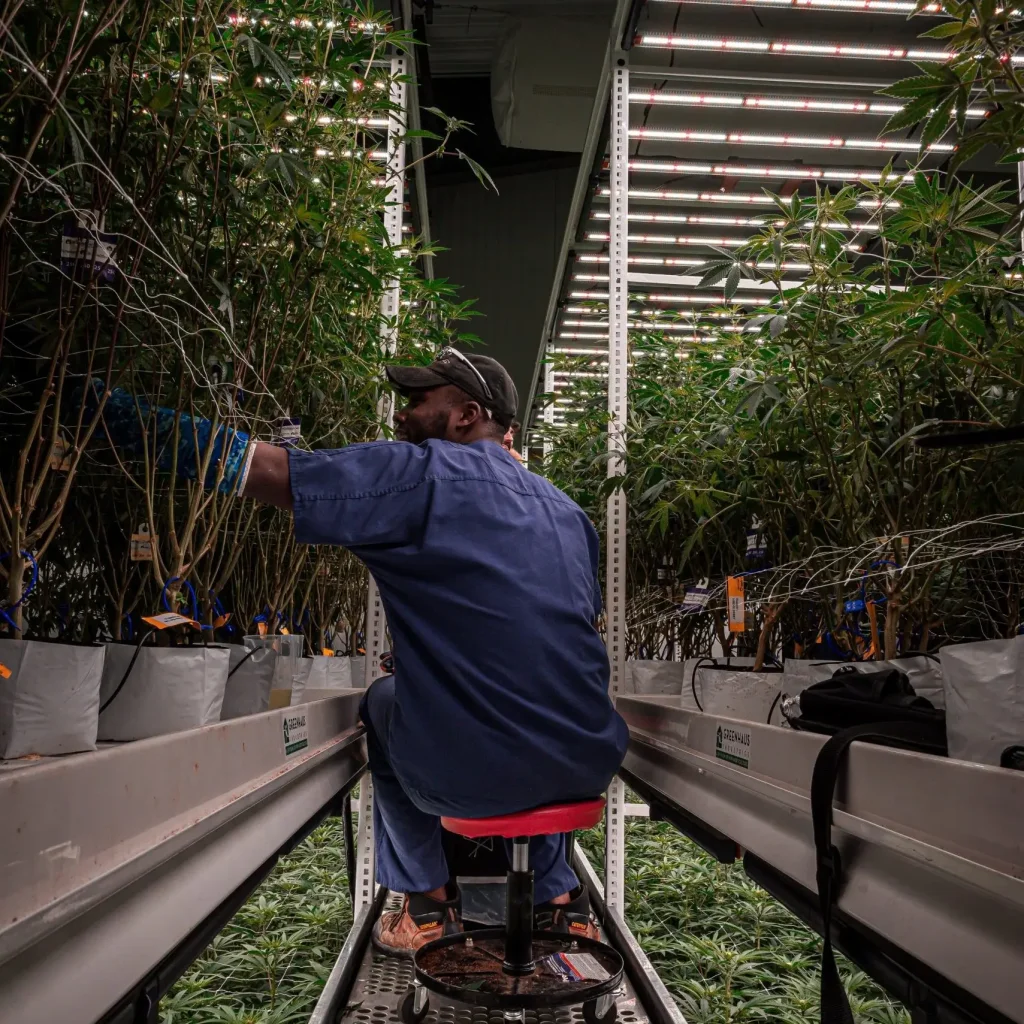
The company is vertically integrated, so every step from seed to sale happens in-house. BeLeaf Medical grows its own cannabis, manufactures gummies, infused products, and concentrates, and offers flowers and pre-rolls. Its products are sold under the Sinse Cannabis brand and through Swade Cannabis Dispensary locations in 12 growing locations, including Rolla, Delmar, The Grove, and Eureka.
For BeLeaf Medical, quality is absolute. The company believes cannabis should be safe, effective, and consistent every time, so it keeps total control over every step, from the first sprout to the retail shelf.
That control also applies to plant material that never becomes a product. The cultivation team, led by Director of Cultivation Justin Sheffield, generates approximately 4,000 lb (1,800 kg) of leaves, stems, and stalks each month.
Every pound of that waste must be handled under strict state rules, without compromising the biosecurity of the growing plants. When BeLeaf looked for a better way to manage it, the team turned to Power Knot and the LCD biodigester.
Sustainability in Daily Operations
As a cannabis company, BeLeaf is always looking for ways to reduce its carbon footprint. Waste handling is one of the most visible places to make a difference.
Cannabis plant waste is mostly water by weight. Before the LCD biodigester, that water weight was loaded onto a large truck and hauled across the city twice a week.
Processing the waste on site removes those trips entirely. Every collection that no longer happens is one less heavy vehicle on the road and fewer emissions tied to moving waste that is largely water.
Cannabis Waste Regulations
According to Missouri State Law under DHSS 19 CSR 30-95, cannabis waste is defined as excess or unusable medical marijuana or medical marijuana byproduct of a cultivation, manufacturing, dispensary, testing, or transportation facility that is non-hazardous. This includes plant waste, such as roots, stalks, flowers, trim, leaves, stems, extracts, spent solvents, and other laboratory wastes.
Cannabis waste is therefore tightly regulated. In Missouri, licensed operators must render plant waste unusable and unrecognizable before it leaves their control.
The standard method is to grind the waste and mix it with at least 50% non-cannabis material. The state also allows other methods it has approved. Operators must log the weight of their waste and use a licensed hauler for removal.
For BeLeaf, that meant a labor-intensive routine:
- Shred the plant waste in the grinder room.
- Mix it with an equal or greater amount of inert, non-cannabis material.
- Store the mixture on site in the hauler’s containers.
- Wait for a scheduled pickup by a licensed waste company, twice each week.
Each step created a challenge. Bulking agents such as straw, coco coir, or cardboard had to be brought into the facility, which adds risk to a controlled growing environment. Stored waste took up space and began to rot. Hauling and container fees were high.
The state approved the use of the LCD biodigester as a compliant disposal method relatively quickly.
Finding a Better Solution
BeLeaf needed a way to render, store, and dispose of green waste with minimal impact on the biosecurity of its facility. The team also wanted to cut the time spent grinding at the end of each day and stop leaving idle waste in the grinder room for extended periods.
The answer came from a peer. The team observed another well-respected cannabis operator in the state using the LCD biodigester for its green waste. They were immediately impressed by how clean the rendering area was and how easy the machine appeared to use.
In September 2026, BeLeaf installed an LCD-300 biodigester in the receiving dock area of its facility.
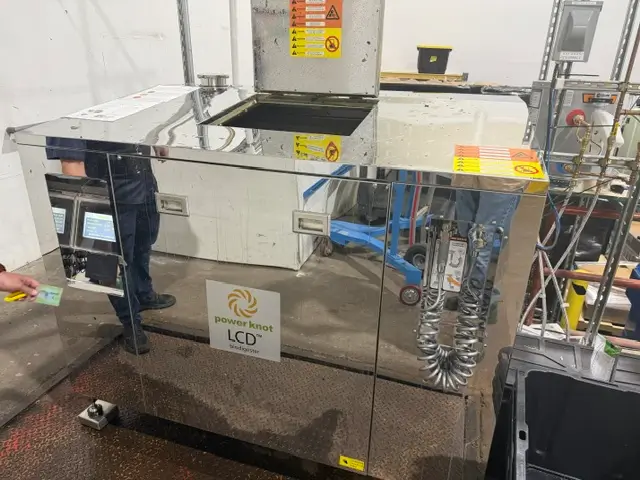
Processing Plant Waste at Its Source
The LCD biodigester uses a natural aerobic digestion process to break down organic waste. Plant material is loaded into the machine, where microorganisms digest it into a liquid that is safely discharged to drain.
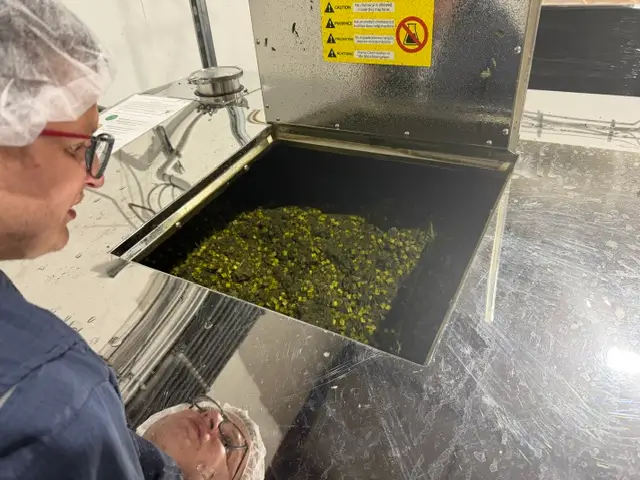
Because the waste is digested completely, it is rendered unusable and unrecognizable without any bulking material. Nothing needs to be stored on site, and nothing needs to be hauled away.
At BeLeaf, the daily process is simple:
- Team members shred their plant waste.
- Supervisors record the waste weight for compliance.
- The waste is loaded into the LCD biodigester to digest.
Shredding is optional. BeLeaf had already invested in a commercial shredder, and using it reduces volume and speeds up digestion. All supervisors are trained on the LCD biodigester and load their team’s waste periodically throughout the day.
Available in nine sizes, LCD biodigesters can process from 10 kg (25 lb) to 900 kg (2000 lb) of organic waste per day.
Results Across the Facility
Since installing the LCD biodigester, BeLeaf has eliminated green waste hauling, disposal costs, and on-site waste storage. The savings that come from no longer hauling green waste twice a week equals about a one-year return on investment for the LCD biodigester and its installation.
For BeLeaf, the LCD biodigester provides several operational advantages:
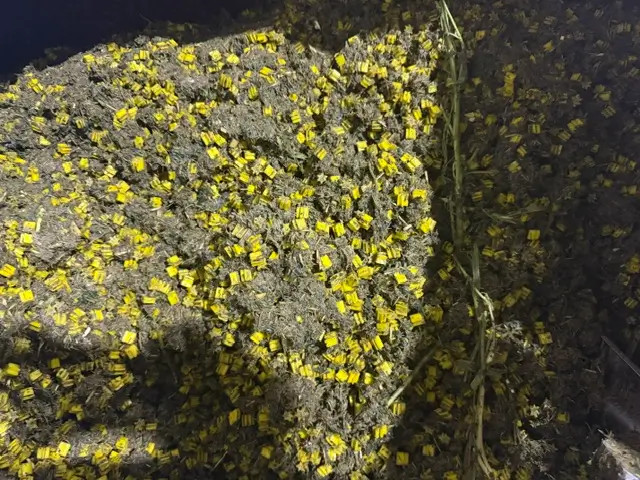
- Stronger biosecurity: Bulking materials such as straw, coco coir, and cardboard no longer enter the facility, and decomposing waste is no longer stored on site.
- Cleaner waste areas: The waste area no longer smells of decomposing plant material, and dozens of totes of stored green waste no longer host saprophytic mold.
- Faster workflow: Team members render their waste more quickly, which prevents a line in the grinder room at the end of the day when multiple departments need it.
- Simpler compliance: The LCD biodigester handles the requirement to render waste unusable and unrecognizable as part of the daily routine.
- Lower operating costs: Hauling fees, container fees, and the cost of mixing materials have been removed.
“Besides the cost savings of handling our waste internally, I consider the increased biosecurity the unit brings as one of its largest advantages,” said Justin Sheffield, Director of Cultivation at BeLeaf Medical.
Data That Supports Compliance
Every LCD biodigester connects to Power Knot’s cloud platform. The machine weighs each load and records how much waste is processed, giving operators a clear view of total waste volumes, monthly averages, peak processing periods, and estimated CO2e avoided.
For a cannabis operator, that data has a direct compliance use. BeLeaf uses the LCD biodigester’s cloud data to verify its own required waste logs and to confirm there are no large discrepancies between the two records. All LCD biodigesters are NTEP Certified. National Type Evaluation Program (NTEP), managed by the National Conference on Weights & Measures (NCWM), is an official evaluation process in the United States that confirms commercial weighing and measuring devices (such as scales, load cells, and fuel pumps) meet national standards for accuracy, durability, and repeatability.
The result is an independent, automatic record that sits alongside the facility’s manual logs, making audits and reporting easier to support.