

Theme parks provide guests with an opportunity to escape into a fantasy full of adventure and thrills. But nothing pulls your guests out of the fantasy faster than overflowing bins, odors near food courts, and visible waste handling.
Reducing food waste has a big impact on theme parks’ bottom line – but it’s also essential for delivering an outstanding theme park experience for guests.
Experience is the most important product that theme parks sell. One bad impression can cost park operators significantly. Researchers with the University of Central Florida find that theme park guests are most likely to report a satisfying experience when enjoying rides, during dining, and when interacting with others. More impactfully, each individual positive experience goes on to “permeate” other experiences, improving guests’ emotional outlook later in the day. Conversely, a single negative experience can take a toll on a guests’ entire visit. This encompasses the dining experience – and its resulting waste.

To create a theme park experience that keeps guests coming back, park operators have to account for food waste within the context of the guest experience. Organizations that adopt sustainability measures and promote them wisely have a strong opportunity to enhance brand loyalty with their guests.
Waste Removal is Tied to Guest Experience
Food and beverage are big ticket items for theme park guests. Attraction design firm PGAV’s Voice of the Visitor report reveals that food and beverage is a leading spending priority, for every generation of park visitor. Park operators are working to increase that spending by offering more diverse types of food. Yet operators aren’t always addressing the barriers to food and beverage spending.
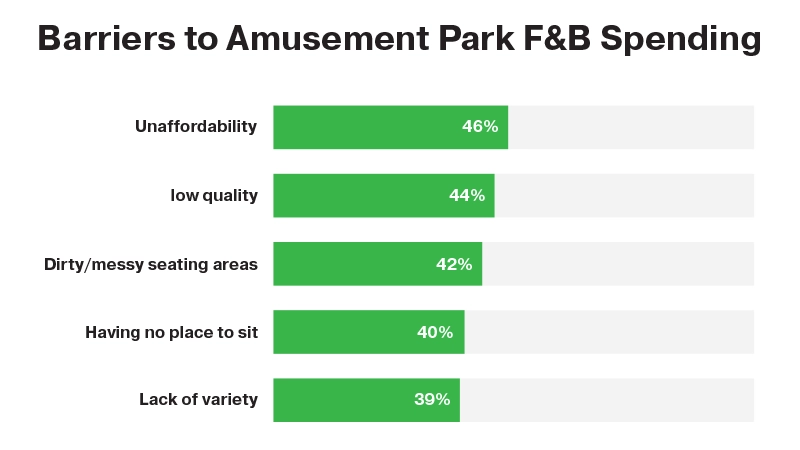
PGAV finds that the biggest barriers to food and beverage spending include dirty or messy seating areas (42%). While guests may not actively notice the work that park operators put into keeping spaces clean, they do take note when waste piles up. Park operators tend to approach this problem by adding more frequent trash cans so a disposal option is always nearby. Of course, adding more cans requires that they be emptied more often. Opting for larger cans may reduce the time spent on waste disposal, but adds a risk of unpleasant odors detracting from the experience of the theme park. Smaller trash cans can reduce this risk, but pulls team members away from more value-added customer-facing interactions.
This is one reason that park operators are evaluating alternative waste disposal options. Multi-stream trash bins encourage park guests to dispose of waste in the most appropriate container for trash, recycling, or food. This doesn’t just promote sustainable disposal. With an onsite biodigester, park operators can more readily carry food waste to the nearest kitchen for quick, easy, and odor-free disposal. Reducing this labor load gives employees more time to clear tables and interact with guests.
Paying for Food Waste Frustrates Guests
The cost of the dining experience also has a tremendous impact on guest satisfaction. Voice of the Visitor notes that food and beverage offerings continue to be a focus for visitors, yet consistently rank lowest among factors contributing to guest satisfaction. Paying high costs for low-quality food can leave a sour taste in any guests’ mouth.
The report adds that parks are working to solve this problem by offering more unique dining experiences and a broader range of food options. However, a broader range of options can generate greater amounts of waste, should new foods miss the mark.
Park operators can mitigate this risk with technology that tracks the types and amounts of food being wasted. Solutions like the LFC biodigester can be equipped with an NFC card reader that can identify the source of the waste or the type of waste. This can be used to generate reports that display this information for each biodigester in use across the park. With this insight, park operators can experiment across their menu with greater confidence, knowing they’ll have data in hand to help them pivot to new menu options.
Sustainability is Part of the Guest Experience
When it comes to the dining experience, guests aren’t just thinking about the types of food served. Many are also thinking about the sustainability impact behind those serving choices. Theme park development company International Concept Management (ICM) finds the most successful parks are those that are investing in low-waste operations.
Some park operators may feel consumers have put sustainability aside as a priority. Indeed, researchers find that, as prices rise, consumers who claim to value sustainability don’t always spend more on organic or environmentally friendly solutions. However, promoting the ways in which your park supports sustainability helps consumers feel good about their purchasing decisions – and that good feeling can contribute to higher rates of customer satisfaction.
Better still, the most impactful investments – including solutions that lower the costs of off-site waste disposal – will rein in operating costs, keeping parks more affordable for visitors.
4 Ways to Make Food Waste Solutions Part of a Positive Theme Park Experience
Educating attendees on the reasoning behind your environmentally friendly investments invites park guests to celebrate sustainability. Building this awareness can also encourage guests to try new strategies in their work to reduce food waste.
Park operators can highlight their sustainability impact by:
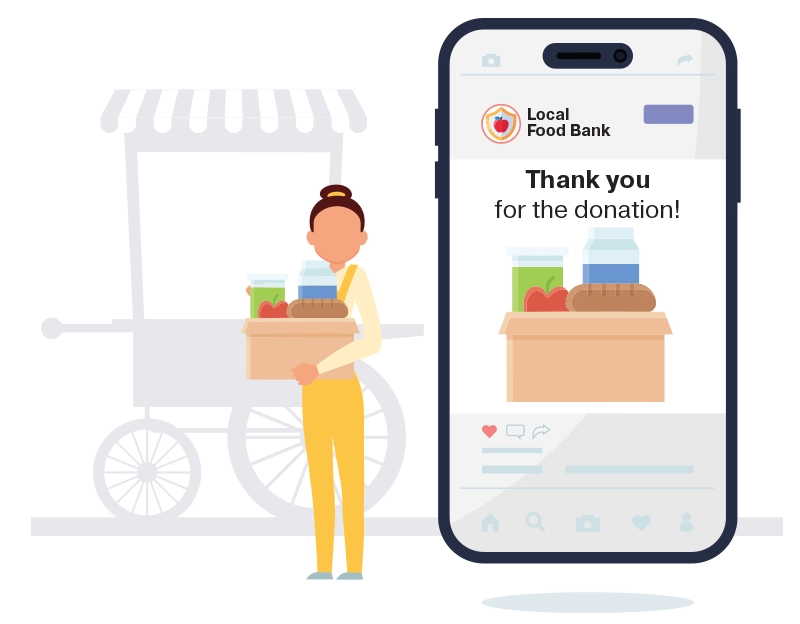
- Promoting organizations to which they donate food through dining area signage and social media.
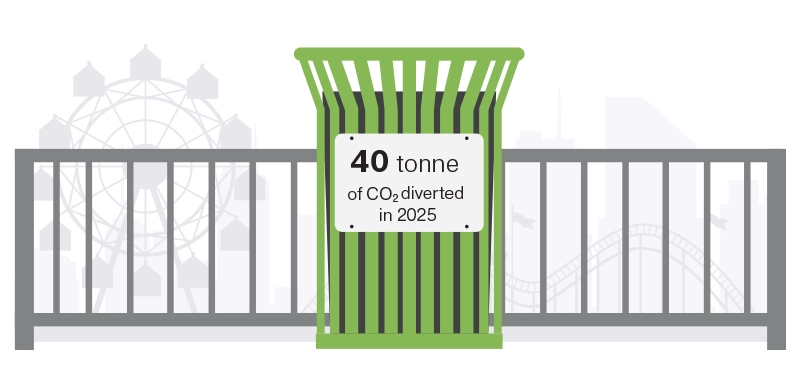
- Posting data over trash cans to demonstrate how much carbon dioxide equivalent they divert each year through sustainable waste management solutions.
- Adding signage to highlight areas where composted food or grey water from food disposal equipment support landscaping.
- Simplifying waste management for employees to allow them more opportunity for positive guest engagement.

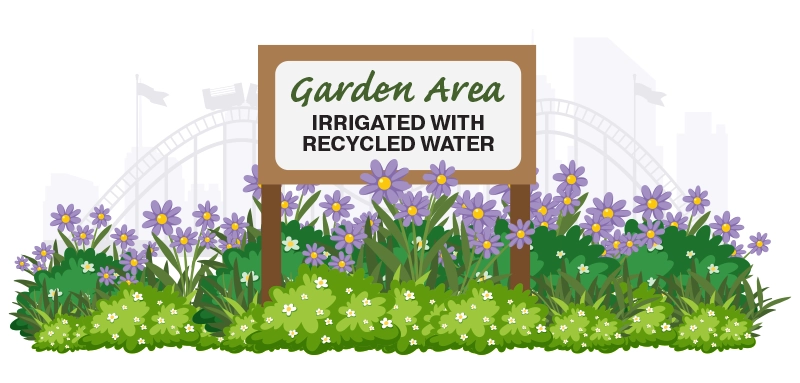
On-site biodigestors can help support this work. Biodigesters keep waste invisible, odorless, and managed continuously without disrupting the park environment. They deliver valuable data as they divert waste from landfills. Biodigester byproducts include grey water that can be filtered to use for landscaping or can be safely disposed down the drain. More impactful yet, this equipment reduces the demand on employees to haul heavy, smelly garbage as it can be installed directly in food preparation areas.
If you want to learn more about how the attractions industry is already using biodigesters to mitigate food waste management, talk to Power Knot today.