

Food waste digesters are on-site systems that break down organic waste, reducing the amount of food waste that needs to be stored, transported, or sent to landfills. Aerobic food waste digesters, such as the LFC biodigester, use microorganisms, oxygen, water, and controlled conditions to accelerate the natural decomposition process.
For commercial operations such as hotels, restaurants, hospitals, commercial kitchens, and food processing facilities, installing a food waste digester provides a practical way to manage food waste at its source while reducing reliance on off-site disposal.
However, choosing the right food waste digester is only part of the process. Facilities also need to consider where the equipment will be installed, how it will fit into existing workflows, and what utilities and infrastructure are required.
Commercial food waste digesters can often be integrated into existing kitchens, waste rooms, loading areas, and other back-of-house spaces. Proper planning can simplify installation, improve daily operations, and support reliable long-term performance.
If you are considering an on-site food waste digester, here are the key facility and installation requirements to evaluate before getting started.
1. Determine How Much Food Waste You Generate
Before considering utilities or installation space, determine how much food waste your facility generates each day.
Food waste volume can vary significantly depending on the type and size of operation. Hotels may experience spikes following banquets or events, while hospitals, commercial kitchens, and food production facilities may generate a more consistent amount throughout the day.
Ideally, facilities should weigh their food waste over several representative days or weeks. Consider:
- Average daily food waste
- Peak daily food waste
- Seasonal fluctuations
- Days and hours of operation
- Expected future growth
Selecting a food waste digester based only on an average day can leave a facility without enough capacity during peak periods. LFC biodigesters are available in multiple sizes to accommodate operations ranging from relatively small kitchens to facilities processing several tonnes of food waste per day.
Power Knot staff can also help estimate the average food waste generated from pre and post consumer operations based on number and frequency of meals served.
2. Identify the Best Installation Location
A food waste digester should be installed as close as practical to where food waste is generated or collected.
Depending on the facility, this might include a:

- Food preparation area
- Commercial kitchen
- Dishwashing area
- Waste or garbage room
- Central waste processing area
Location affects more than convenience. Moving food waste long distances through a facility requires additional labor and can increase the risk of spills and contamination.
Consider the entire food waste journey. Where is the waste generated? Who collects it? How is it transported? Where will employees load it into the digester?
A good installation should make food waste management simpler rather than adding another step to the workflow.
3. Make Sure There Is Enough Space
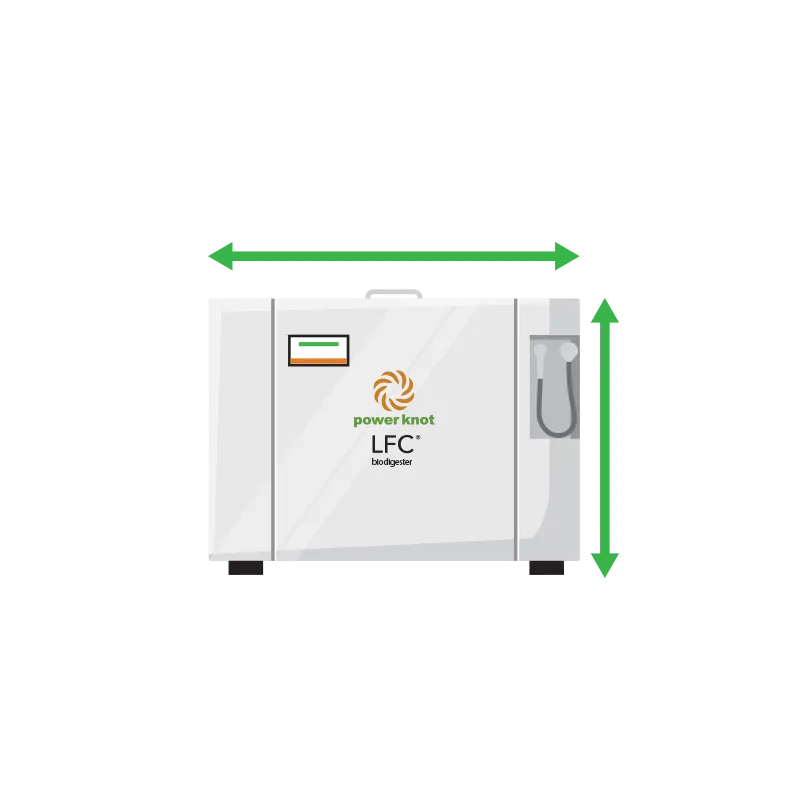
Check the dimensions of the food waste digester and compare them with the proposed installation area.
Do not consider only the equipment footprint. Facilities should leave adequate space around the machine for operators to load food waste safely and for technicians to access components during inspection and service.
Also evaluate the route the equipment will take to reach its final location.
Measure:
- Doorways
- Hallways
- Elevators
- Loading dock entrances
- Ceiling heights
- Corners and turning areas
- Stairs or changes in floor elevation
A room may have enough space for the machine even though the path to get the equipment into that room does not.
For larger installations, planning equipment access early can prevent costly changes on installation day.
4. Check Electrical Requirements
Commercial food waste digesters require electricity to operate components such as motors, controls, sensors, and other systems.
Electrical requirements vary depending on the model and installation location. Before installation, confirm the required:
- Voltage
- Phase
- Frequency
- Circuit capacity
- Electrical connection
The LFC biodigesters are available in voltages to support installations in any country globally.
For 3-phase installations over 250 V, pay attention to whether your facility can provide neutral or not. The electrical supply should be installed according to the manufacturer’s specifications and applicable local codes.
5. Provide a Water Supply
Aerobic food waste digesters use water as part of the digestion process, so an appropriate water connection is required.
The exact requirements depend on the equipment and facility. Water quality should also be considered because excessive sediment, hardness, or other water conditions can affect equipment over time.
Before installation, verify:
- Water connection requirements
- Available water pressure
- Accessibility to hot and cold water
- Water quality
- Filtration requirements
- Connection location
Planning the water connection close to the equipment helps simplify installation and avoids unnecessarily long supply lines.
6. Plan the Drain Connection
During aerobic digestion, microorganisms break food waste down into water, carbon dioxide, and organic matter. The resulting wastewater must leave the machine through an appropriate drain connection.
Drainage should therefore be evaluated early in the installation process.
Confirm the required drain size, location, slope of the exit pipe, and configuration based on the manufacturer’s installation instructions and applicable local regulations.
The discharge route should remain accessible so it can be inspected and maintained when necessary.
Facilities should also verify local wastewater requirements before installation. Regulations can vary by municipality and application.
7. Ensure an Internet Connection

Plan for a reliable internet connection at the installation location. All purchases of the LFC biodigester include lifetime access to the LFC Cloud, Power Knot’s remote monitoring and analytics platform.
The LFC Cloud automatically collects operational data from the biodigester, allowing authorized users to remotely monitor food waste processing, review historical trends, and analyze performance from anywhere with internet access.
Before installation, confirm that the biodigester can connect to your facility’s network. Reliable connectivity ensures that operational data can be transmitted to the LFC Cloud and remains accessible for ongoing monitoring and reporting. If you are unable to connect to your facility’s network, procure the GSM box from Power Knot which allows your biodigester to report its operational status without the traffic touching your network.
8. Consider Ventilation and the Surrounding Environment
A food waste digester should be installed in an environment suitable for the equipment and the people operating it.
Consider temperature, humidity, ventilation, exposure to weather, and general cleanliness when selecting the installation location.
If equipment will be installed outdoors or in an area exposed to unusual environmental conditions, select a model and configuration designed for that environment.
The installation area should also remain accessible for routine cleaning and housekeeping.
9. Think About How Employees Will Load the Machine
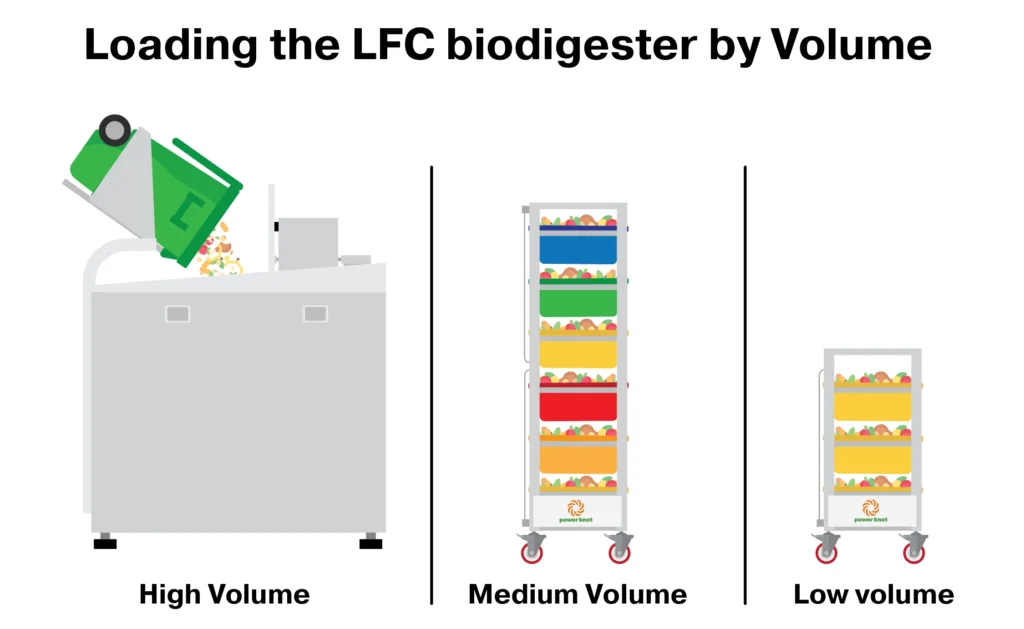
A food waste digester may process hundreds or thousands of kilograms of food waste every day. How that waste gets into the machine can have a significant impact on labor.
Smaller operations may be able to load food waste manually. High-volume operations may benefit from equipment that reduces repetitive lifting and handling.
Depending on the application, food waste handling equipment can include:
- Carts or bins
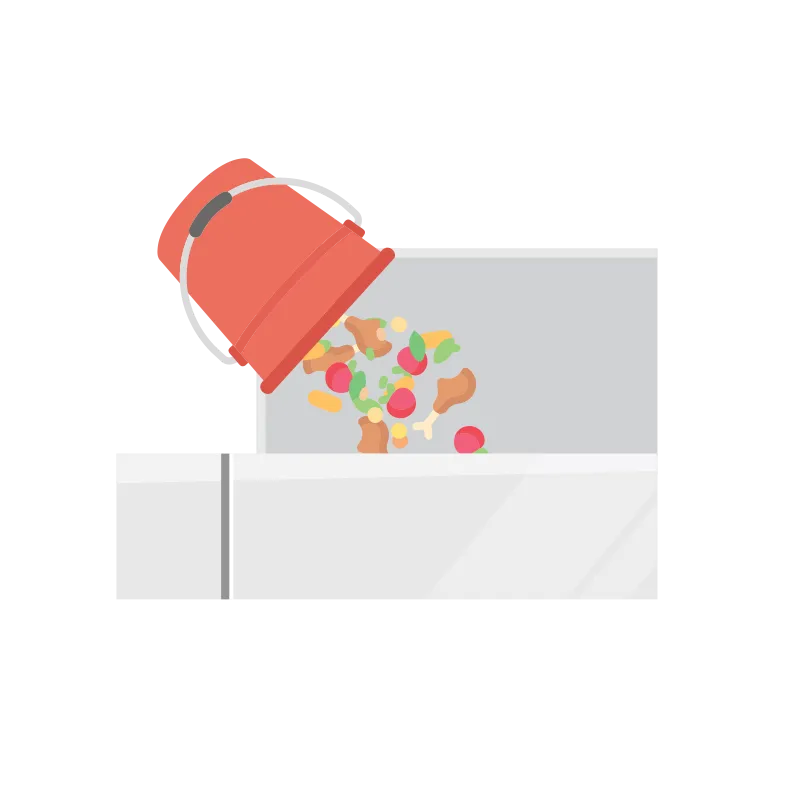
- Bin tippers
- Conveyors
- Shredders
- Other material handling systems
For example, a bin tipper can mechanically lift a compatible container and empty food waste into the biodigester, reducing the need for employees to repeatedly lift heavy containers.
When planning an installation, look beyond the machine itself. Consider how employees will move food waste from its source to the digester every day.
10. Consider Food Waste Preparation
Not all facilities generate the same type of food waste.
A hotel buffet may produce a mixture of prepared foods, while a food processing facility might generate large quantities of a single material. Some operations may also generate large or difficult-to-handle pieces of organic waste.
Food waste should be prepared according to the manufacturer’s operating guidelines before being loaded.
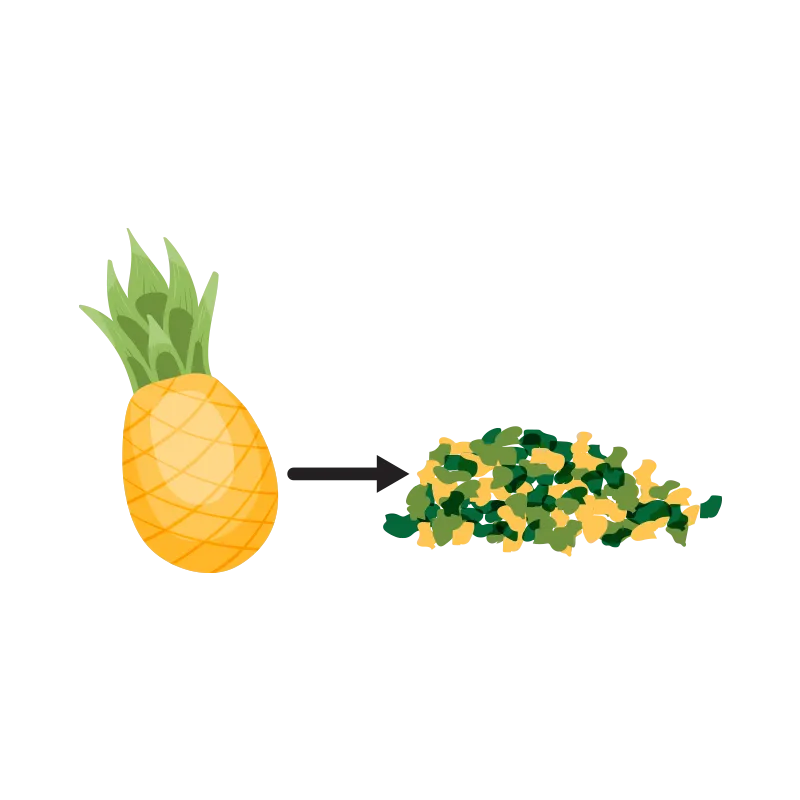
For high-volume applications, preprocessing equipment such as a BCG shredder can reduce larger food waste into smaller pieces before it enters the LFC biodigester.
The right configuration depends on the type, volume, and consistency of the waste stream.
11. Make Room for Maintenance and Service
Food waste digesters are designed for continuous operation, making service access an important part of installation planning.
Avoid positioning equipment so tightly against walls, permanent fixtures, or other machinery that makes it difficult to service the biodigester.
Adequate service clearance makes it easier to perform inspections, preventative maintenance, repairs, and component replacement.
This is especially important when designing a new facility. Providing sufficient service access during the design phase is much easier than relocating equipment later.
12. Confirm Local Codes and Regulations
Food waste, plumbing, wastewater, electrical, health, and building regulations can differ by location.
Before installation, facilities should determine which local approvals, permits, or inspections apply to their project.
Requirements may involve:
- Electrical work
- Plumbing
- Wastewater discharge
- Building modifications
- Health and sanitation
- Workplace safety
Working with qualified local contractors and the equipment manufacturer or authorized distributor can help identify applicable requirements before installation begins.
13. Plan for Commissioning and Employee Training
Installation is not complete when the equipment is connected.
Before regular operation begins, the food waste digester should be commissioned according to the manufacturer’s instructions. Operators should also understand how to use the equipment correctly.
Training should cover topics such as:

- What materials can be added to a biodigester
- What should not be added
- Proper loading procedures
- Daily operation
- Cleaning
- Basic troubleshooting
- Safety procedures
Clear training is particularly important for facilities with multiple shifts or high employee turnover. Everyone who interacts with the equipment should follow the same procedures.
Food Waste Digester Installation Checklist
Before ordering or installing a commercial food waste digester, confirm:
✓ Measure daily and peak food waste volumes
✓ Select the appropriate digester capacity
✓ Confirm adequate installation space
✓ Verify equipment access to the installation site
✓ Confirm electrical service requirements
✓ Identify a suitable water connection
✓ Review drainage requirements
✓ Evaluate the operating environment
✓ Plan how staff will transport and load food waste
✓ Identify any required preprocessing equipment
✓ Allow adequate clearance for service and maintenance
✓ Review local codes and wastewater requirements
✓ Schedule commissioning and operator training
Planning the LFC biodigester Installation
Every facility is different. A small restaurant may require a relatively straightforward installation, while a hotel, resort, hospital, cruise ship, food processing facility, or large commercial kitchen may need a more comprehensive food waste handling system.
Planning the installation around both the equipment requirements and the facility’s existing workflow can help create a more efficient food waste management process.
Power Knot offers LFC biodigesters in a range of processing capacities for organizations looking to manage food waste at its source. Depending on the application, systems can also be integrated with equipment such as BCG shredders, bin tippers, and other waste handling solutions.
Considering an on-site food waste digester? Contact Power Knot to discuss your food waste volume, facility requirements, and the LFC biodigester configuration best suited to your operation.