

Modern farms produce more than crops and livestock; they also generate large volumes of organic waste. Crop residue, spoiled produce, orchard prunings, fruit stones, and livestock byproducts can quickly accumulate during harvesting and processing. While these materials are often viewed as waste, many can be composted, recycled, converted into renewable energy, or reused as animal feed ingredients, depending on local regulations.
As disposal costs continue to rise and landfill regulations become more restrictive, farms are increasingly looking for sustainable alternatives to simply hauling organic waste away.
Industrial shredders play an important role by reducing bulky organic materials into smaller, uniform particles that are easier to transport, store, and prepare for downstream processing.
Common Types of Agricultural Waste
Every agricultural operation produces a unique mix of organic waste depending on the crops or livestock being raised.
Common materials include:
- Crop stalks
- Corn cobs
- Fruit pits and stones
- Orchard prunings
- Vines
- Sugar beets
- Spoiled fruits and vegetables
- Plant roots
- Greenhouse waste
- Livestock byproducts
- Animal bones from on-farm processing
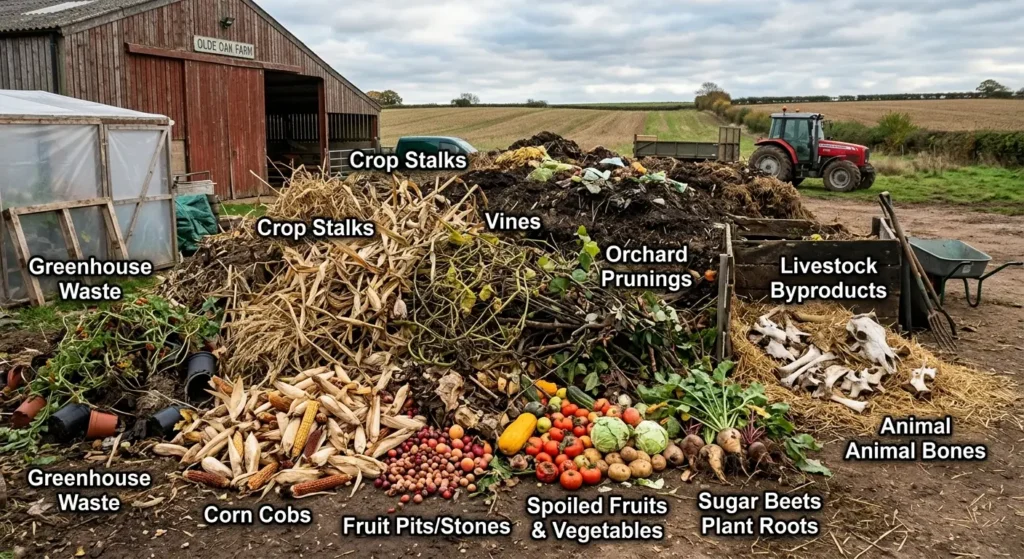
Many of these materials are fibrous, dense, or irregularly shaped, making them difficult to handle efficiently without first reducing their size.
Lower Disposal Costs Through Volume Reduction
Organic waste is expensive to transport. Large, bulky materials occupy valuable trailer or dumpster space, increasing hauling frequency and disposal costs.
Shredding agricultural waste helps by:
- Reducing waste volume
- Lowering transportation costs
- Improving storage efficiency
- Creating a consistent feedstock for downstream processing
- Making bulky materials easier to handle
As more regions implement higher landfill tipping fees and encourage resource recovery, reducing the amount of waste requiring disposal can provide meaningful operational savings.
Preparing Materials for Downstream Processing
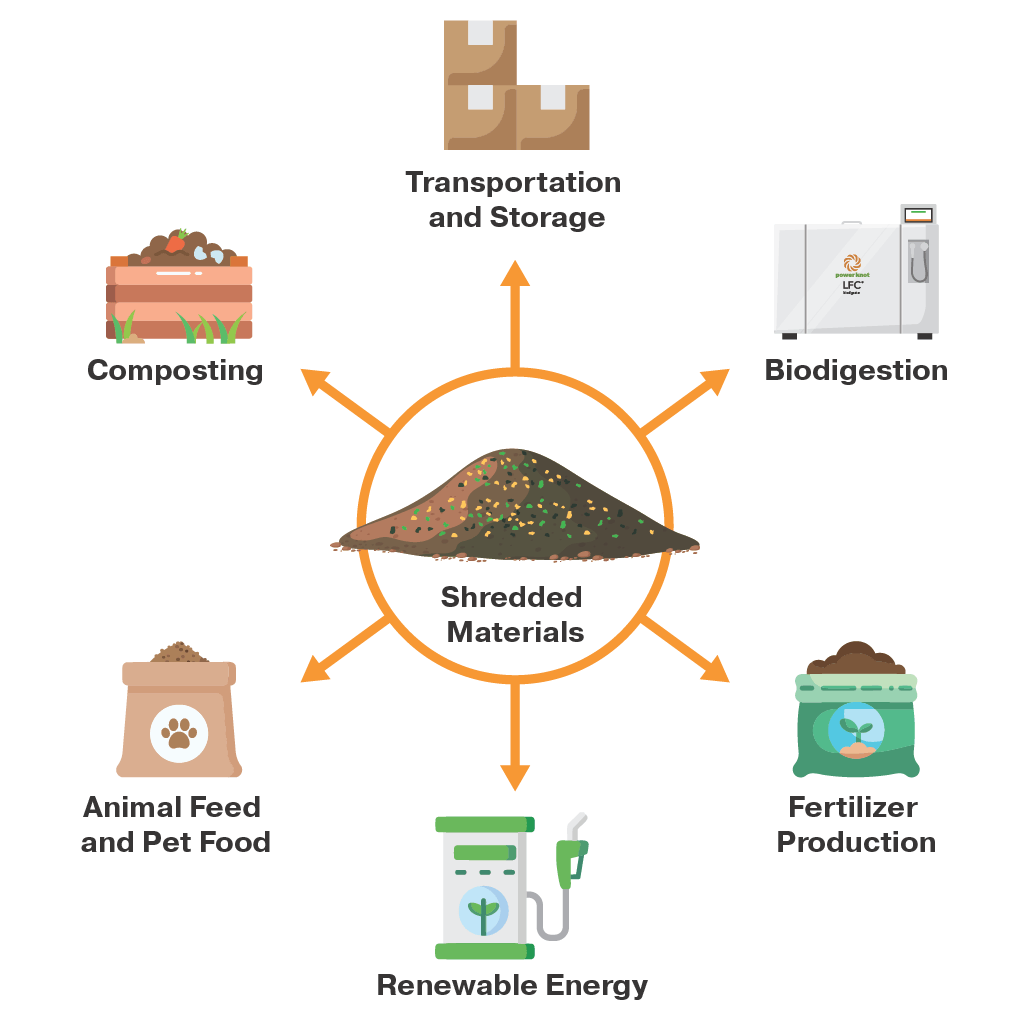
Many agricultural byproducts require pretreatment before they can be reused or processed further. Shredding creates a more consistent particle size that improves handling and prepares materials for a variety of downstream applications, including:
- Composting – Smaller particles provide greater surface area for microorganisms, helping organic materials break down more quickly and uniformly while improving pile management.
- Biodigestion – Shredding crop residue, fruit stones, fibrous stalks, and other dense organic materials creates a more consistent feedstock for anaerobic digesters improving biological processing.
- Renewable Energy – Agricultural residues used in biomass and biogas production are easier to convey, mix, and process after size reduction.
- Animal Feed and Pet Food – Certain vegetables and other agricultural byproducts are ground before further processing into livestock feed or pet food ingredients, where permitted by local regulations and manufacturing requirements.
- Fertilizer Production – Organic materials are often reduced in size before being incorporated into fertilizer manufacturing, improving handling and processing efficiency.
- Transportation and Storage – Uniformly sized materials are easier to store, transport, and feed into downstream equipment, reducing handling time and improving operational efficiency.
Protecting Downstream Equipment
Shredding is not only about reducing particle size. It also helps create a more consistent feedstock that can reduce blockages and improve material flow into downstream processing equipment.
Whether materials are entering composting systems, biodigesters, conveyors, pumps, or other processing equipment, consistent particle size helps improve overall process efficiency.
Choosing the Right Agricultural Shredder
Agricultural waste can be surprisingly demanding on equipment. Fibrous stalks, dense fruit stones, and animal bones require a shredder capable of continuous operation under challenging conditions.
Important features include:
- Low-speed, high-torque operation
- Double-shaft cutting system
- Heavy-duty cutting knives
- Continuous-duty design
- Easy maintenance
- Reliable performance with fibrous and dense materials
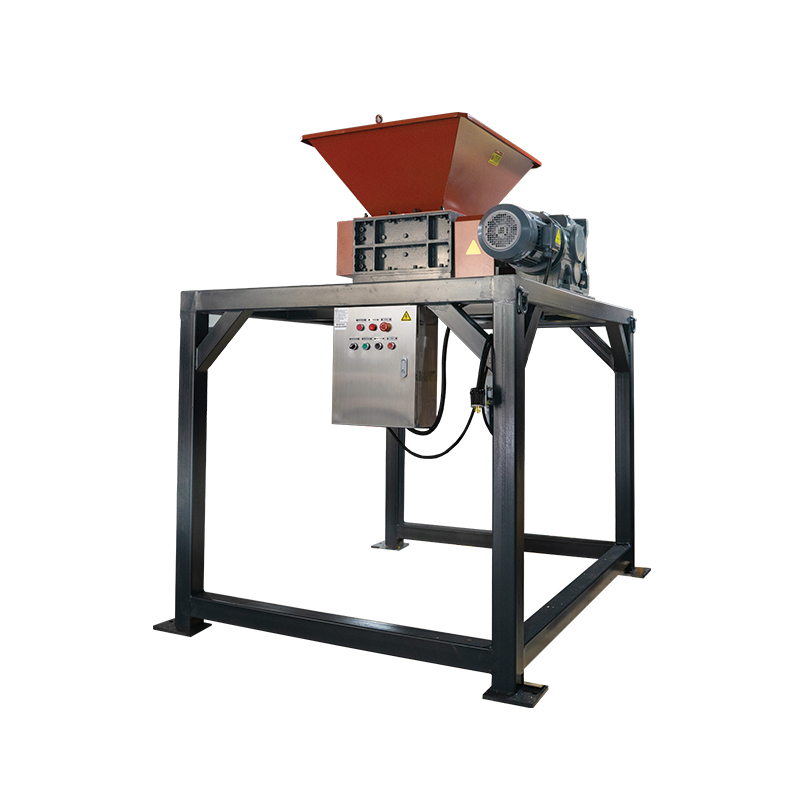
The Power Knot BCG-315 shredder is engineered to process agricultural waste, fruit stones, fibrous plant materials, and animal bones before composting, biodigestion, recycling, and renewable energy applications. Its double-shaft cutting design produces a consistent particle size while handling difficult organic materials with reliable, continuous operation.
Additional capabilities include:
- Processes up to 180 kg (400 lb) per hour
- Handles materials up to 400 mm (16 in) in length
- Produces a uniform output between 15 mm and 35 mm
- Designed for continuous heavy-duty operation
Improve Agricultural Waste Management
Organic waste doesn’t have to be a disposal problem. With proper size reduction, farms can prepare crop residue, spoiled produce, fruit processing waste, and livestock byproducts for composting, biodigestion, renewable energy, rendering, and other value-added applications.
By improving how agricultural waste is handled, farms can reduce disposal costs, improve operational efficiency, and recover more value from materials that might otherwise be discarded.
Contact Power Knot to learn how the BCG-315 shredder can help prepare agricultural waste for downstream processing and resource recovery.