

A commercial food waste digester is a long-term investment. For facility managers evaluating equipment, one important question is how long the system can reasonably be expected to remain in service.
The answer depends on the equipment itself, how frequently it is used, how well it is maintained, and whether worn components can be serviced or replaced over time.
The LFC biodigester is designed to provide approximately 15 to 25 years of service when properly operated and maintained.
Understanding what affects that lifespan can help businesses evaluate the true long-term value of a food waste digester.
What Determines the Lifespan of a Food Waste Digester?
A food waste digester combines mechanical, electrical, and biological processes to break down organic waste. In commercial facilities, that equipment may operate continuously while processing food waste every day.
Several factors can influence how long it lasts.
1. Build Quality
The materials and components used to manufacture a food waste digester have a major impact on its service life.
Commercial food waste equipment must withstand moisture, food acids, cleaning, mechanical movement, and repeated loading. Equipment designed specifically for these environments is better suited for years of continuous operation.
The LFC biodigester is constructed from stainless steel and designed for commercial environments where durability, sanitation, and corrosion resistance are important.
When comparing food waste digesters, consider more than the initial purchase price. Construction quality, especially if the chassis is made of regular painted steel, can have a significant impact on long-term reliability and total cost of ownership.
2. Preventive Maintenance
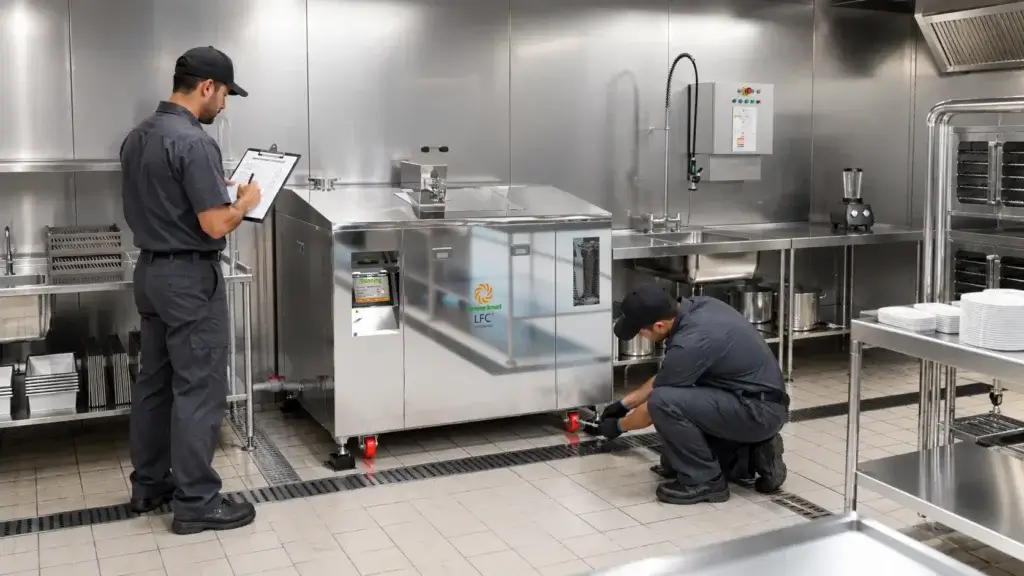
Regular maintenance is one of the most important factors affecting equipment life.
Food waste digesters contain mechanical and electrical components that should be periodically examined, lubricated, adjusted, and replaced as they wear.
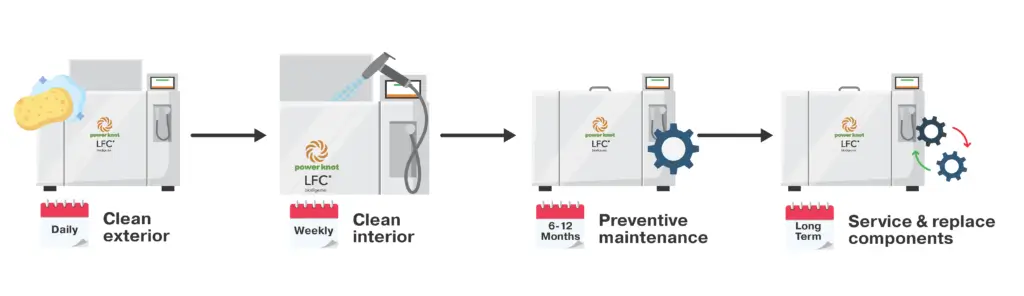
For the LFC biodigester, scheduled maintenance is generally planned every six to 12 months. Power Knot recommends complete periodic servicing every six to nine months, with servicing required at least annually to maintain the warranty.
Preventive maintenance can identify wear before it results in equipment failure, reducing downtime while helping extend the useful life of the machine.
3. Proper Daily Operation
How employees use a food waste digester can also affect how long it lasts.
Operators should follow manufacturer recommendations for food waste types, loading volumes, cleaning, and operation. Continually overloading the equipment or using settings incorrectly can place unnecessary stress on mechanical components.
For example, the LFC User’s Manual warns that improper use of certain operating modes can overload the transmission system and cause damage.
Employee training is therefore an important part of protecting the equipment over its lifetime.
4. Replaceable Components
A long equipment lifespan does not mean every component will last for decades.
Motors, bearings, seals, chains, sensors, and other components naturally experience wear. Consumables also need to be replenished or replaced periodically.
What matters is whether these individual components can be serviced or replaced without replacing the entire machine.
The LFC biodigester is designed to be maintained over its service life, with scheduled maintenance, replacement parts, consumables, and software updates all forming part of its maintenance program.
This serviceable design helps businesses maintain the equipment rather than treating it as a disposable asset.
Although Power Knot can arrange to repair our LFC biodigester anywhere in the world, Power Knot supports your right to repair by providing a comprehensive service manual, service checklist, wiring diagrams, and access to spare parts.
5. Proven Longevity in Real-World Operations
Expected service life is important, but actual performance in customer facilities provides an even better indication of equipment longevity.
At JW Marriott Marquis Miami, an LFC biodigester operated for more than 10 years without issues. The hotel recently replaced the machine with a newer LFC model with its increased feature set when the area was renovated and the floor resurfaced, rather than because the original machine had reached the end of its service life.
This is not an isolated example. Many LFC biodigesters at customer sites have been operating for 10 to 15 years without issues, demonstrating the long-term durability of properly operated and maintained equipment.
Power Knot designs the LFC biodigester for approximately 15 to 25 years of service with proper operation and maintenance. Its serviceable design allows individual components to be maintained or replaced as needed, helping extend the useful life of the equipment rather than requiring replacement of the entire machine.
6. Monitoring and Early Detection
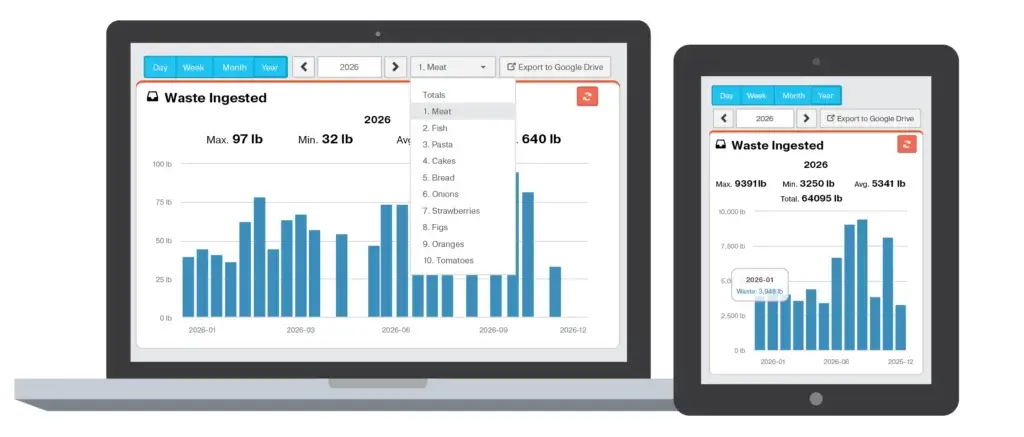
Small equipment problems can become larger and more expensive if they go unnoticed.
LFC biodigesters include built-in maintenance counters that notify operators when scheduled service is approaching. The LFC Cloud can also indicate when maintenance is due and send email notifications.
Monitoring equipment performance and addressing maintenance requirements early can help prevent unnecessary wear and unexpected downtime.
How Often Does a Food Waste Digester Need Maintenance?
Maintenance requirements vary by manufacturer and model.
For LFC biodigesters, maintenance includes routine cleaning, scheduled mechanical service, replenishing Powerzyme, replacing Powerchips, and updating software when required.
Facility managers should establish a preventive maintenance schedule and keep service records throughout the equipment’s life rather than waiting until a problem occurs.
Repair or Replace a Food Waste Digester?
As equipment ages, facilities may eventually need to decide whether repairing or replacing it makes more financial sense.
Age alone should not determine that decision. Consider:
- Overall condition of the equipment
- Frequency and cost of repairs
- Availability of replacement parts
- Changes in food waste volume
- Changes in facility requirements
- Reliability and downtime
- Increased features on the newer model
- Cost of replacement compared with continued service
A serviceable food waste digester may continue operating for many years as individual worn components are replaced.
Consider Lifespan When Calculating ROI
The expected life of a food waste digester can significantly affect its return on investment.
A lower-cost machine that requires replacement after a relatively short period may ultimately cost more than durable equipment that remains in operation for decades.
For example, equipment that costs $100,000 and operates for 20 years represents a very different long-term investment than equipment that costs half as much but whicht lasts only three to five years.
Facility managers should therefore evaluate total cost of ownership, including purchase price, expected lifespan, maintenance, consumables, replacement parts, utilities, and service.
A Food Waste Digester Is a Long-Term Investment
A commercial food waste digester should not be viewed as a short-term piece of kitchen equipment.
With proper operation and preventive maintenance, the LFC biodigester is designed to provide approximately 15 to 25 years of service. Regular maintenance, replaceable components, employee training, and equipment monitoring all contribute to achieving a long service life.
Choosing equipment built for long-term use can help businesses reduce replacement costs, improve reliability, and generate greater value from their investment.
Looking for a food waste digester built for long-term operation? Explore the LFC biodigester and find the right model for your facility.