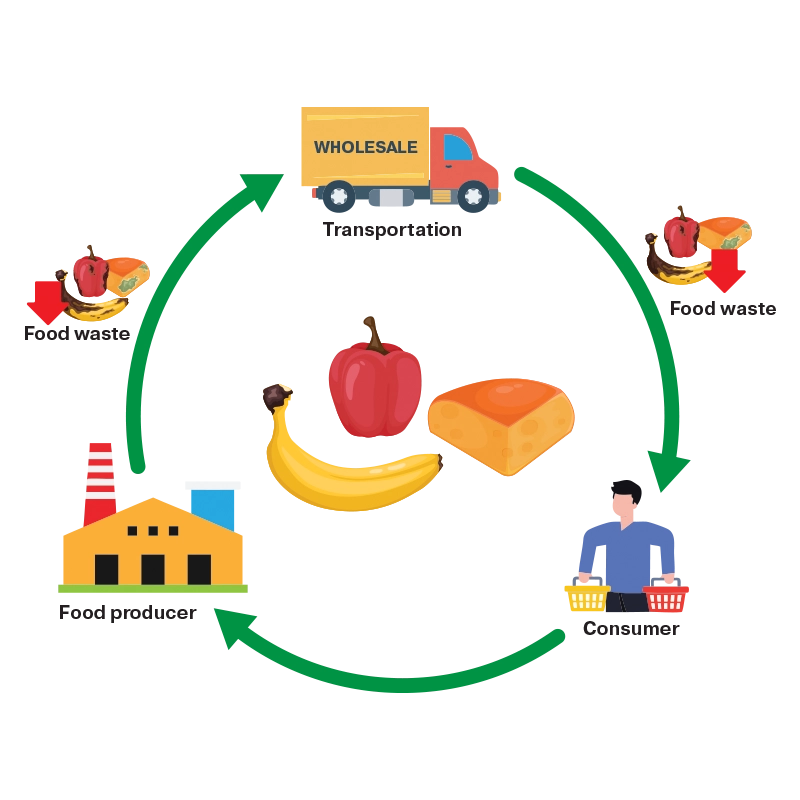

Food waste is more than a sustainability problem – it signifies lost revenue at every stage of the food value chain. Around the world, this amounts to $400 billion in food lost each year continues before it ever reaches retailers. By taking steps to reduce food waste, food wholesalers have an opportunity to reduce their costs and deliver real progress toward their sustainability goals. However, identifying the right strategy is rarely easy.
Mitigating the harmful impacts of food waste can require an investment of time and money. These investments can pay off significantly in the long-term. Food wholesalers might consider implementing strategies based on the food waste hierarchy, a framework for prioritizing solutions based on their great impact. Below, we identify four areas where food wholesalers can apply the food waste hierarchy to reduce their costs and mitigate the damaging impact of food waste on the environment.
1. Improve procurement accuracy
Reducing waste has the most profound impact on mitigating the damaging impacts of agriculture and food production, transportation, and disposal on the environment. Wholesalers can make the biggest strides in reducing food waste by boosting their accuracy in predicting demand. It’s with this goal in mind that nearly half of food industry companies reported plans to invest in artificial intelligence and supply chain tracking systems in 2025, according to the Institute of Food Technologists (IFT).

In 2024, food retailers invested more than $10 billion, about 1% of total sales, in technology, while suppliers committed to technology at a rate of 1.5%, according to FMI, the Food Industry Association. Investments are being targeted to reduce food waste and streamline upcycling and recycling processes. With more accurate data from retailers, wholesalers can better deliver in-demand items with less risk of waste.
One of the shifts wholesalers are tracking is a growing preference for frozen foods. FMI research indicates that in 2026, 40% of consumers will use frozen foods every few days or daily, up from 35% in 2019. FMI notes that 37% of consumers reported using frozen food specifically as a way to reduce food waste.
2. Reduce spoilage
Spoilage is a costly problem for distribution centers. Causes can include a range of variables, including overstock, improper storage, failure to rotate stock based on expiration dates, and transportation challenges. Identifying specific costs of spoilage can save distribution centers in the long-run.
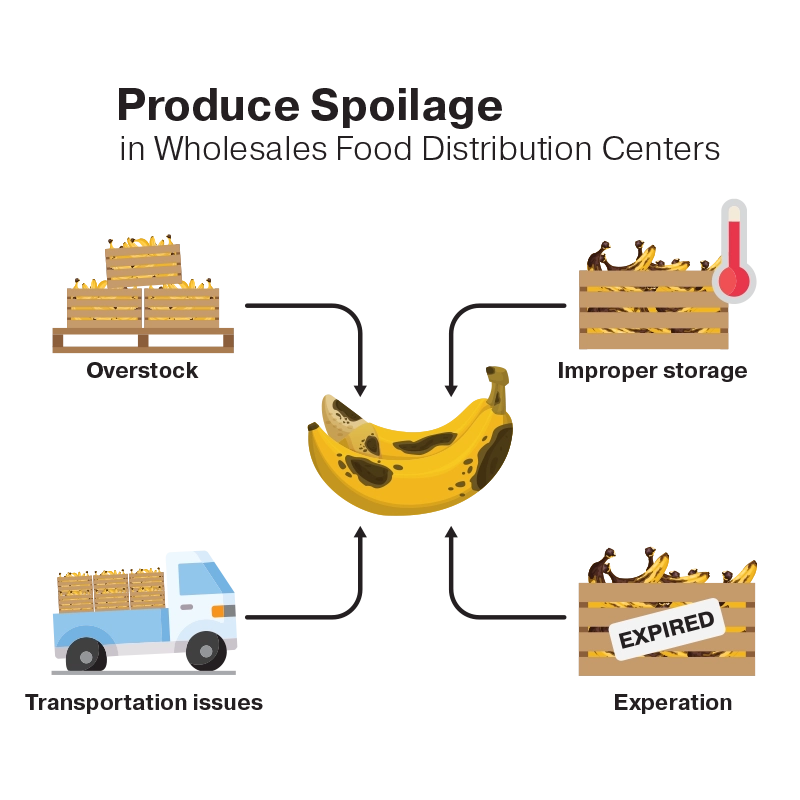
For example, a U.S. Food Waste Pact program to identify food waste hotspots in the yogurt supply chain found that distribution center and retail yogurt losses due to expired products amounted to an annual loss of approximately $94 million. Multiplying that loss across an entire product inventory can add up dramatically.
In the case of yogurt spoilage, researchers found $65 million worth of product was damaged due to the cardboard shipment packaging. The solution was a redesign of the cardboard boxes that carried multiple yogurt packs from producer to retailer. Other solutions included improvements to inventory management software, including more automation, for better date tracking and lost pallet prevention. While these solutions demand an upfront investment, they hold the potential to generate significant savings.
3. Donate leftover food
No matter how good the data is, the many variables behind food demand make it virtually impossible to fully mitigate food waste. Before disposing of food, however, food wholesalers can mitigate their environmental impact by donating food when possible.
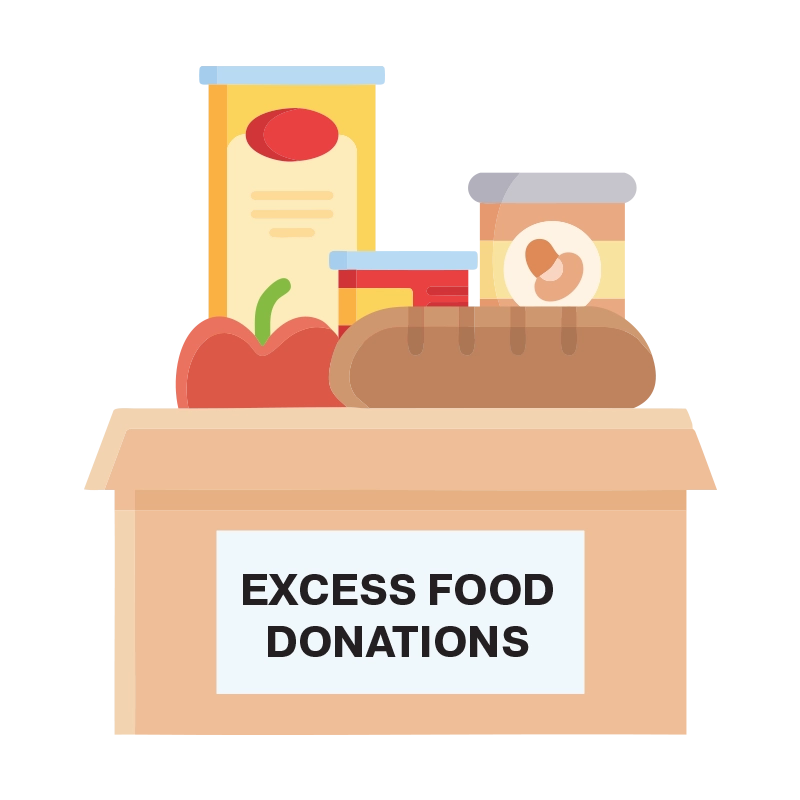
Wholesalers often donate overstock food, as well as food that has damaged packaging or is approaching its sell-by date. Corporations can give to organizations like Feeding America, a nationwide network that connects food donations to food banks, food pantries and local meal programs. With more than 48 million people facing hunger in the U.S., food donations provide a welcome solution for consumers and a powerful way to keep food waste out of landfills.
4. Sustainably dispose of food waste
One of the biggest challenges wholesalers face is meeting demand for fresh foods while mitigating risk of waste. FMI consistently sees consumer interest in healthy, nutritious foods translate to a demand for fresh foods. However, risk of spoilage remains high among perishable goods. While the strategies noted above can reduce spoilage, wholesalers must also identify strategies to responsibly dispose of food waste.
When food waste is sent to landfills, it breaks down in an oxygen-free decomposition process that releases methane gas. This damaging greenhouse gas has an outsized impact on climate change. In a growing number of localities, regulations require that food waste be composted rather than sent to landfills, as compositing presents a far more environmentally friendly alternative.
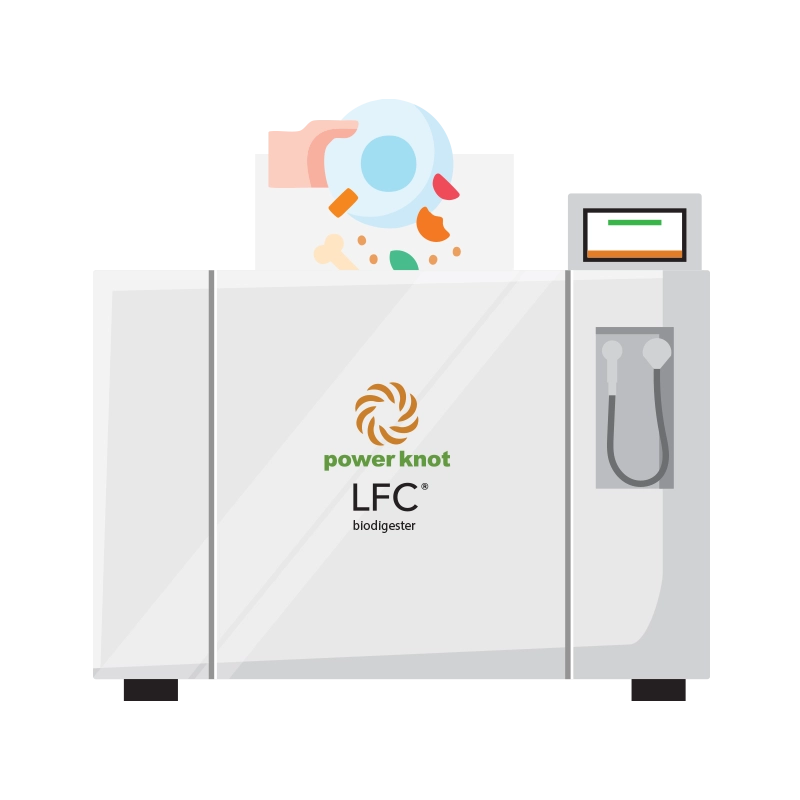
Many food wholesalers are investing in biodigesters as a more useful, and sustainable, food waste disposal solution. This equipment is installed directly in areas where food is handled, making it easy for employees to handle waste. The sealed equipment rapidly breaks food down in a process that mimics natural, oxygen-rich decomposition and releases grey water that can be disposed of down the sewer. Moreover, solutions like the LFC biodigester track the types and amount of food added, providing wholesalers with valuable data to feed their procurement strategies.
Wholesalers Hold the Power to Improve Food Value Chain
As a conduit between food producers and consumers, wholesalers have a unique opportunity to reduce food waste across the value chain. However, right-sizing food production and supply to meet varied demands will always be difficult. That’s why it’s so important for food distributors to identify opportunities to adjust supply and responsibly dispose of waste.
Power Knot can help food distributors navigate this tough balance. The LFC biodigester provides a data-driven approach to food waste management. With its powerful insight in hand, food distributors can keep building a bigger impact in their journey to reduce food waste. To get started on this journey, contact Power Knot today.