

U.S. restaurants contribute an estimated 22 to 33 billion pounds to the food waste problem every year, a problem with tremendous environmental impacts. As consumers increasingly shift their buying power to support environmentally friendly businesses, this restaurant food waste problem is also becoming a customer experience problem that restaurants are feeling at their bottom line.
This proved the case for fast food chain Chik-fil-A when a June 2021 TikTok video called out the company for dumping excess chicken nuggets at the end of the day. The amount of food we throw away and the amount of starving people there are just doesn’t sit right with me, said one commenter on the video.Â
The fact of the matter is that wasting excess food doesn’t sit well with the fast-food chain either. In 20212, Chick-fil-A launched a food donation program called Chick-fil-A Shared Table. Through the program, franchises package extra food and send it to charitable organizations like soup kitchens and non-profit organizations. But, as many restaurant owners with similar good intentions are well aware, food donation isn’t easy and it isn’t possible in every location.
As The U.S. EPA Excess Food Opportunities Map demonstrates, those regions producing the most excess food don’t always have programs in place to distribute this surplus to communities in need. And as USDA points out, donating perishable prepared foods requires special handling such as refrigerated trucks and prompt distribution. There are also regulations governing the safe donation of these foods.
Therein lies the trap into which many restaurants fall. Relying solely on strategies such as food donation to dispose of restaurant food waste at the end of the day is a reactive approach to this problem. To more effectively reduce food waste, restaurants should consider a multi-pronged approach to managing their food waste.
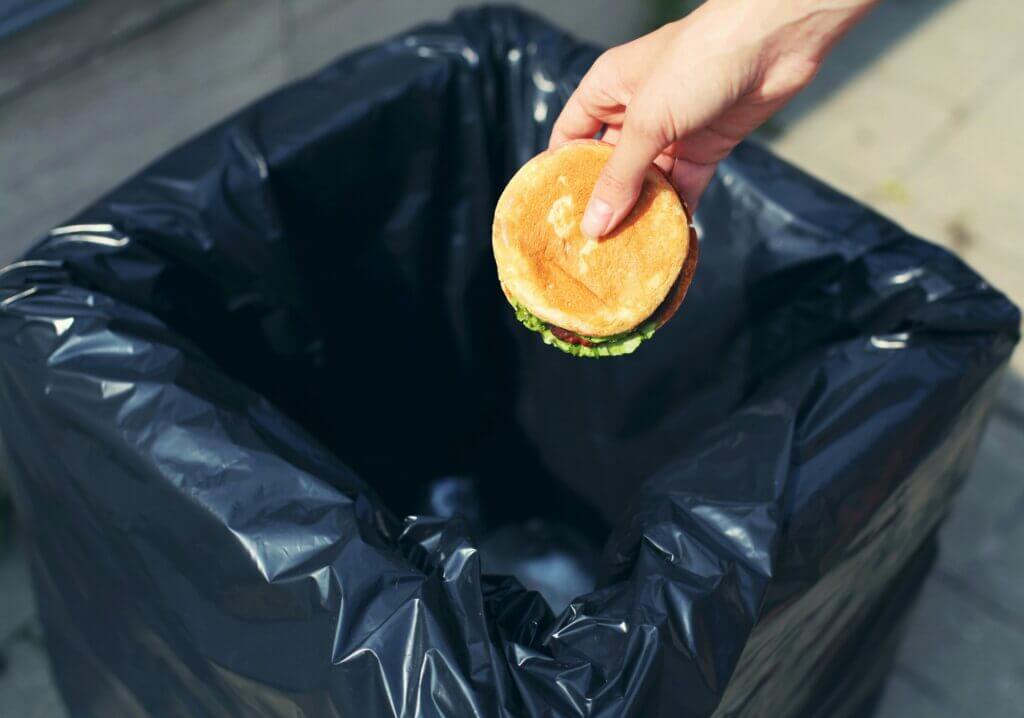
How much food do restaurants waste?
The first critical step for better managing excess food is to understand exactly how much food is being wasted. Reducing the amount of food purchased is the most effective strategy for minimizing restaurant food waste, but also the most difficult. By understanding the level of waste, and identifying patterns, it becomes more manageable to appropriately reduce inventory.
The EPA provides toolkits to food services businesses to begin the process of assessing their waste. It breaks out waste tracking by food type as well as the stage at which it was disposed: during preparation, after improper cooking, as the result of expiration before use, or sent back by the customer.
Other restaurants are applying onsite tools to gather data about the amount of food wasted. For example, some onsite aerobic biodigesters provide data on how much food waste is consumed by the biodigester on an hourly basis. This can include a breakdown of the type of waste being digested. This data analytics can help restaurants identify where they can make adjustments to what they serve, better gauge inventory levels, and more easily predict seasonal demand.
Safely handling restaurant food waste
Safe handling of food is of paramount importance for restaurants, and this includes when considering donations. Some food donation organizations are unable to accept cooked food or excess food that has been previously served to the public.
On the other hand, uncooked foods can carry their own challenges. Chicken, for example, is particularly prone to bacteria such as Campylobacter, Salmonella, and Clostridium. This makes it difficult for corporations to safely dispose of chicken without risks to staff and customers. The Centers for Disease Control & Prevention estimate that about a million people get sick from eating contaminated poultry every year.
In the event that local infrastructure isn’t in place to support safe food donation, restaurants should have other waste removal strategies in place to keep food out of landfills. When excess food is discarded in a landfill it degrades through an anaerobic (lacking oxygen) process that produces methane gas. Methane is 87 times worse for the atmosphere than carbon dioxide, making it a significant contributor to damaging greenhouse gas emissions.
By installing an onsite aerobic biodigester, restaurants are able to safely and responsibly dispose of restaurant food waste in the kitchen. Biodigesters use microorganisms to aerobically digest food waste. Because the process uses oxygen to decompose food, there is no emission of damaging methane gases and none of the smells associated with rotting food. The result is grey water, an environmentally friendly by-product that can be sent safely down the drain. Having this equipment installed in the kitchen means there is no need for additional infrastructure or manual handling.
Ensure solutions are sustainable
The key to successfully reducing restaurant food waste is ensuring that each step of this multi-pronged approach is sustainable over time and at each location. This can be challenging, particularly for restaurant chains.
The Natural Resources Defense Council (NRDC) notes that one of the challenges that chain restaurants face is that they rarely afford the flexibility to individual franchises to permit changes based on local demand. Creative inventory use is not always possible as chains often have strict guidelines about how long items can sit after preparation before they must be discarded. While these guidelines are important safety measures, it’s also important to recognize that not every chain location may have access to the same infrastructure for the disposal of food waste, whether it be for food donation or off-site composting.
Chik-fil-A does make an effort to work with local restaurants. In addition to its food donation program, the chain has supported a number of franchise operators in piloting back-of-house composting programs. Of course, the feasibility of these types of programs will vary based on franchise location. Implementing easy-to-use aerobic biodigesters to divert excess food from landfills is a sustainable solution that allows for consistency across locations.
If you’re ready to take the next step to reducing your restaurant’s food waste, Power Knot can help. Our LFC biodigesters are used to save money at a variety of facilities that have waste food. You might not be able to stop people from throwing away food, but you can stop it from going to the landfill. Contact Power Knot today.