

The construction industry generates millions of tons of waste every year. While much of the focus is placed on concrete, steel, and drywall recycling, construction sites also produce significant amounts of organic and bulky materials that require size reduction before disposal or recycling.
Wood pallets, timber offcuts, tree roots, vegetation, cardboard, packaging materials, and other bulky waste can quickly accumulate on construction sites, taking up valuable space and increasing hauling costs.
Industrial shredders help construction companies reduce the size of these materials, making them easier to transport, recycle, or repurpose.
Common Organic Waste Generated on Construction Sites
Construction waste is more than broken concrete and scrap metal. Many projects also generate materials such as:
Construction waste is more than broken concrete and scrap metal. Many projects also generate materials such as:
- Wood scraps: lumber, trim, 2×4, plywood, pallets, timber offcuts, wood crates
- Plant debris: tree branches, tree roots, brush, vegetation
- Packaging: large-scale cardboard,
- Fiberboard and natural fiber materials
Many of these materials can be recycled or composted rather than being sent directly to landfill.
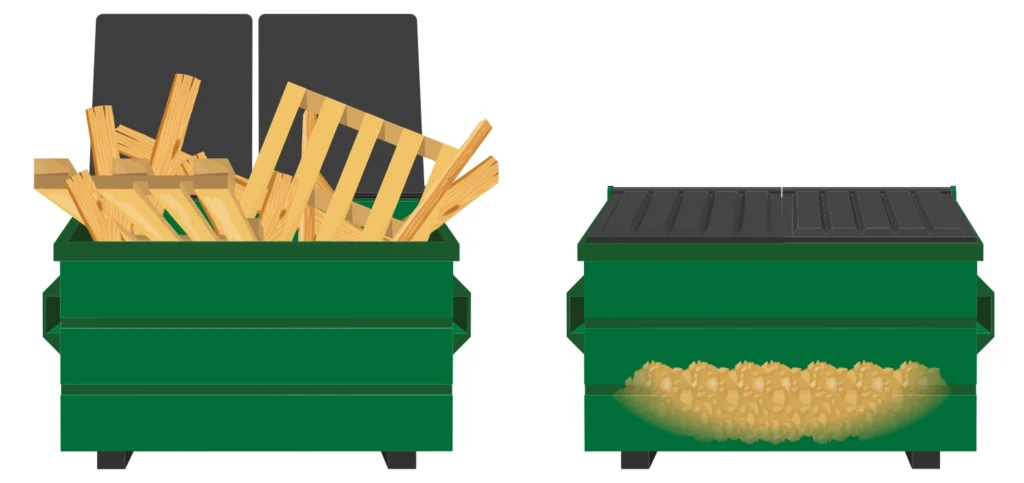
Why Size Reduction Matters
Bulky waste is expensive to manage. To calculate debris removal costs, most hauling companies use multiple models which often utilize a mix of pricing based on: volume, weight, and labor & time.
Large pieces of wood and vegetation consume valuable dumpster space, require more frequent waste pickups, and increase transportation costs.
Shredding these materials into smaller, uniform pieces offers several advantages:
- Reduces waste volume
- Lowers hauling costs
- Improves material handling
- Simplifies transportation
- Creates feedstock for downstream recycling
- Maximizes dumpster capacity
For contractors managing multiple projects, these savings can add up quickly.
Supporting Construction Waste Recycling
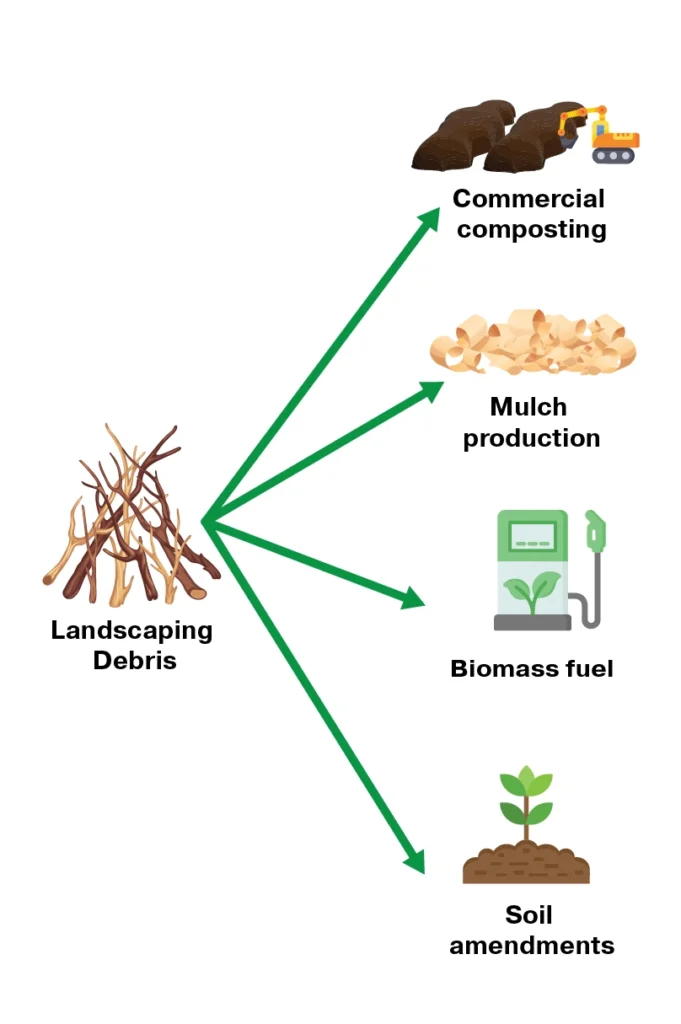
Many organic construction materials can be given a second life after shredding.
Examples include:
Landscaping Debris
Branches, roots, and vegetation can be processed for:
- Commercial composting
- Mulch production
- Biomass fuel
- Soil amendments
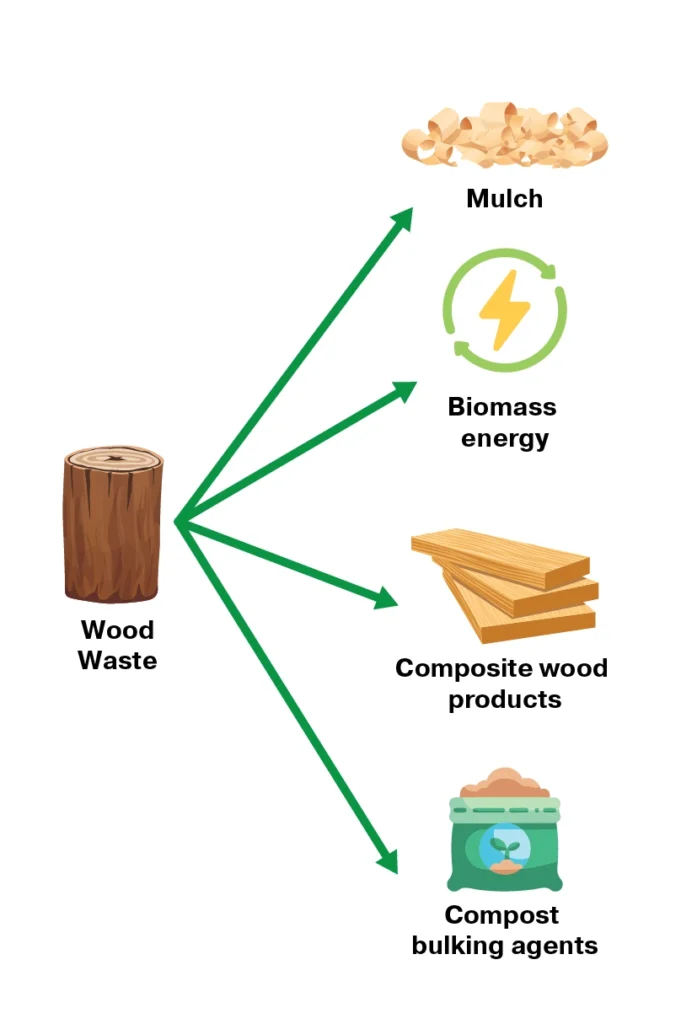
Wood Waste
Untreated wood can be processed into material used for:
- Mulch
- Biomass energy
- Composite wood products
- Compost bulking agents
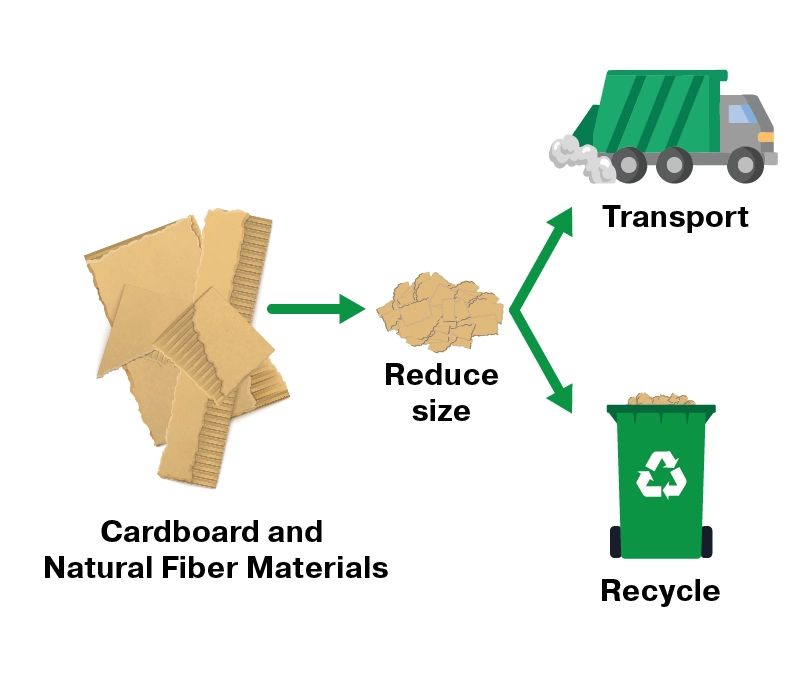
Cardboard and Natural Fiber Materials
After size reduction, these materials become easier to transport and recycle.
Rather than paying landfill fees, contractors may be able to divert valuable materials into existing recycling streams.
Many biomass facilities require material to be reduced to a consistent particle size before processing.
Shredding wood waste, vegetation, and other organic materials creates a more uniform feedstock that is easier to convey, store, and process.
Proper preparation also improves handling throughout the biomass production process.
Choosing the Right Industrial Shredder
Construction sites require equipment capable of handling bulky, irregular materials under demanding conditions.
Important features include:
- Low-speed, high-torque operation
- Heavy-duty cutting knives
- Continuous-duty operation
- Ability to process fibrous materials
- Easy maintenance
- Reliable operation
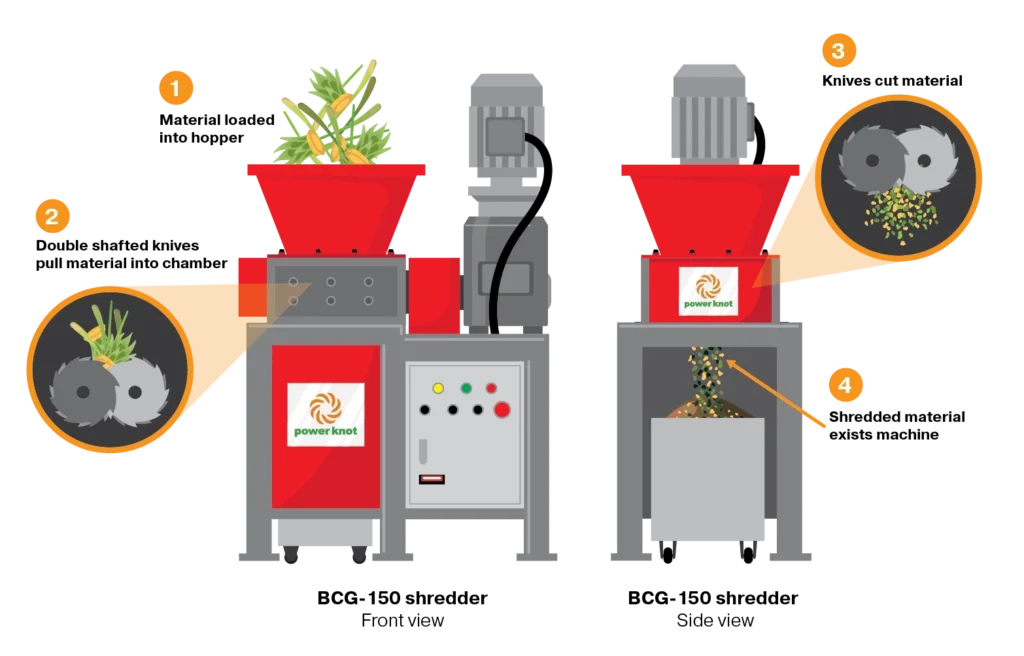
The Power Knot BCG-315 shredder is engineered to process dense organic materials including fibrous plant material and agricultural waste, making it suitable for preparing many organic waste streams before recycling or other downstream processing. Its double-shaft cutting design, low-speed high-torque motor, and heat-treated knives are designed for continuous heavy-duty operation.
Reduce Waste, Recover More Value
As the construction industry continues to prioritize sustainability, reducing the amount of waste sent to landfill has become an important objective. Proper size reduction allows contractors to recycle more materials, reduce hauling costs, and improve job site efficiency.
Whether preparing landscaping debris for composting, wood waste for biomass energy, or bulky organic materials for recycling, industrial shredders help transform difficult-to-handle waste into valuable resources.
Contact Power Knot to learn how the BCG-315 shredder can help support construction waste recycling and organic material processing.