

Food waste can be managed in many different ways, and batch thermal dehydration is one option available to commercial kitchens, institutions, and food processors. Rather than biologically breaking down waste, these systems use heat and airflow to remove moisture from organic material, significantly reducing its weight and volume.
Like every food waste technology, batch thermal dehydration has advantages and limitations. Understanding how it works can help determine whether it is the right solution for your operation.
What is batch thermal dehydration?
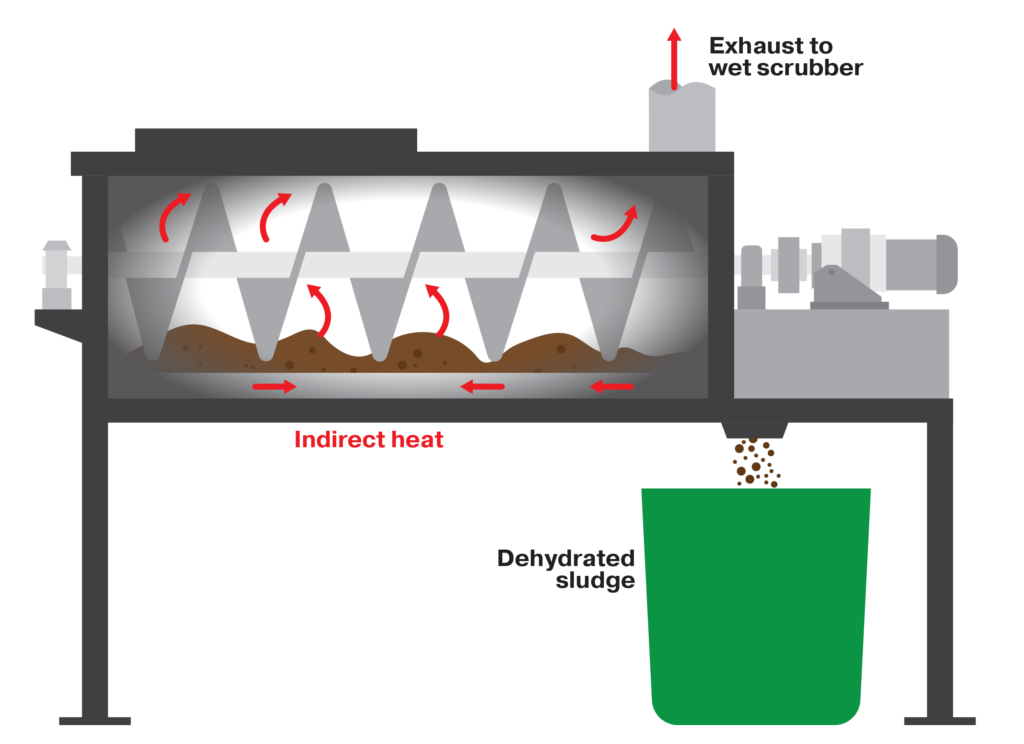
Batch thermal dehydration uses controlled heat, airflow, and mechanical mixing to evaporate moisture from food waste. During the process, the waste is heated to temperatures recognized by the USDA for pathogen reduction while moisture is vented away as steam.
The remaining material is a dry, biosecure byproduct that is lighter, easier to handle, and significantly reduced in volume.
Unlike biological treatment systems, thermal dehydrators do not break down organic matter—they simply remove water.
Is the output compost?
No.
Batch thermal dehydration does not compost food waste. Composting relies on microorganisms that biologically decompose organic material over time.
Instead, thermal dehydration produces a dry, sterilized byproduct. Depending on local regulations and the materials processed, this byproduct may be suitable for disposal, further processing, or agricultural applications.
How does batch thermal dehydration work?
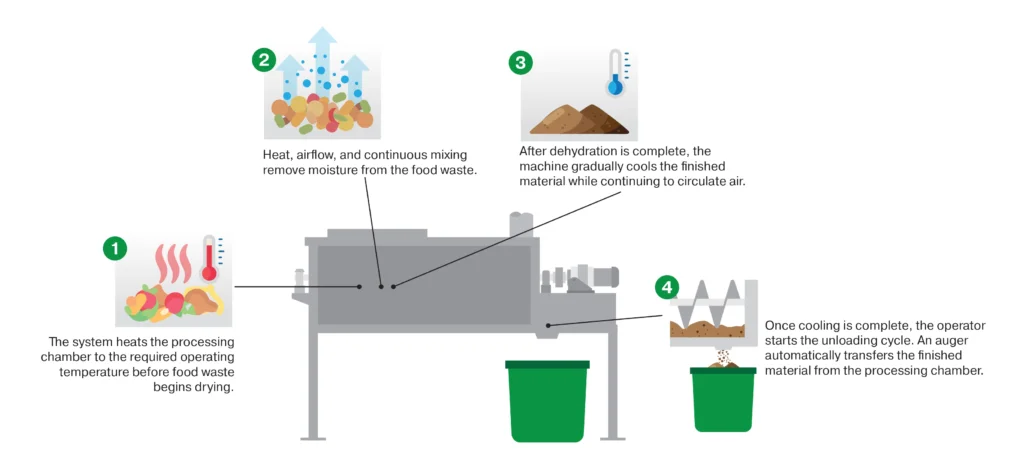
Most commercial batch thermal dehydrators operate through four stages.
Stage 1: Preheat
The system heats the processing chamber to the required operating temperature before food waste begins drying.
Why it matters
Preheating creates a consistent operating temperature that promotes even moisture removal throughout the batch.
Components in operation
- Electric heaters
- Mixer motor
Extra steps
Some of these dehydrators may inject microorganisms into the chamber at this stage. These may digest a small portion of the waste, but insufficient to make a difference to the finished dried waste. However, this addition provides the manufacturers of such machines the opportunity of claiming a compost process.
Stage 2: Dehydration
Heat, airflow, and continuous mixing remove moisture from the food waste. Water leaves the chamber as steam while the product is continually agitated to improve drying efficiency.
Many systems continue this process until the waste has lost approximately 85% or more of its original weight while maintaining temperatures required for pathogen reduction.
Why it matters
This is the primary drying stage, where both moisture reduction and sterilization occur.
Components in operation
Auger (at programmed intervals)
Heaters
Air blower
Mixer
Stage 3: Cooldown
After dehydration is complete, the machine gradually cools the finished material while continuing to circulate air.
Why it matters
Cooling allows the byproduct to remain safely inside the chamber until it is unloaded and handled by operators.
Components in operation
- Blower
- Mixer motor
Stage 4: Unloading
Once cooling is complete, the operator starts the unloading cycle. An auger automatically transfers the finished material from the processing chamber. Some systems also offer automatic unloading.
Why it matters
The remaining material is dry, biosecure, and much easier to transport, store, or dispose of than untreated food waste.
Components in operation
- Auger
- Mixer motor
How much space does it require?
Batch thermal dehydrators are generally designed as standalone commercial equipment. Depending on capacity, they typically require dedicated floor space, electrical service, ventilation, and sufficient clearance for loading and unloading.
Larger models intended for institutional or industrial applications occupy considerably more space than compact food waste treatment technologies.
How much does it cost to operate?
Thermal dehydration relies on electrical heating, continuous mixing, and forced airflow throughout each processing cycle. Because removing water through heat requires a significant amount of energy, operating costs are significantly higher than technologies that rely primarily on biological processes.
Energy consumption depends on factors such as:
- Daily processing volume
- Moisture content of the food waste
- Batch duration
- Equipment efficiency
Operations should consider both electricity costs and labor associated with loading, unloading, and transporting the dried byproduct.
Who should use batch thermal dehydration?
Batch thermal dehydration can be a good fit for operations that:
- Generate large quantities of food waste each day
- Have sufficient floor space for industrial equipment
- Prefer overnight batch processing
- Require pathogen reduction before transporting waste
- Want to reduce hauling weight and volume before disposal
The technology is commonly used in large commercial kitchens, military facilities, correctional institutions, universities, food processing facilities, and some hospitality operations.
| Benefits | Drawbacks |
|---|---|
| Significantly reduces the weight and volume of food waste. | Consumes a significant amount of electrical energy. |
| Produces a dry, biosecure byproduct. | Uses batch processing, so food waste may need to wait until the next cycle. |
| Can process diseased carcasses, such as chickens contaminated with salmonella. | Can produce unpleasant odors that must be treated with a carbon filter or vented outdoors, away from windows. |
| Achieves pathogen reduction through high temperatures. | Does not biologically digest or compost food waste. |
| Operates automatically once a batch begins. | Requires dedicated floor space and adequate ventilation. |
| Suitable for processing large daily volumes of food waste. | The dried byproduct still requires disposal or further processing. |
Is batch thermal dehydration the right choice?
Batch thermal dehydration is an effective way to reduce the weight and volume of food waste while producing a dry, biosecure byproduct. However, it remains a batch process that consumes considerable energy and still leaves material that must be managed after treatment.
The best food waste solution depends on an organization’s goals. Operations focused on reducing hauling weight may benefit from thermal dehydration, while facilities seeking continuous treatment or biological digestion may find other technologies better suited to their needs.
Alternative Food Waste Solutions
Batch thermal dehydration is only one of several technologies available for managing commercial food waste. The right solution depends on an organization’s priorities, including available space, utility costs, labor requirements, sustainability goals, and how they intend to handle the remaining waste.
For facilities looking to eliminate food waste on-site rather than simply reduce its weight, the Power Knot LFC biodigester offers a different approach. Instead of using high temperatures to remove moisture, the LFC biodigester uses naturally occurring microorganisms to biologically digest food waste continuously throughout the day. The process converts food waste into grey water that can safely enter the sewer system where permitted by local regulations, eliminating the need to store, transport, or dispose of a solid byproduct.
Ready to take the next step in sustainable food waste management? Contact Power Knot today to learn how our innovative solutions can help your organization reduce waste, save costs, and meet your sustainability goals.