

Walk through any commercial kitchen and you will find plastic bin liners in almost every waste bin. The liner is treated as a necessity. Most operations never question it.
They should. A kitchen running two shifts across ten waste bins can go through hundreds of liners every week. Beyond the volume, the liner creates a problem that extends well past the kitchen itself: it contaminates the organic waste stream, interfering with waste processing solutions such as composting and biodigestion and undermining every downstream effort to divert food waste from landfill.
The SBT® bin tipper from Power Knot makes liner-free operation practical. Here is why eliminating liners matters and how a bin tipper closes the gap between intention and execution.
The Scale of the Problem
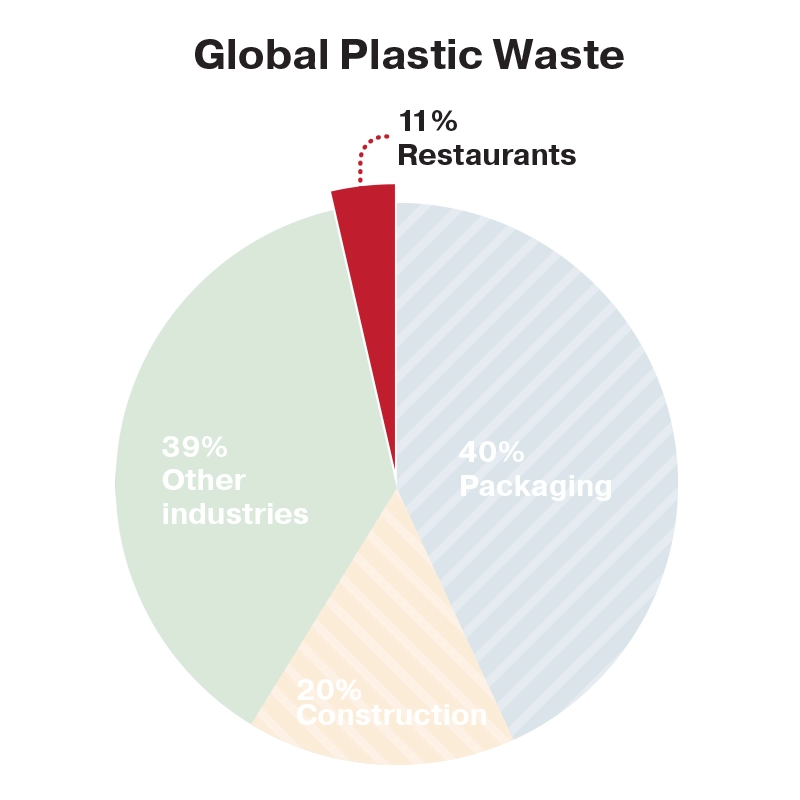
The US restaurant industry generates an estimated 11 million tons of plastic waste each year, according to the EPA. Bin liners are not tracked separately in most waste audits, but they are a consistent fraction of that total. A typical commercial kitchen emptying bins across a full operating day goes through ten to twenty liners per station. Multiply that across prep stations, pass-throughs, and post-service cleanup, and the volume climbs quickly.
The cost is also underappreciated. A facility buying two to three cases of liners per week is spending several hundred dollars annually on a product that adds no operational value and generates a waste stream of its own.
The liner is not just a cost. It is a contamination source that follows organic waste all the way to the disposal facility, undermining the diversion programs that many operations have invested in building.
How Liners Contaminate the Organic Waste Stream
Plastic does not decompose and does not belong in any organic waste recovery pathway. The US EPA has identified plastic contamination in food waste streams as an issue actively undermining the expansion of composting and anaerobic digestion infrastructure nationwide. The primary source is food packaging and containers from commercial and institutional sources. Bin liners fall squarely into that category.
When a kitchen empties a lined organic waste bin into a composting or food waste collection container, either staff remove the liner first, which is an extra step frequently skipped under time pressure, or the liner travels with the food waste and becomes a contaminant. The Washington State Department of Ecology puts it plainly: plastic bags and films clog and break composting machinery, making it difficult for facilities to sell finished compost. In some cases, contamination levels are high enough that facilities stop accepting food waste entirely.
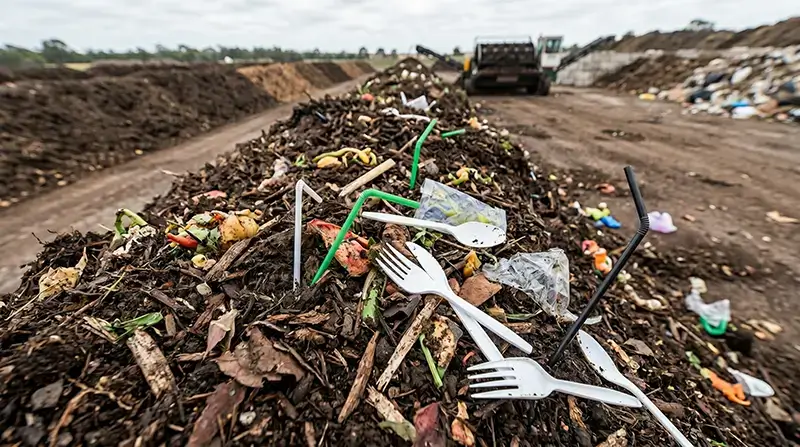
For anaerobic digestion facilities, the problem is both mechanical and operational. Plastic must be removed before organic material enters the digester. Liners that are not removed intact can wrap around mixing equipment, cause blockages, and reduce digestion efficiency. The result is higher processing costs, more rejected loads, and lower value from the recovered organic material.
Plastic contamination causes compost and anaerobic digestion facilities to reject loads, break equipment, and in some cases stop accepting food waste altogether. The organic waste that operators work to divert ends up in landfill anyway.
Why Compostable Liners Do Not Fully Solve the Problem
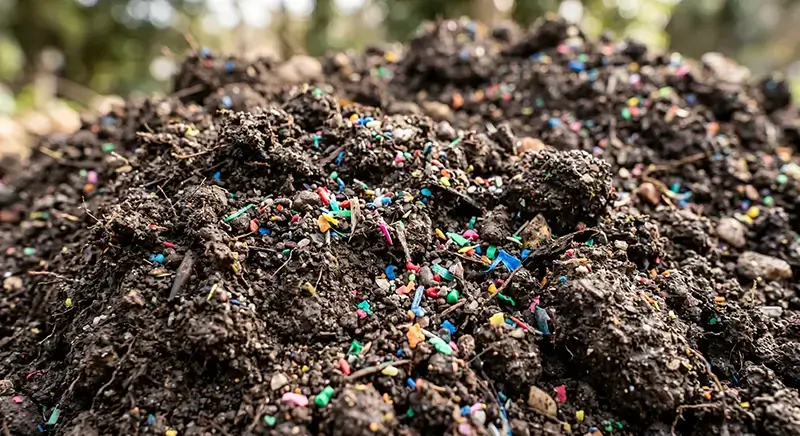
The obvious response is to switch to compostable liners. But research by StopWaste, an Alameda County waste reduction authority, shows that compostable plastics often do not break down as advertised in real processing environments, and can leave behind microplastics that contaminate finished compost. Certification standards require only 90% biodegradation, meaning up to 10% of the material may remain as plastic fragments, too small to screen out, entering soil used in food production.
Municipalities are drawing the same conclusion. Ann Arbor stopped accepting compostable plastics in 2024. San Diego does not accept compostable or biodegradable bags because they do not consistently break down. The better answer is not a less harmful liner. It is no liner at all.
Why Kitchens Use Liners in the First Place
The liner exists because it solves a real problem. Without one, emptying a bin of wet food waste is physically difficult and hygienically unpleasant. The liner makes bins easier to empty, protects them from residue buildup, and reduces cleaning frequency. Any approach to liner elimination has to address these directly.
A bin tipper addresses all three. The machine lifts and inverts the bin mechanically, tipping contents directly into a dumpster, compactor, or biodigester without staff handling the waste. The bin returns upright and clean enough to return to service immediately, without a liner. The tipping cycle completes in under 20 seconds and requires the removal of no liner.
The SBT bin tipper is constructed from food-grade stainless steel and can be hosed down as part of the normal kitchen cleaning routine. It is fully battery-powered and cordless, allowing it to be positioned wherever waste is generated rather than at a fixed disposal point.
The Connection to On-Site Biodigestion
The argument for liner elimination is strongest when organic waste is destined for an on-site biodigester. The LFC® biodigester from Power Knot converts food waste to water within 24 hours and is designed to accept organic waste directly, without bags or liners.
If a liner enters the LFC biodigester, it does not digest. The machine captures non-organic material, but that captured plastic still has to be removed and disposed of separately. The liner has defeated its own purpose: it contaminated the biodigester and created a separate plastic disposal task. Operating without liners is not just environmentally preferable. Food waste that has not been sitting in a plastic bag is cleaner and easier for the machine to process.
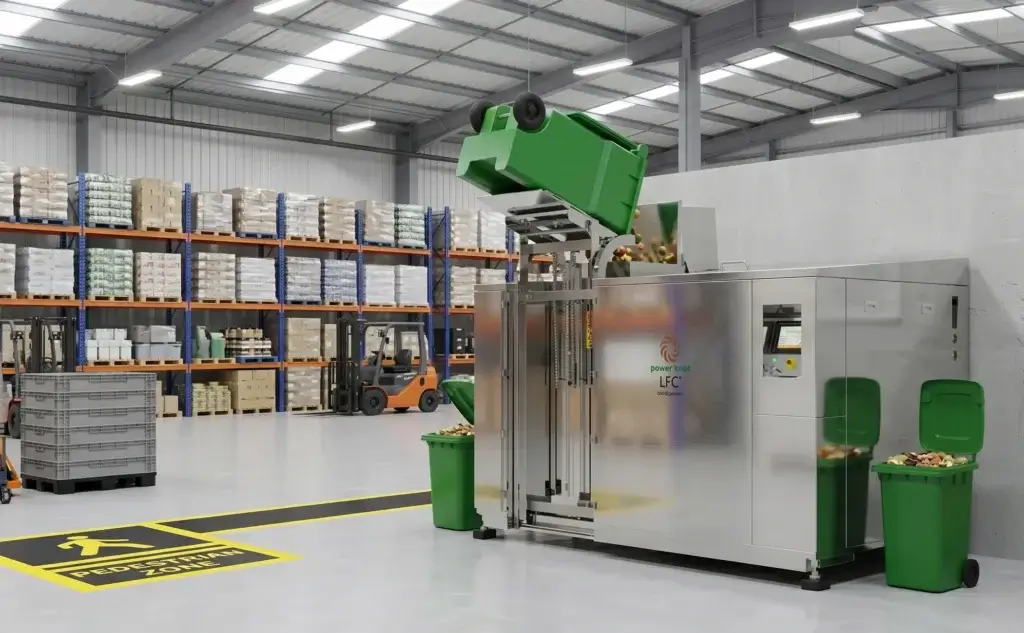
An SBT bin tipper paired with an LFC biodigester creates a fully liner-free organic waste workflow: food waste moves directly from the bin to the biodigester without bags, without carry trips, and without plastic entering the organic stream.
The LFC Cloud records the weight of food waste digested by the hour, day, and month, providing verified figures for sustainability reporting, regulatory compliance, and ESG disclosures.
Making the Transition
The shift to liner-free operation requires a change in practice as much as equipment. Staff need a new routine: bring the bin to the tipper, complete the tipping cycle, return the bin to service. Most kitchens also find that a short period of more frequent bin rinsing is needed while the habit is established. In practice, this settles within a few weeks.
The material savings are immediate. From day one of liner-free operation, the kitchen stopped generating a category of single-use plastic waste that had no pathway to recycling or recovery and was actively contaminating the organic waste it was meant to contain.
If your kitchen is ready to eliminate single-use liners from your organic waste operation and want to understand how the SBT bin tipper and LFC biodigester work together, contact Power Knot today. Power Knot can help you assess your current waste handling setup and identify the right combination of equipment for liner-free operation.