

The JW Marriott Marquis Miami is a 313 room property in downtown Miami that serves business travelers, leisure guests, and large scale events. Its location in the city center and its extensive food and beverage operations, including banquets, daily buffets, and several dining outlets, create significant demands on resources and waste management. As guest expectations shift toward more sustainable practices, the hotel has prioritized improving operational efficiency and reducing its environmental footprint.
Setting a New Standard for Sustainable Luxury
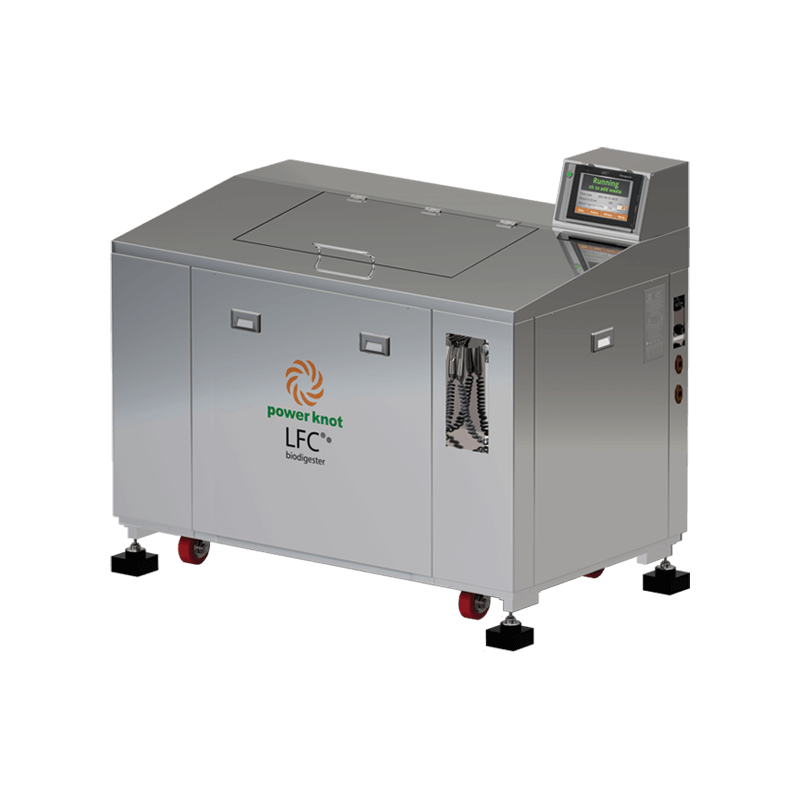
From the outset, the JW Marriott Marquis Miami recognized the environmental and operational challenges associated with large-scale food preparation and waste. In 2015, it became the first luxury hotel in Florida to adopt the Power Knot LFC biodigester. The objectives were clear: reduce labor and hauling costs, minimize the footprint of on-site waste storage and transport, and demonstrate leadership in sustainable operations.
A decade later, the hotel’s sustainability goals remain the same, yet guest expectations have evolved. Today, sustainability is a major competitive differentiator in the luxury hotel market. The Marquis’ waste-diversion program resonates strongly with environmentally conscious guests, and meeting planners increasingly request sustainability credentials when organizing large events.
At the center of this program is Power Knot’s food waste digester, which plays a pivotal role in expanding and strengthening the property’s environmental initiatives.
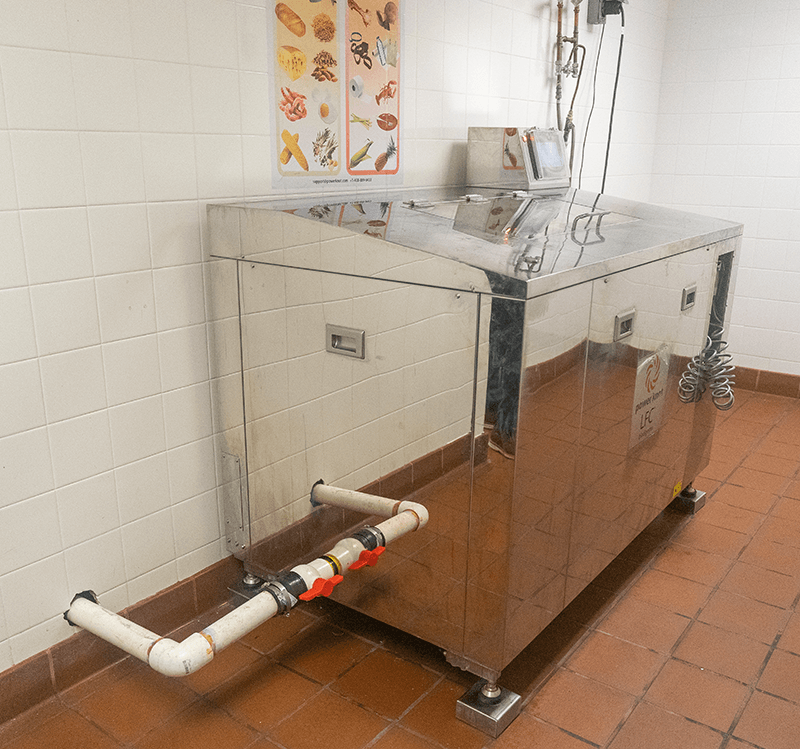
Introducing Lola: The Hotel’s On-Site Food Waste Solution
The decision to install the LFC biodigester in 2015 was championed by Urs Lütschg, Corporate Director of Engineering. “I am working to make our hotel group as sustainable as possible,” explained Lütschg, “and after reviewing the available options, I decided on the LFC from Power Knot. I thought it was a good system when I saw it a year ago, but the latest additions by Power Knot of touch screen, weighing capabilities, remote connectivity, and three year warranty were determining features to acquire this system now.”
In 2019, the original unit was replaced with an upgraded model that the hotel staff affectionately named Lola.
Installed on the hotel’s 5th floor adjacent to the main dish room, Lola transforms organic food waste into grey water through aerobic digestion. This placement eliminates the need to transport heavy garbage bags around the hotel.
“The digester helps us a lot,” said Louis Brown, Supervisor of Stewarding. “Before, we had to load heavy garbage bags and transport them from the fifth floor to the loading dock [on ground level].”
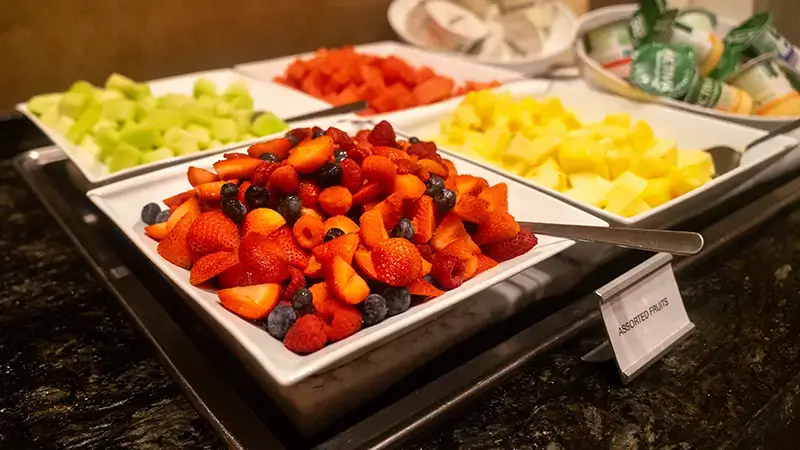
Food waste is generated across multiple operations: banquets, breakfast buffets, the employee cafeteria, and restaurants. Now, all waste remains on the 5th floor, where it’s fed into Lola and converted into grey water that is safely discharged into the sewage system.
For a large urban hotel that serves meals daily and that hosts hundreds of events, food waste is more than an operational nuisance. It’s a cost center and an environmental liability.
“Our banquet operation serves 500 to 700 people. Our commitment is not necessarily to eliminate all waste but to handle it responsibly,” said Matthew Blair, Director of Food and Beverage. “Most of the food production in the hotel is driven through our banquet culinary team. With large volume event operations, overproduction is often unavoidable, but how we manage it is entirely within our control.”
The hotel had originally installed an LFC biodigester in 2015 and maintained contact with Power Knot. Building on this long-standing relationship with Power Knot, the hotel leveraged institutional knowledge and familiarity when upgrading to the newer model.
Key benefits of the on-site system include:
- Significant reduction of waste volume and internal waste transport
- Ability to meet growing guest and client expectations for sustainability
- Strong appeal to meeting planners booking large scale events
- Lower labor costs and reduced back of house congestion
- Decreased waste hauling and disposal fees
- Improved sanitation, with fewer odor, pest, and risk concerns
Measurable Reductions in Waste and Cost
The LFC biodigester includes lifetime access to the LFC Cloud, a data analytics and real-time monitoring platform. Using this system, the hotel tracks daily, weekly, and monthly waste patterns and the results have been substantial.
“We’re saving about 25–30% on our waste bill,” said Carlos Gomez, Director of Engineering. “Approximately $4,000 per month.”
These cost savings meant that the LFC biodigester paid for itself the minute it was installed. In addition to cost savings, the hotel diverts thousands of pounds of food waste from landfills each month, dramatically reducing its environmental footprint.
“From my desk, I can see how much waste we are adding to the LFC biodigester by the hour, day, week, and month,” said Lütschg. “We cannot control what we cannot measure and we all need to play a part to reduce global warming.”
A Comprehensive Sustainability Program
The LFC-200 biodigester, Lola, anchors a broader ecosystem of sustainability initiatives at JW Marriott Marquis Miami. Additional programs include:
Eco-Friendly Materials
- Compostable to-go containers and utensils made from agave, bamboo, and sugarcane
Urban Agriculture & Biodiversity
- JW Garden on the 19th floor providing herbs, greens, and edible flowers
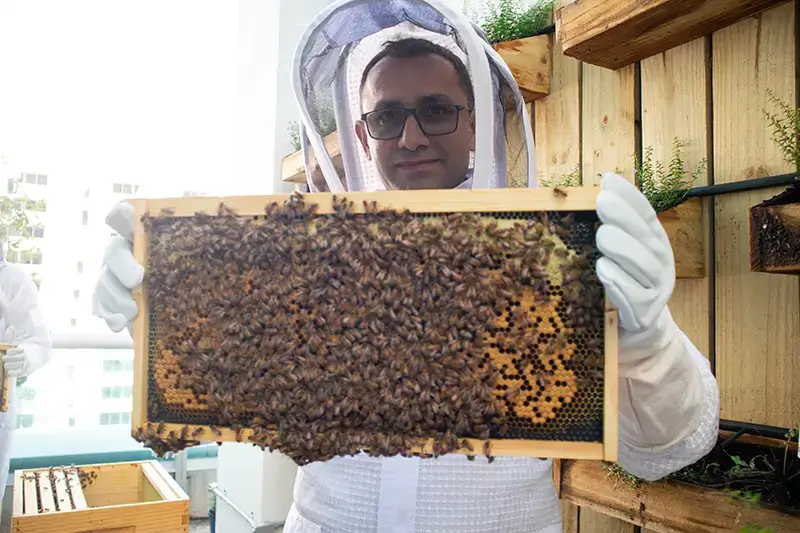
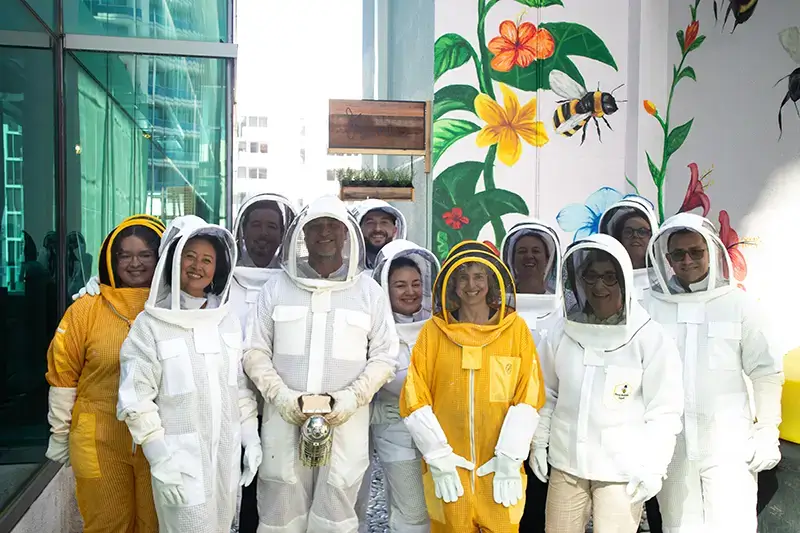
- Beehives supporting pollination for the garden and supplying house made honey
Water Conservation
- Rainwater harvesting tank used as the primary irrigation source for the JW Garden
Recycling & Circularity
- Baling and recycling cardboard
- Recycling batteries and fluorescent lamps
- “Clean the World” partnership to collect used soap, plastics, and bottles from guest rooms
Energy-Efficiency Measures
- Motion sensors in back-of-house and mechanical rooms
- Conversion to LED lighting (goal: 80% by end of 2026)
- HVAC control upgrades to reduce electricity and water loads
- Advanced control systems to reduce energy planned by end of 2027
- Automated AC control in meeting rooms by end of 2026
With these robust initiatives, the hotel has earned four Green Key Certifications with recognition well aligned with its sustainability leadership.
A Model for Sustainable Urban Hospitality
For JW Marriott Marquis Miami, sustainability is not a trend. It’s a long-term commitment to operating responsibly in the heart of one of America’s most dynamic cities. From on site food waste digestion to rooftop gardens, beehives, and energy efficient technologies, the property showcases what sustainable luxury can look like in one of America’s most energetic urban settings.
By embracing cutting edge solutions and maintaining a consistent commitment to environmental stewardship, the JW Marriott Marquis Miami is setting a new standard for the future of sustainable hospitality.