

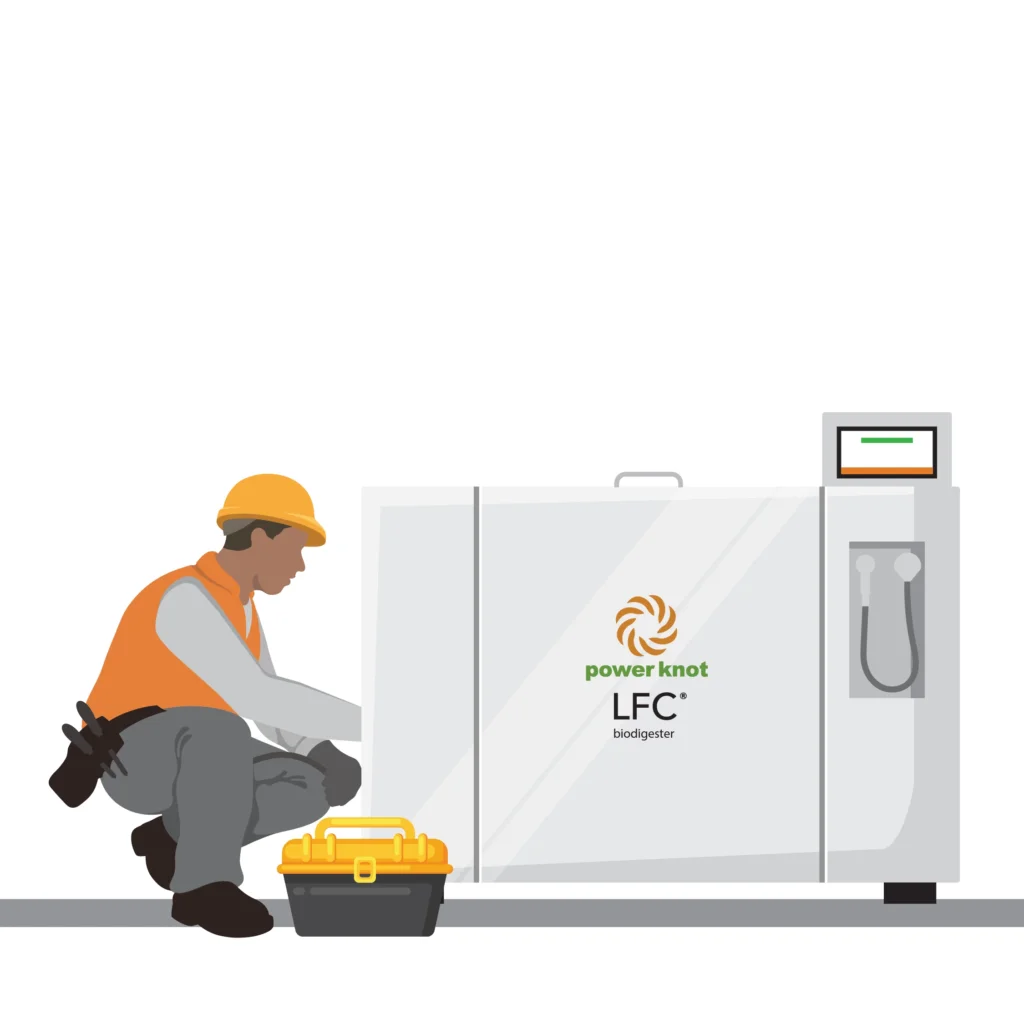
A commercial food waste digester is designed to operate every day in demanding environments such as hotels, commercial kitchens, hospitals, and food processing facilities. Like any mechanical equipment, however, regular maintenance is necessary to keep it operating reliably.
For facility managers, the key is understanding what maintenance is required, how often it should be performed, and who should perform it.
The LFC biodigester is designed to provide approximately 15 to 25 years of service when properly operated and maintained.
1. Follow a Preventive Maintenance Schedule
Maintenance should not begin when something breaks.
Preventive maintenance helps identify wear before it causes downtime, while extending equipment life and controlling repair costs.
For the LFC biodigester, scheduled periodic maintenance is generally performed every six to 12 months and typically requires two to four hours on site.
2. Keep the Digester Clean
Routine cleaning should be part of normal operation.
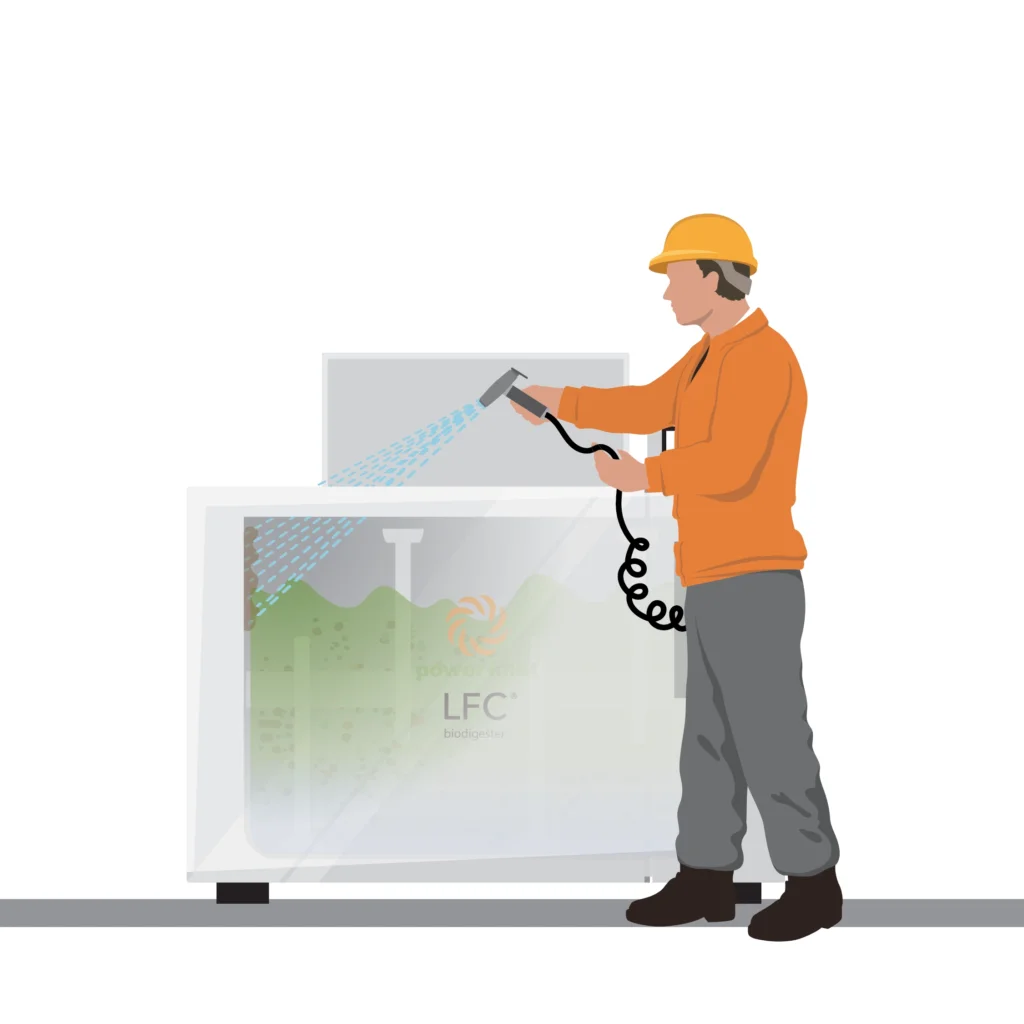
The LFC biodigester maintenance schedule recommends cleaning exterior surfaces daily and the interior weekly. Both tasks generally take about 10 minutes.
Regular cleaning also gives operators an opportunity to identify unusual conditions before they develop into larger problems .We recommend that all operators follow this simple daily maintenance video guide for the LFC biodigester.
3. Monitor Maintenance Requirements
Modern food waste digesters can help facility managers keep track of service requirements.
LFC biodigesters contain internal service counters that monitor upcoming maintenance for items such as Powerzyme microbes, Powerchips media, mechanical service, and empty-weight calibration.
The LFC Cloud can also provide notifications when scheduled maintenance is approaching, allowing facility managers to plan service rather than react to equipment downtime.
4. Plan for Consumables
Aerobic food waste digesters may require consumables in addition to mechanical maintenance.
The LFC biodigester uses Powerzyme microbes and Powerchips media to support the digestion process. According to the User’s Manual, typical service intervals include:
| Maintenance | Typical Frequency |
| Clean exterior | Daily |
| Clean interior | Daily |
| Supplement powder Powerzyme | 2–6 months |
| Supplement liquid Powerzyme | 6–18 months |
| Periodic maintenance | 6–12 months |
| Replace Powerchips | 3–5 years |
Actual maintenance requirements can vary based on the model, configuration, and operating conditions.
5. Pay Attention to Alerts and Changes in Performance

Unusual noises, recurring alerts, or changes in operation should not be ignored.
During LFC mechanical service, technicians check components such as the gearbox, motor, chain, and bearings for abnormal noises and other signs of wear.
Operators should know which alerts they can address themselves and when to contact qualified service personnel.
6. Keep Maintenance Records

Maintenance documentation makes it easier to track recurring issues, replacement parts, consumables, and long-term operating costs.
For LFC biodigesters, maintaining service records is also important for warranty coverage. The User’s Manual requires regular maintenance to be documented and service reports to be retained in case there may be a claim under warranty.
7. Use Qualified Personnel for Technical Service

Routine cleaning can be handled by trained operators, but technical maintenance and repairs should be performed by qualified personnel.
The LFC User’s Manual specifies that installation, commissioning, technical maintenance, and service should be performed by authorized or appropriately qualified and trained personnel
8. Train Employees on Proper Operation

Good maintenance starts with proper daily operation.
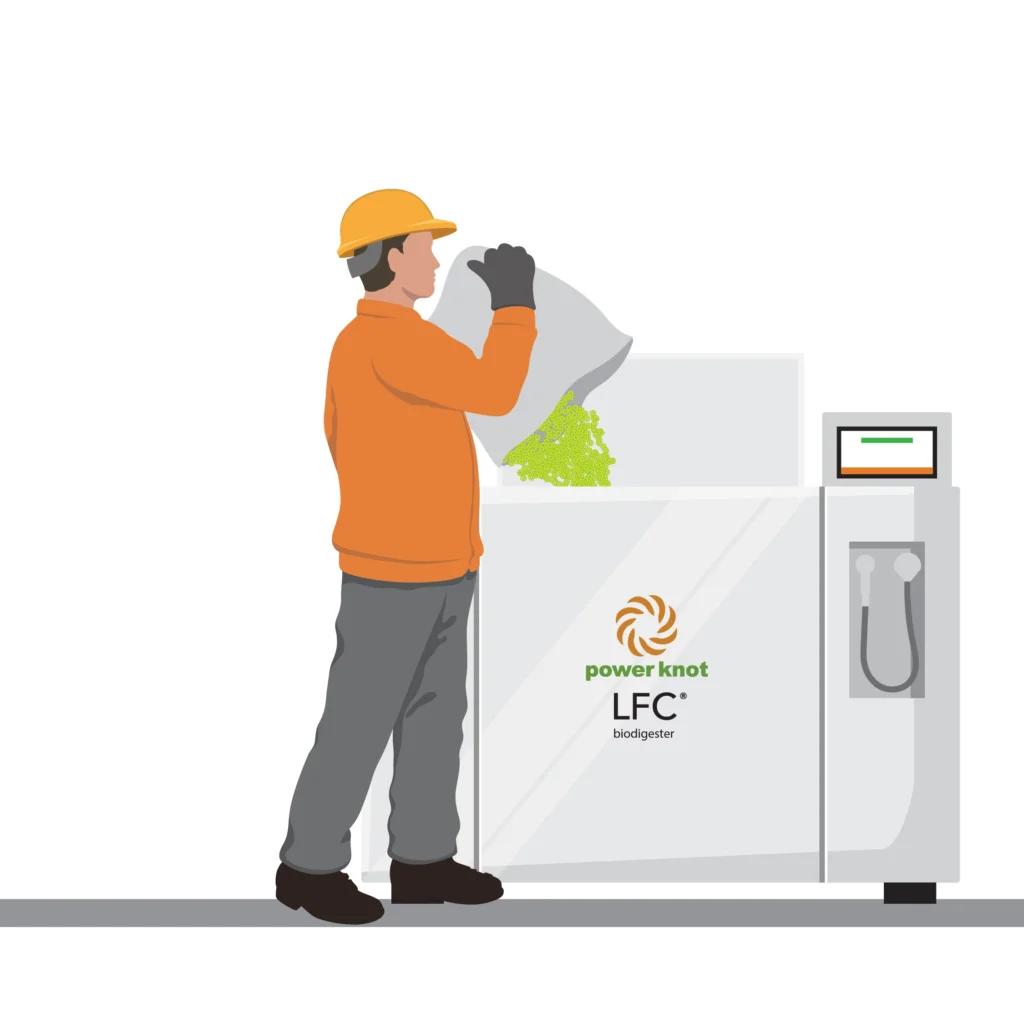
Employees should understand what can be loaded into the digester, how to load it correctly, how to clean it, and how to respond to alerts.
Preventing contaminants, improper loading, and misuse can reduce unnecessary wear and help protect the equipment over its service life.
Food Waste Digester Maintenance Checklist
✓ Clean the exterior daily
✓ Clean the interior regularly
✓ Monitor service notifications
✓ Schedule preventive maintenance
✓ Replenish consumables as required
✓ Investigate unusual noises or alerts
✓ Train employees on proper operation
✓ Use qualified personnel for technical repairs
✓ Maintain service records
✓ Keep software and connectivity curren
Plan for Long-Term Maintenance
A food waste digester is a long-term facility asset, so maintenance should be considered before purchasing the equipment.
Beyond the initial purchase price, facility managers should consider preventive maintenance, consumables, replacement parts, service labor, technical support, and expected equipment life.
With proper operation and maintenance, an LFC biodigester is designed to provide approximately 15 to 25 years of service, making preventive maintenance an important part of protecting the facility’s investment.
Considering an on-site food waste digester? Contact Power Knot to discuss your food waste volume, facility requirements, and long-term maintenance needs.