

Moving food waste is one of the most routine tasks in a commercial kitchen, yet it is often one of the least optimized. Every day, employees push heavy bins through crowded kitchens, hallways, elevators, and loading docks. When the process isn’t designed properly, it can lead to spills, injuries, sanitation issues, and unnecessary labor.
Many facilities rely on a bus box cart, bus tote cart, utility bin cart, or tote box dolly that was originally intended for transporting dishes or ingredients, not heavy, wet food waste.
Here are five of the most common mistakes organizations make when transporting food waste and how to avoid them.
1. Using the wrong cart
Not every cart is designed for food waste.
General-purpose bus box carts, utility bin carts, and tote carts are often used because they’re already available in the kitchen. However, these carts may not securely support heavy bins filled with liquid and organic waste. And if the cart is made of lightweight aluminium, it may not be designed at all to handle the total weight from these bins.
Food waste is denser than dirty dishes or empty containers. As carts move over thresholds or around corners, wheels may collapse, and bins can shift, slide, or tip, creating spills and safety hazards.
Choosing equipment designed specifically for food waste handling improves both safety and reliability.
2. Making too many trips
Many kitchens transport only one or two bins at a time. While this may seem manageable, the extra trips quickly add up.
Each trip requires an employee to stop food preparation, push a cart across the facility, empty the bins, return the cart, and resume work.
Over the course of a year, these unnecessary trips can consume hundreds of labor hours.
Transporting multiple bins in a single trip reduces labor while allowing employees to spend more time on food preparation and customer service.
3. Overloading bins
A common mistake is filling lug bins beyond their intended capacity.
Overloaded bins are more difficult to push, place greater stress on the cart, and increase the likelihood of spills during transport. They also create greater ergonomic strain when employees lift or reposition them.
Instead of overfilling individual containers, use additional bins and transport more of them at once using a cart designed for multiple lug bins.

4. Ignoring sanitation
Food waste naturally contains moisture, oils, and organic residue that can quickly build up on carts.
If carts are difficult to clean or contain areas where food residue accumulates, they can become sources of odors and contamination.
Equipment used for food waste transport should have smooth surfaces, minimal crevices, and materials that withstand frequent cleaning and sanitizing.
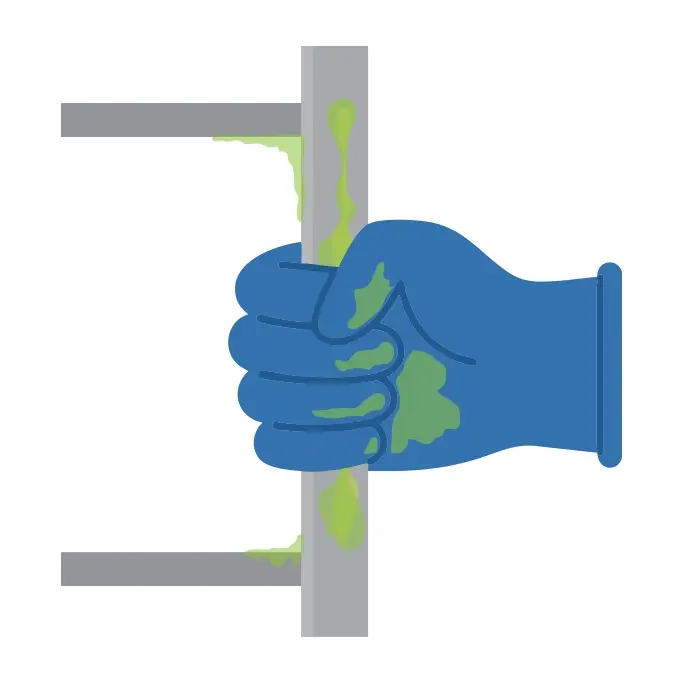
This is one reason stainless steel remains the preferred material for food service equipment.
5. Buying for price instead of performance
It’s tempting to purchase the least expensive cart available. However, equipment used every day should be evaluated based on total cost of ownership rather than purchase price.
A lower-cost aluminum bus tote cart or tote box dolly may work well for light-duty applications, but heavy commercial use can lead to broken wheels, bent frames, damaged runners, and more frequent replacement.
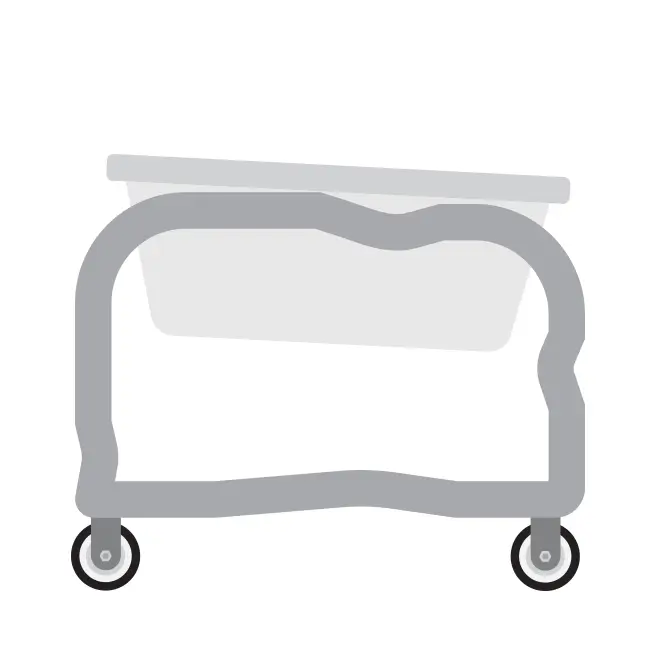
Investing in durable equipment reduces maintenance, minimizes downtime, and provides better value over its service life.
The Power Knot SBH lug cart
The Power Knot SBH lug carts are designed specifically for transporting food waste in demanding commercial environments.
Available in two models, the SBH-90 lug cart holds three lug bins, while the SBH-180 lug cart accommodates six. Both feature 100% stainless steel construction, double-lipped bin runners, rear stop mechanisms, heavy-duty lockable casters, and two-sided loading for efficient operation.
Unlike many general-purpose bus box carts, utility bin carts, or tote carts, the SBH lug carts are engineered to safely transport heavy food waste while remaining easy to clean and built for years of daily service. Contact Power Knot today to see which lug cart best fits your business needs.