

Food waste technologies continue to evolve as businesses look for ways to reduce disposal costs and improve sustainability. One option is Rapid Thermal Processing (RTP), a technology that rapidly dries food waste while reducing pathogens and producing a dry residual material.
Like any food waste treatment method, Rapid Thermal Processing has both advantages and limitations. Understanding how it works can help determine whether it is the right solution for your operation.
What is Rapid Thermal Processing?
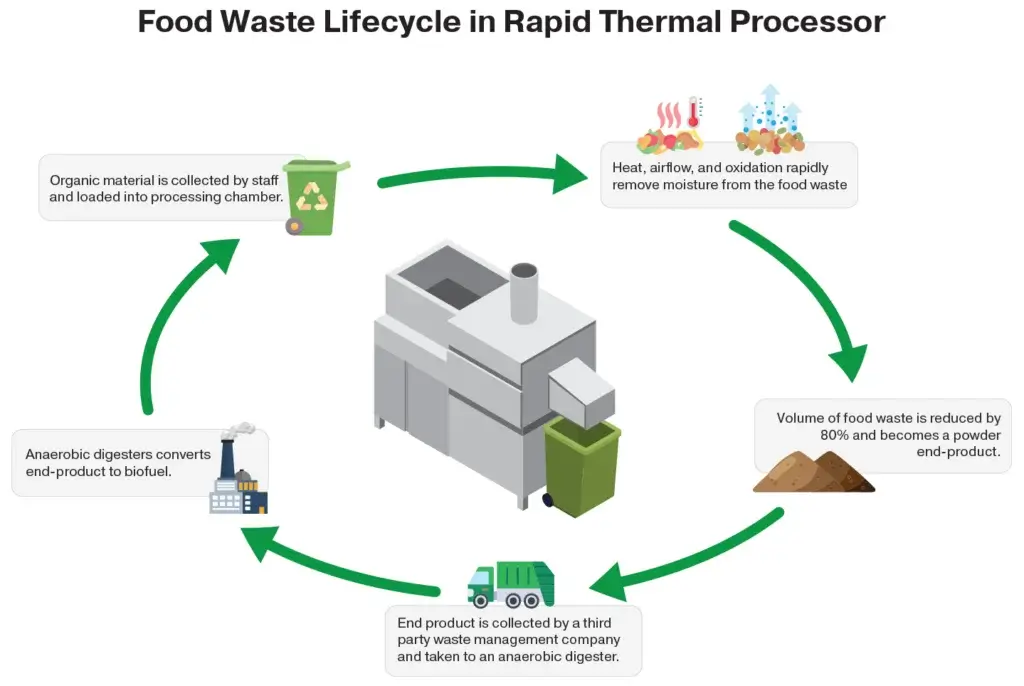
Rapid Thermal Processing is a food waste treatment technology that combines heat, airflow, and oxidation to rapidly remove moisture from organic waste. During the process, charged oxygen molecules accelerate the breakdown of food waste while moisture is evaporated and released as warm, humid vapor.
Unlike biological treatment systems, Rapid Thermal Processing does not digest food waste. Instead, it produces a dry, pathogen-free residue that is significantly lighter and smaller in volume than the original waste.
Many systems can reduce the weight of food waste by up to 80%, meaning that every 500 kg (1,100 lb) of food waste may produce approximately 100 kg (220 lb) of residual material.
Is the output compost?
No.
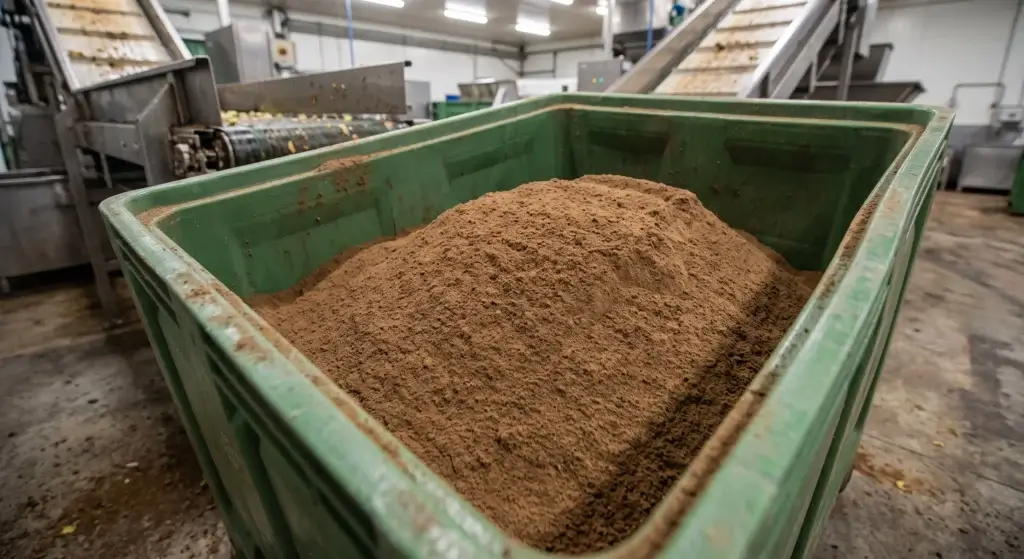
Although the remaining material may resemble compost, Rapid Thermal Processing does not produce finished compost. Compost is created through biological decomposition by microorganisms over time.
Instead, RTP produces a dry residual material that may be suitable for beneficial reuse depending on local regulations and the type of food waste processed. Many companies that produce rapid thermal processors will claim their finished product is a pathogen-free, nutrient-rich material but there is no research or evidence to properly substantiate these claims.
How does Rapid Thermal Processing work?
Most Rapid Thermal Processing systems complete treatment in a single automated cycle.
Stage 1: Loading
Food waste is loaded into the processing chamber.
Why it matters
Proper loading helps ensure efficient airflow and consistent treatment throughout the batch.
Stage 2: Rapid Thermal Processing
Heat, airflow, and oxidation rapidly remove moisture from the food waste while reducing pathogens. Water is released as humid vapor, leaving behind a dry residual material.
Why it matters
This stage delivers the majority of the weight and volume reduction while producing a stable, residue that is easier to handle.
Stage 3: Unloading
After processing is complete, the remaining material is removed from the unit for storage, transport, or beneficial reuse where permitted.
Why it matters
The final material is lighter and occupies much less space than untreated food waste.
How is Rapid Thermal Processing different from Thermal Dehydration?
Although both technologies remove moisture from food waste, they are not identical.
Traditional thermal dehydrators rely primarily on sustained high temperatures to evaporate water from food waste. Rapid Thermal Processing combines heat with oxidation to accelerate drying, allowing the process to be completed more quickly while producing a dry residual material.
How much space does it require?
Rapid Thermal Processing systems are generally designed for commercial and industrial facilities. Depending on capacity, they require dedicated floor space along with electrical service and ventilation.
How much does it cost to operate?
Rapid Thermal Processing requires large amounts of electrical energy to generate heat, circulate air, and power the oxidation process. Operating costs can be expensive depending on the amount of food waste processed, equipment size, local electricity rates, and processing frequency.
While the technology significantly reduces waste volume, organizations should also consider the cost of transporting or further processing the remaining residual material.
Who should use Rapid Thermal Processing?
Rapid Thermal Processing may be a good option for organizations that:
- Generate large quantities of food waste
- Want to reduce hauling weight and volume
- Need pathogen reduction before transporting waste
- Have sufficient floor space and low cost electrical supply
- Can manage or reuse the remaining residual material
The technology is commonly considered by commercial kitchens, food manufacturers, institutions, and other facilities producing consistent volumes of organic waste.
| Benefits of Rapid Thermal Processing Food Waste | Drawbacks of Rapid Thermal Processing Food Waste |
|---|---|
| Reduces the weight and volume of food waste by up to 80% | Requires electricity to operate |
| Automated batch operation | Batch processing rather than continuous treatment |
| Reduces waste storage requirements | Produces a residual material that still requires transport, further processing, or beneficial reuse |
| Residual material may have beneficial reuse opportunities depending on local regulations | Requires dedicated installation space and ventilation |
| Requires an engineer to resolve contamination issues |
Alternative Food Waste Solutions
Rapid Thermal Processing is one option for reducing the volume of food waste, but it still leaves a solid residual material that must be managed.
For organizations looking to eliminate food waste on-site, the Power Knot LFC biodigester uses naturally occurring microorganisms to biologically digest food waste continuously throughout the day. Power Knot also offers BCG grinders, SBT bin tippers, and SBH lug carts to create a complete food waste handling system that reduces labor, improves workplace safety, and minimizes waste hauling.