

Every day, businesses generate materials that are too large, bulky, or difficult to dispose of efficiently. Whether it’s food waste, animal bones, cardboard, plastics, or manufacturing byproducts, reducing material size is often the first step toward safer handling, lower disposal costs, and more efficient processing.
That’s where industrial shredders come in.
Industrial shredders are used across countless industries to reduce the size of materials before disposal, recycling, composting, biodigestion, rendering, or reuse. Selecting the right shredder depends on the type of material, throughput requirements, and the downstream process.
This guide explains how industrial shredders work, where they are used, and what features matter most when selecting one.
What Is an Industrial Shredder?
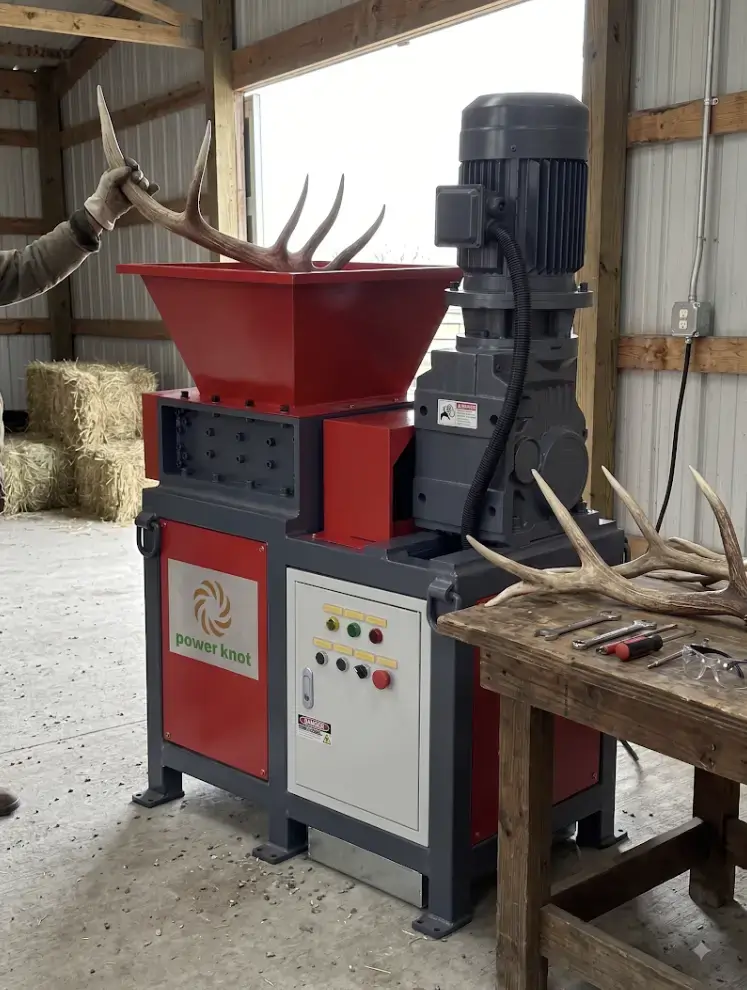
An industrial shredder is a machine designed to reduce large, bulky, or difficult-to-handle materials into smaller pieces using slow-speed, high-torque rotating cutting shafts fitted with hardened knives.
Unlike high-speed grinders that pulverize material into fine particles, shredders focus on primary size reduction. They tear, shear, and cut materials into manageable pieces that are easier to transport, process, or dispose of.
Industrial shredders are commonly used as the first step in waste processing because they can handle large, irregular, or contaminated materials with minimal preparation.
Shredder vs. Grinder: What’s the Difference?
Although the terms are often used interchangeably, industrial shredders and grinders serve different purposes.
| Feature | Industrial Shredders | Industrial Grinders |
|---|---|---|
| Primary Action | Shearing, tearing, and cutting | Impact, chipping, pulverizing, and attrition |
| Operating Speed | Low speed (10–100 RPM) | High speed (400–1,000+ RPM) |
| Torque | Extremely high torque | Lower torque |
| Feedstock / Material | Bulky, mixed, tough, or contaminated waste | Homogeneous, cleaner feedstock (wood, green waste) |
| Output Size | Large, rough, irregular fragments (2–4 inches+) | Small, uniform particles, chips, or powders (< 1 inch) |
| Process Stage | Primary processing (initial volume reduction) | Secondary processing (finishing / fine sizing) |
Many operations actually use both; a shredder for primary size reduction followed by a grinder for finer processing.
Which Industries Use Industrial Shredders?
Industrial shredders are used wherever large volumes of material need to be reduced before disposal, recycling, or further processing. They improve handling, reduce storage requirements, and prepare materials for downstream applications.
- Commercial Kitchens: Restaurants, hotels, hospitals, universities, casinos, and corporate cafeterias use shredders to prepare food waste for biodigesters, composting systems, vacuum transport systems, and other food waste processing equipment.
- Meat Processing Facilities: Shred bones, fat, offal, cartilage, and other byproducts before rendering, composting, biodigestion, or fertilizer production.
- Food Manufacturing: Process production waste, recalled products, expired inventory, packaging-separated organics, and manufacturing offcuts for recycling or treatment.
- Agriculture: Reduce crop waste, spoiled produce, animal feed, and agricultural residues before composting, anaerobic digestion, or other recovery processes.
- Cruise Ships: Minimize the volume of onboard food waste before treatment or temporary storage while improving handling in space-constrained environments.
- Recycling Facilities: Process plastics, wood, cardboard, rubber, and other recyclable materials into consistent feedstock for downstream recycling operations.
- Secure Data Destruction: Destroy hard drives, electronic devices, storage media, and confidential materials to help protect sensitive information and support secure disposal.
How Do Industrial Shredders Work?
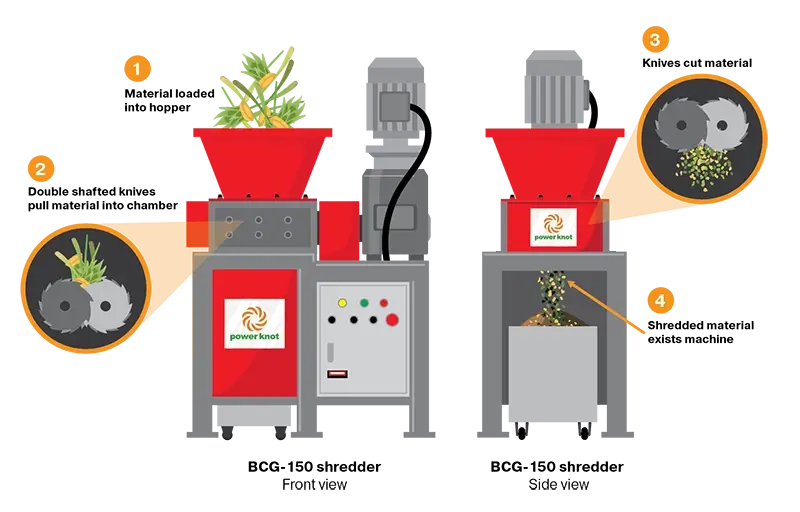
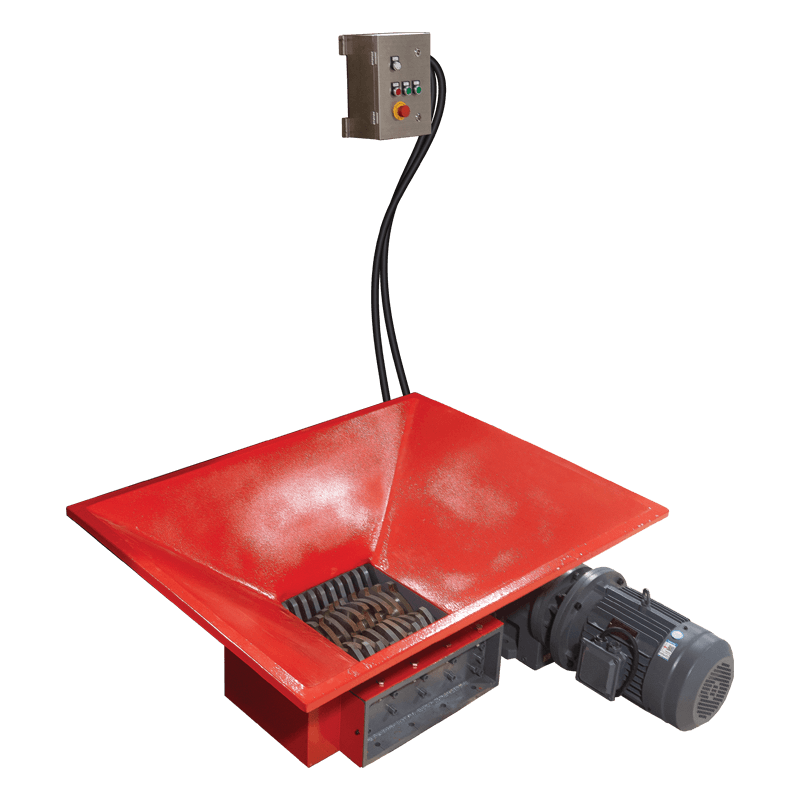
While designs vary, most industrial shredders operate using the same basic process:
- Material is loaded into the hopper that is usually on top of the machine.
- Two counter-rotating shafts fitted with hardened cutting knives pull material into the cutting chamber.
- The knives shear and tear the material into smaller pieces.
- The shredded material exits the machine under the cutting blades for collection or transfer to the next stage of processing.
Some shredders discharge directly into conveyors, pumps, biodigesters, or storage bins, creating a continuous processing workflow.
What Should an Industrial Shredder Be Made Of?
Industrial shredders operate in demanding environments where durability directly affects reliability and maintenance costs.
Several construction features are worth considering:
- Stainless Steel Construction
For food processing applications, stainless steel provides superior corrosion resistance, is easier to clean, and supports food safety requirements. However, such construction should be limited to relatively soft foods, and they cannot shred bones, for example
- Carbon Steel and Cast Iron Construction
Carbon steel and cast iron or the defacto standard for a ruggedly built shredder.
- Heat-Treated Knives
The cutting knives perform the majority of the work inside the shredder.
Heat-treated, hardened steel knives maintain a sharper edge for longer, improving cutting performance while reducing maintenance and replacement frequency.
- Heavy-Duty Bearings and Shafts
Industrial shredders experience extremely high torque loads, particularly when processing dense materials such as bones or frozen food waste. Oversized shafts and industrial bearings improve long-term reliability.
Single-Shaft vs. Double-Shaft Shredders
One of the biggest design differences is the number of cutting shafts.
| Feature | Single-Shaft Shredders | Double-Shaft Shredders |
|---|---|---|
| How It Works | One rotating shaft cuts material against a stationary cutting plate. | Two counter-rotating shafts pull material inward while applying high cutting forces. |
| Advantages |
|
|
| Best Suited For |
|
|
What Is Torque and Why Does It Matter for Shredders?
Torque is the rotational force that allows a shredder’s cutting shafts to continue turning under heavy loads. Simply put, torque determines how much force the shredder can apply to pull, tear, and cut difficult materials.
A shredder with higher torque can process tougher materials without stalling. This is especially important when shredding animal bones, cartilage, frozen food waste, dense plastics, or bulky organic materials.

Unlike high-speed equipment that relies on impact, industrial shredders use a low-speed, high-torque design that offers several advantages:
- Processes tougher materials with ease
- Reduces jams and blockages
- Maintains consistent performance with varying feedstock
- Extends the life of the cutting bladed by reducing heat and wear
- Produces material that is ideal for downstream processing
When evaluating a shredder, the power of the motor is only part of the equation. High torque is often the biggest factor in real-world performance.
Four Benefits of Using an Industrial Shredder
1. Reduces Waste Volume
Shredding significantly decreases the space required for storing and transporting waste.
Smaller particles pack more efficiently, allowing businesses to reduce container sizes and hauling frequency.
2. Prepares Material for Further Processing
Many waste treatment technologies perform better with smaller material.
Shredding prepares material for:
Shredding prepares material for:
- Biodigestion
- Composting
- Rendering
- Thermal dehydration
- Anaerobic digestion
- Recycling
Uniform particle sizes often improve processing efficiency and reduce equipment blockages.
3. Improves Material Handling
Bulky waste can be difficult and unsafe to transport.
Shredding creates a more manageable material that is easier to convey, pump, store, or process.
4. Increases Operational Efficiency
Automating size reduction reduces manual labor, improves workflow, minimizes handling, and creates a more consistent waste management process.
How to Choose the Right Industrial Shredder
Industrial shredders are a critical part of many waste management and material recovery systems. By reducing the size of bulky materials, they simplify handling, improve downstream processing, and help organizations recover more value from waste that might otherwise be discarded.
When selecting a shredder, consider:
- Material being processed
- Required throughput
- Desired output size
- Moisture content
- Available floor space
- Downstream processing equipment
- Integration with screw conveyors or other equipment
- Maintenance requirements
- Food safety or sanitation requirements
Choosing a shredder that matches both your material and your processing goals will improve efficiency, reduce maintenance, and maximize equipment life.
If your operation processes food waste, animal byproducts, or other organic materials, the Power Knot BCG Shredder is engineered to provide reliable, high-torque size reduction while integrating seamlessly with biodigesters and other downstream waste processing systems. Contact Power Knot to determine which BCG model best fits your application.