

Whether you call it a lug cart, bus box cart, bus tote cart, or utility bin cart, these workhorses are responsible for moving thousands of pounds of food, dishes, ingredients, and waste every year. They travel through kitchens, hospitals, hotels, cruise ships, airline catering facilities, universities, and food manufacturing plants, often being used many hours every day.
When purchasing a cart, price is usually the first consideration. However, the material used to construct the cart has a much greater impact on its long-term value.
The two most common materials are stainless steel and aluminum. While both are lightweight and corrosion resistant, they perform very differently in demanding commercial environments.
Strength that lasts
Commercial kitchens are unforgiving environments. Carts are pushed through narrow doorways, loaded with heavy bins, bumped into equipment, and washed repeatedly.
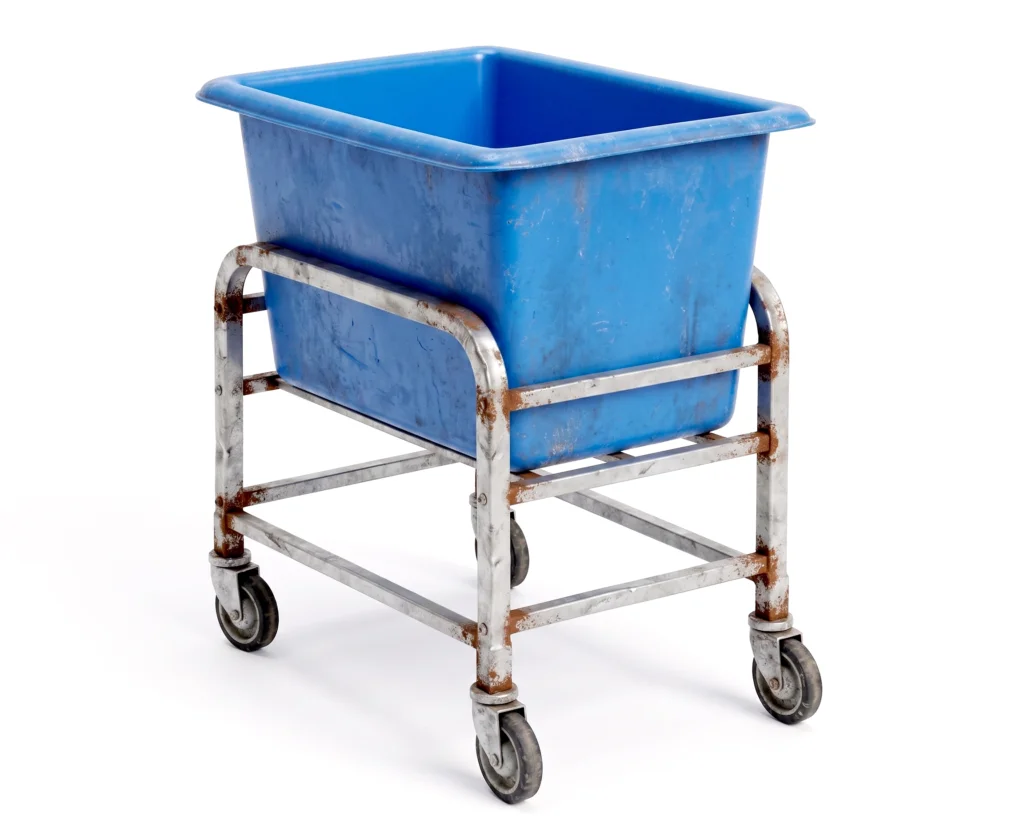
Although aluminum weighs less than stainless steel, it is also softer. Over time, repeated impacts can bend rails, dent frames, and loosen welds. Once structural components become distorted, bins may no longer slide smoothly or remain securely supported.
Stainless steel offers significantly greater strength and rigidity. It is better suited for facilities where carts are used continuously, may be subject to rough handling, and expected to provide reliable service for many years.
For organizations looking at total cost of ownership rather than initial purchase price, durability often outweighs a small difference in weight.
Corrosion resistance
Both aluminum and stainless steel resist rust, but they do so differently.
Aluminum naturally forms a protective oxide layer that slows corrosion. However, this layer can be damaged by harsh cleaning chemicals, salt, acidic food waste, or repeated abrasion.
High-quality stainless steel forms a chromium-rich passive layer that continually regenerates when damaged. This makes stainless steel particularly well suited for environments where equipment is exposed to moisture, food acids, sanitizers, and frequent washdowns.
Marine galleys, airline catering facilities, and food processing plants especially benefit from stainless steel’s superior resistance to corrosion.

Hygiene matters
In food service, equipment must be easy to clean—not just when it is new, but after years of daily use.
As aluminum dents and scratches over time, surfaces become more difficult to clean thoroughly. Damaged and scratched surfaces can trap food particles, making sanitation more challenging.

Stainless steel maintains a smooth, non-porous surface that withstands aggressive cleaning chemicals without degrading. This is one reason stainless steel has become the preferred material for food preparation tables, sinks, conveyors, and other equipment used in hygienic environments.
The same principle applies to bus tote carts, utility bin carts, and food waste transport carts.
Lower maintenance over time
A cart may seem like a simple piece of equipment, but repairs can become costly.
Bent runners, damaged frames, worn fasteners, and cracked welds increase maintenance costs and often result in carts being taken out of service.
A well-built stainless steel cart is designed to withstand years of heavy use with minimal maintenance, helping facilities reduce downtime and replacement costs.

Long-term value
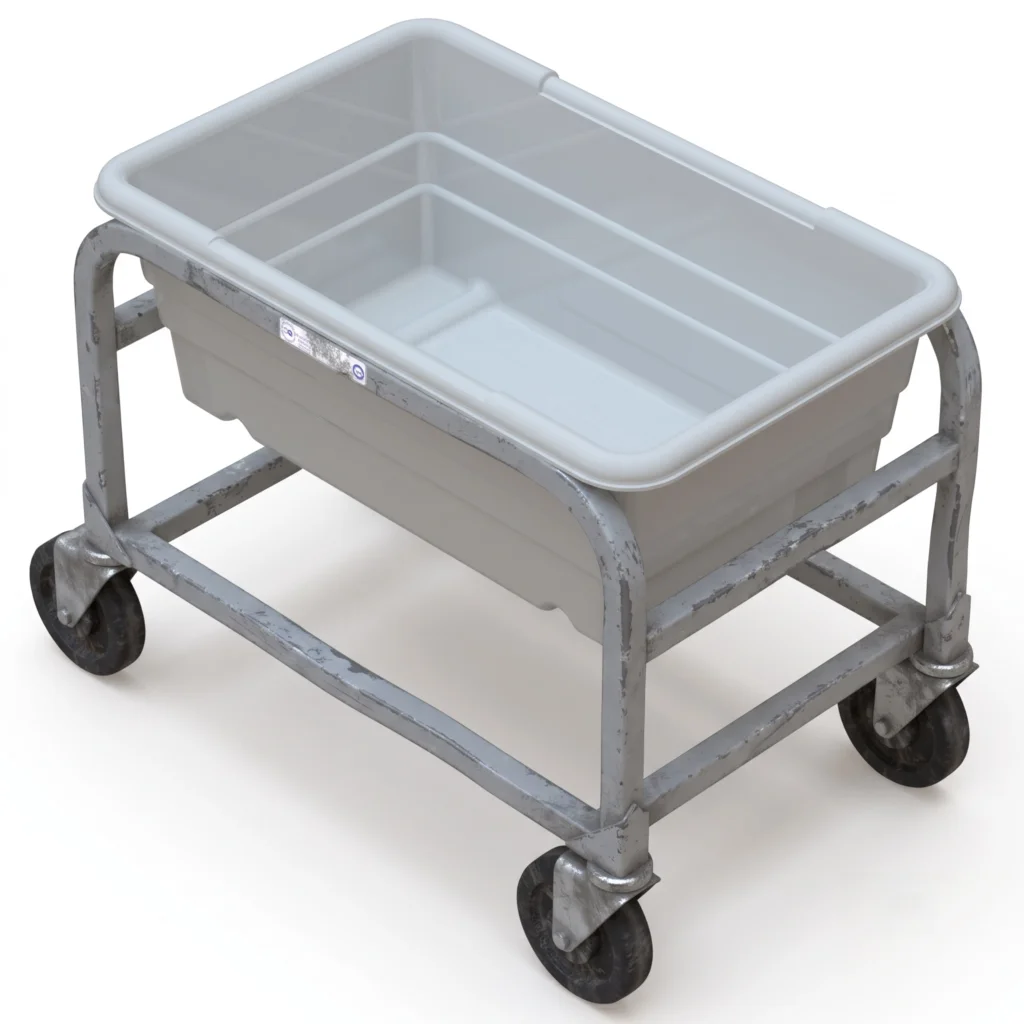
Aluminum carts often have a lower initial purchase price, making them attractive for light-duty applications.
However, facilities that operate around the clock should also consider:
- Expected service life
- Maintenance costs
- Replacement frequency
- Cleaning requirements
- Downtime caused by damaged equipment
When these factors are considered together, stainless steel usually provides the lower total cost of ownership.
Power Knot SBH lug cart
The Power Knot SBH lug carts are engineered for demanding commercial environments where durability, hygiene, and reliability matter. Unlike many general-purpose bus box carts or utility bin carts, the SBH is designed specifically for food waste handling.
The SBH family includes two models:
- SBH-90 lug cart – holds three lug bins
- SBH-180 lug cart– holds six lug bins
Both feature:
- 100% stainless steel construction
- Double-lipped bin runners
- Rear stop mechanisms
- Four heavy-duty lockable casters
- Two-sided loading
- Smooth, easy-to-clean surfaces
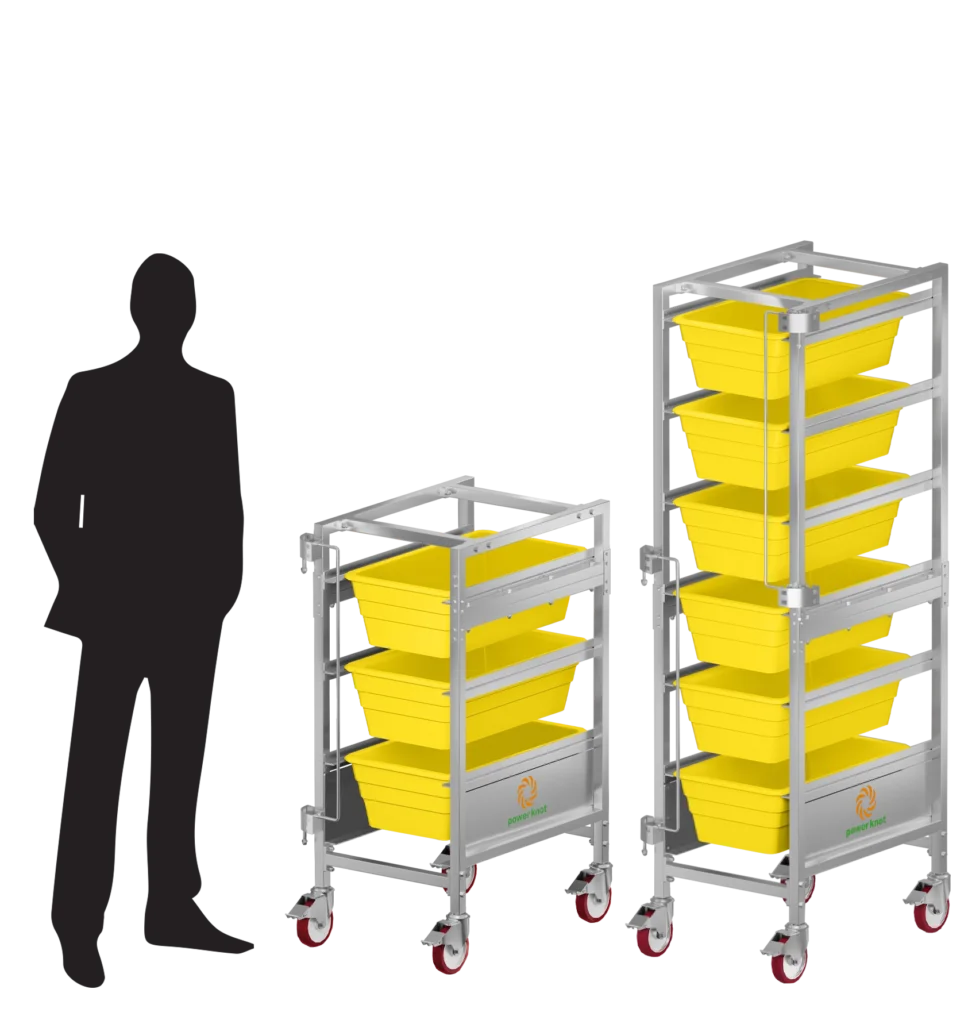
From transporting food waste to biodigesters to moving ingredients in commercial kitchens and food manufacturing facilities, the SBH lug cart is built for years of reliable service.
Choosing the right cart
Aluminum carts can be suitable for occasional, light-duty use. For commercial kitchens, hospitals, hotels, universities, cruise ships, airline catering facilities, and food manufacturers, stainless steel provides superior durability, hygiene, and long-term value.
When choosing a lug cart, bus tote cart, bus box cart, or utility bin cart, look beyond the purchase price. Consider the operating environment, cleaning requirements, and expected service life. In most professional food service applications, stainless steel delivers the lowest total cost of ownership.