

Sustainability recognition doesn’t happen overnight. Behind every certification, award, or sustainability stamp are countless operational improvements, staff training initiatives, and environmental programs working together to reduce a property’s impact on the planet.
One hotel that has demonstrated leadership in this area is Anantara The Palm Dubai Resort, which recently earned a Gold Stamp in the latest cycle of the Dubai Sustainable Tourism (DST) Stamp program. This prestigious recognition highlights the resort’s commitment to sustainability across multiple areas of operation, including waste management, resource conservation, and environmental stewardship.
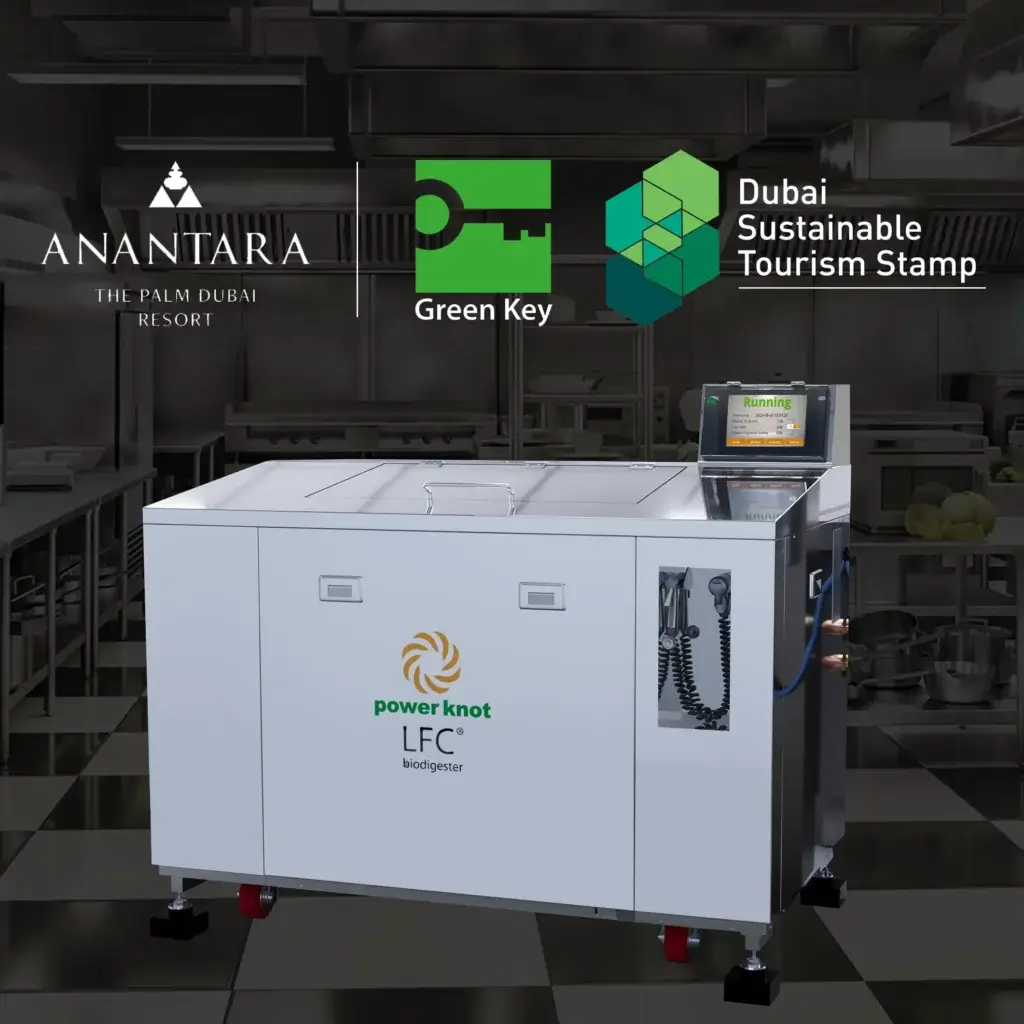
Among the initiatives supporting these efforts is the resort’s investment in innovative food waste management technology. In late 2022, the luxury resort installed an LFC-500 biodigester at the property to process food waste onsite, helping the resort reduce waste transportation, improve operational efficiency, and support its broader sustainability objectives.
Why Food Waste Matters in Sustainable Hospitality
Food waste remains one of the hospitality industry’s most significant environmental challenges. Hotels generate substantial amounts of organic waste from restaurants, buffets, banquets, room service operations, and employee dining facilities.
Traditional food waste disposal methods often involve:
- Storing food waste onsite until collection
- Frequent waste hauling and transportation
- Additional labor for handling and disposal
- Odor and hygiene concerns
- Increased greenhouse gas emissions associated with transportation and disposal in a landfill

As hotels pursue more ambitious sustainability goals, reducing food waste and implementing responsible disposal practices have become essential components of environmental management programs.
Anantara’s Commitment to Sustainable Operations
Power Knot installed LFC-500 biodigesters at both Anantara The Palm Dubai Resort and Anantara World Islands Dubai Resort to help each property address the challenges associated with food waste disposal.
Before installation, both resorts relied on transporting food waste offsite. For Anantara World Islands Dubai Resort, the challenge was even greater. Located approximately four kilometers offshore on its own island, every load of food waste required transportation back to mainland Dubai, creating additional costs, logistics, and environmental impact.
The resort’s location within a sensitive marine environment also meant that waste management practices had to meet strict environmental standards.
Hotel management sought a solution that would:
- Reduce transportation requirements
- Lower waste disposal costs
- Support sustainability objectives
- Minimize environmental impact
- Improve operational efficiency
The solution was onsite food waste digestion.
How the LFC biodigester Supports Sustainability Goals
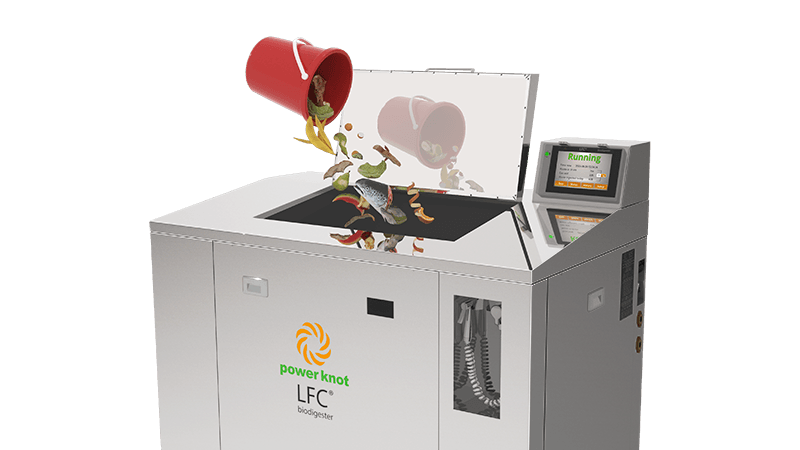
The LFC biodigester processes food waste using naturally occurring microorganisms, allowing hotels to manage waste directly at the source.
At the Anantara properties, each LFC-500 biodigester can process between 175 kg and 1,500 kg of food waste every 24 hours. The fully enclosed system operates without odors and significantly reduces the amount of food waste requiring transportation.
The process is simple:
- Food waste is added throughout the day.
- Naturally occurring microorganisms digest the organic material.
- The waste is converted into grey water.
- The grey water enters the property’s sewage treatment system.
- Treated water can be reused for irrigation and landscaping applications where permitted.
This circular approach supports resource efficiency while helping hotels reduce their environmental footprint.
Sustainability Recognition Through Measurable Action
The benefits of onsite food waste digestion extend beyond operational savings.
The LFC biodigesters played an important role in helping both properties achieve Green Key Certification by introducing a new waste management process that supported their circular economy initiatives. In 2026, the LFC biodigester at Anantara The Palm processed 58 tonne of waste.
Today, sustainability remains a core focus for Anantara The Palm Dubai Resort. The resort highlights responsible waste management, recycling programs, food waste reduction, and environmental conservation as part of its ongoing sustainability strategy.
The recent achievement of a Gold DST Stamp further reflects the property’s commitment to implementing meaningful environmental initiatives and continuously improving sustainability performance.
Preparing for the Next Generation of Sustainability Standards
As sustainability programs such as the Dubai Sustainable Tourism Stamp continue to evolve, hotels are expected to demonstrate increasingly measurable environmental performance.
The fourth cycle of the DST Stamp program expands from 19 to 27 sustainability requirements, raising expectations for documentation, operational practices, and environmental accountability.
For hotel operators, food waste management represents one of the most practical and impactful opportunities to:
- Reduce environmental impact
- Lower operational costs
- Improve sustainability reporting
- Support certification efforts
- Demonstrate measurable ESG progress
Sustainable Hospitality Starts in the Kitchen
While guests may see a sustainability award displayed at the reception desk or featured on a hotel’s website, the work behind that recognition begins behind the scenes.
By managing food waste at the source, hotels can reduce transportation requirements, improve operational efficiency, support circular economy initiatives, and strengthen their overall sustainability programs.
Anantara The Palm Dubai Resort and Anantara World Islands Dubai Resort demonstrate how innovative food waste management solutions can help transform food waste from an operational challenge into an opportunity for environmental leadership.
As sustainability standards continue to rise, forward thinking hotels are discovering that one of the most effective places to begin is in the kitchen.
Contact Power Knot to learn how the LFC biodigester can help your hotel reduce food waste, lower disposal costs, support sustainability initiatives, and advance your environmental goals.