

Most operations measure maintenance in dollars. The better measure is hours of use.
When facility managers evaluate new equipment, the conversation usually centers on purchase price, energy use, and projected savings. Maintenance gets a single line in the spreadsheet, often underestimated, and then the discussion moves on. What that line rarely captures is the day-to-day operational burden that high-maintenance equipment places on a facility.
Maintenance is not just an expense. It is a recurring claim on time, attention, and operational stability. Once you view it that way, the way you evaluate equipment and total cost of ownership starts to change.
The Hidden Cost of Unplanned Downtime
When equipment fails, the visible costs are easy to track. These include service calls, replacement parts, and lost output. The harder and often more damaging costs are operational.
Unplanned downtime rarely happens at a convenient time. It hits mid-shift, during peak usage, or right before a critical deadline. Workflows stall, staff are pulled into troubleshooting, and supervisors shift from leading operations to managing disruptions.
The scale of the issue is significant:
- Unplanned downtime costs manufacturers up to $50 billion annually
- The average cost can reach $260,000 per hour across industries
- In many cases, even one hour of downtime exceeds $100,000 in losses
- Unplanned downtime can cost up to 15x more than planned maintenance
Even at a smaller operational scale such as food service or hospitality, the pattern holds. The direct cost is only part of the equation. The real damage comes from disruption, including lost momentum, fragmented workflows, and teams forced into reactive mode.
What Minimal Maintenance Looks Like in Practice
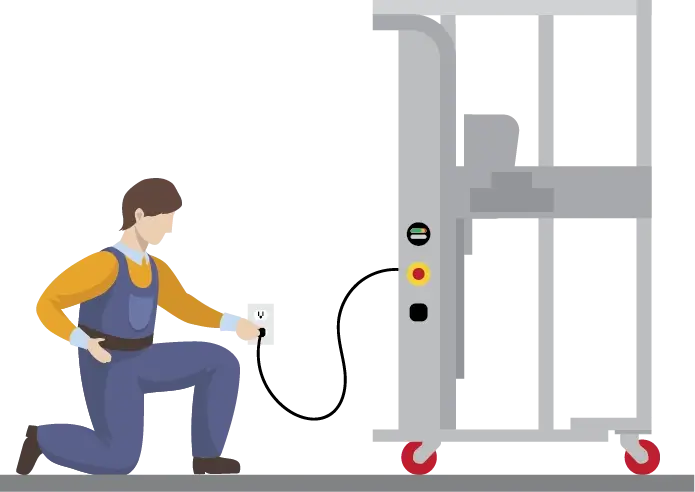
The SBT bin tipper requires one simple routine performed weekly: a battery charge cycle. That is the maintenance schedule. No lubrication program. No filter replacements. No hydraulic fluid checks. No recurring calibration visits. An annual preventive maintenance completes the servicing that is required.
In high-turnover environments such as food service, hospitality, and catering, that simplicity matters more than it may appear. Institutional knowledge around equipment care is often one of the first things lost when experienced staff leave. Complex maintenance procedures require training, documentation, and someone to consistently own the process. When that person leaves, the process often breaks down until the machine does.
In high-turnover environments such as food service, hospitality, and catering, that simplicity matters more than it may appear. Institutional knowledge around equipment care is often one of the first things lost when experienced staff leave. Complex maintenance procedures require training, documentation, and someone to consistently own the process. When that person leaves, the process often breaks down until the machine does.
A machine with one straightforward weekly task is far less vulnerable to that kind of operational drift. It does not depend on specialized knowledge or constant oversight. It runs, gets charged, and runs again. That simplicity is a form of resilience that rarely appears on a spec sheet but becomes more valuable every year the equipment is in service.
Labor Diversion Adds Up Fast
In most facilities, maintenance is not handled by dedicated technicians. It’s handled by whoever is available.
That creates a compounding problem:
- A cook troubleshooting equipment is not cooking
- A supervisor managing a repair is not managing operations
- One issue creates multiple secondary disruptions
Research shows that downtime impacts extend well beyond lost production. A significant portion of downtime cost comes from lost productivity and business disruption, not just repairs.
Over time, unreliable equipment creates:
- Informal workarounds
- Increased cognitive load on staff
- Reduced efficiency and consistency
Reliable, low-maintenance equipment removes that friction—not dramatically, but consistently across every shift. That cumulative effect is where much of the value lives.
A Better Way to Think About Total Cost of Ownership
Total cost of ownership (TCO) is widely used—but often incompletely applied.
Most analyses focus on:
- Purchase price
- Energy consumption
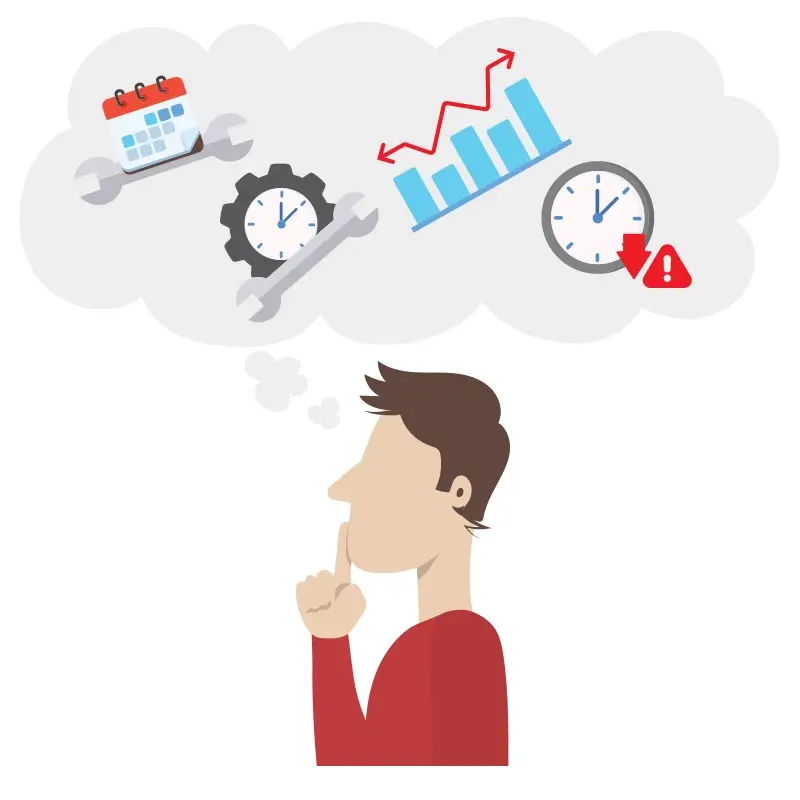
Fewer account for:
- Maintenance frequency and labor hours
- Service delays and parts availability
- Staff time lost to disruptions
- Performance inconsistency over time
This gap matters. Facilities lose hundreds of hours per year to downtime on average, and much of that loss comes from unplanned events.
When these factors are fully modeled, the conclusion is consistent:
Equipment with minimal maintenance requirements and long design life often outperforms lower-cost alternatives over time.
The machine that:
- Requires little intervention
- Maintains consistent performance
- Avoids disrupting operations
…is typically the less expensive machine in real operating conditions.
For operations leaders, the takeaway is straightforward. The equipment you choose does more than perform a task. It shapes how your team works, how predictable your shifts are, and how often your operation is forced into reactive mode. Investing in low-maintenance, high-reliability equipment is not just about reducing service costs. It is about protecting time, stabilizing workflows, and creating an environment where people can focus on doing their jobs without interruption. Over the life of the machine, that advantage is not incremental. It is decisive.
Contact Power Knot to learn how low-maintenance equipment design can support your facility’s operational goals today.