

Feeding animals, particularly livestock on farms, with food scraps or waste is a practice that has been utilized by farmers for centuries. Today, around 30% of what is currently fed to livestock around the world today comes from food supply chain waste or by-products from food processing. In the United States, approximately 10% of surplus food is sent to feed animals, with most of it originating from manufacturing facilities or grocery stores.
This blog outlines how garbage feeding works, when it is most effective, and the potential risks associated with feeding food waste to animals. By understanding the process and its implications, you can make informed decisions about the best way to manage food scraps without resorting to landfilling.
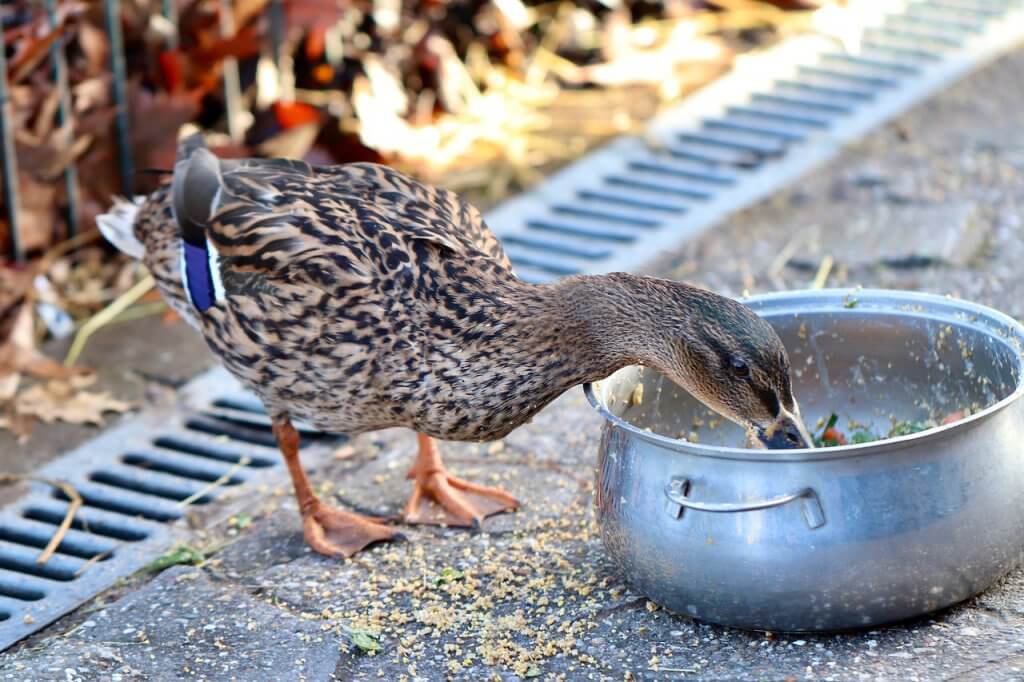
How Feeding Food Waste to Animals Works
Feeding food waste to animals involves several critical steps to ensure safety, efficiency, and compliance with regulations:
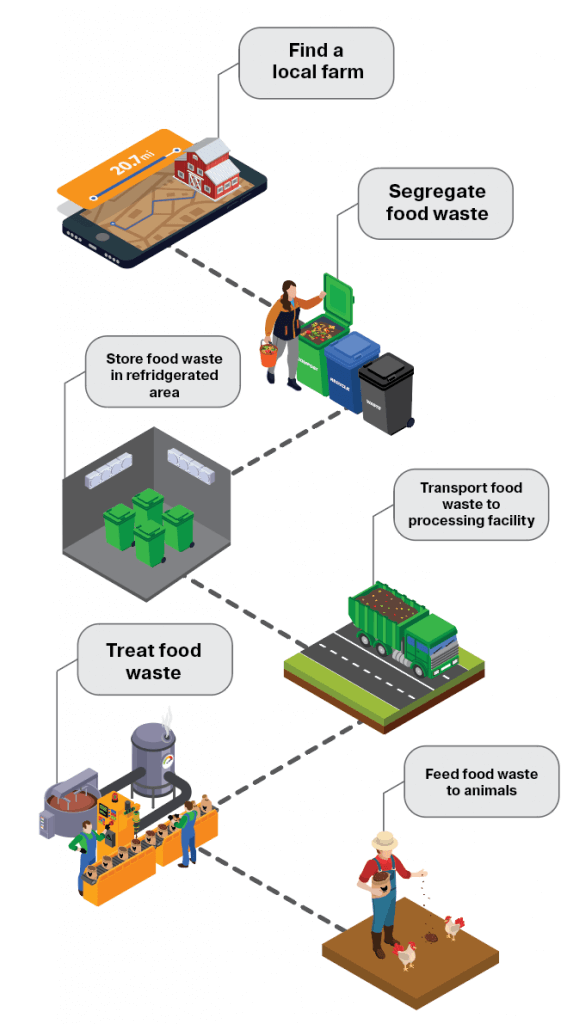
1. Finding a Local Farmer
Collaboration with local farmers or partnered agencies is essential. The proximity of farms reduces financial and environmental costs associated with transportation, making the process more sustainable.
2. Handling and Transport
Edible food scraps are segregated from non-edible materials, such as plastic or metal, and stored in insulated or temperature-controlled environments to prevent spoilage before pickup. Food waste that decomposes during storage can become unsafe for animals.
3. Treatment
Food waste is treated by processes such as dehydration, pelleting, extrusion, or fermentation to eliminate harmful pathogens and improve nutritional content. These steps ensure the feed is safe for livestock consumption while meeting regulatory standards. It is generally not permitted to feed untreated food scraps to animals, and food scraps that might contain meat can never be fed to poultry, for example.
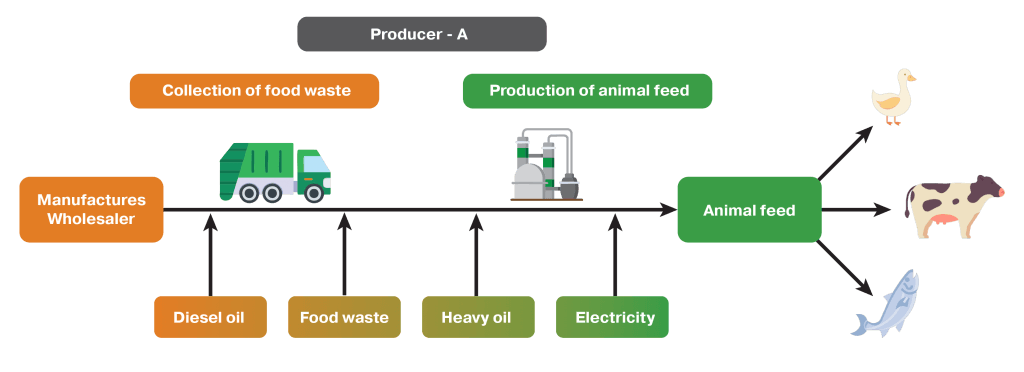
Benefits of feeding food waste to animals
Feeding food waste to animals offers numerous environmental, economic, and agricultural benefits and, if executed properly, can be an excellent way to handle excess food waste. It reduces landfill waste, mitigating methane emissions and minimizing the resources required to produce commercial feed, thereby promoting a circular economy. Feeding food scraps to animals reduces the need for conventional animal feed, decreasing the environmental impacts associated with growing and processing feed crops. This practice aligns with the third tier of the EPA’s Wasted Food Hierarchy, providing a circular solution to keep nutrients and nourishment within the supply chain.
Environmental Impact
- Reduces landfill waste, mitigating methane emissions
- Minimizes the resources required to produce commercial animal feed
- Supports a circular economy by repurposing nutrients and nourishment in the food supply chain
Economic Impact
- Lowers costs for farmers by offering a cheaper alternative to traditional feed
- Creates opportunities for businesses to process and distribute food waste as feed
Agricultural Impact
- Adds essential nutrients for livestock, enhancing their diet
- Enhances feed diversity for agricultural operations
- Supports small-scale farms by offering a sustainable alternative to industrial feed
Other Impact
- Aligns with zero-waste goals, promoting sustainability
- Respects the resources used to produce surplus food, preventing waste
- Promotes ethical food use by ensuring surplus food is repurposed effectively
Drawbacks of feeding food waste to animals
Feeding food waste to animals offers sustainability benefits but also comes with several potential drawbacks, including health, regulatory, logistical, environmental, and ethical concerns. There are significant disease risks associated with feeding contaminated food waste to livestock and animals. If food waste isnât handled properly, it can transmit bacterial, parasitic, and viral diseases to animals, which may then make their way to humans.
Historically, food waste fed to animals has been linked to serious outbreaks in humans. Bovine spongiform encephalopathy (mad cow disease), an incurable neurological condition, is believed to have spread when calves consumed meat and bone meal made from cattle. This epidemic peaked in 1992 and, as of 2019, had resulted in over 200 human deaths. Beyond these specific risks, food waste may also contain harmful pathogens, toxins, or foreign objects that can harm animals and compromise food safety. Strict regulations on the use of food waste in animal feed, particularly for livestock, aim to mitigate these risks but result in costs for compliance and legal challenges if not followed.
Health and Safety Risks
- Food waste, if improperly handled, can transmit bacterial, parasitic, and viral diseases to animals, potentially entering the human food chain
Regulatory Challenges
- Strict regulations on food waste use in animal feed vary by state and often require costly compliance measures
- Some states prohibit feeding certain types of food waste, like meat or dairy, to animals
Additional Drawbacks
- Nutritional Inconsistencies: Food waste often lacks the uniform nutritional profile needed for optimal animal growth and health.
- Storage Challenges: Food waste is perishable and requires appropriate storage conditions to prevent spoilage and maintain its suitability as feed.
- Collection Inefficiencies: Collecting food waste from diverse sources (e.g., households, restaurants, or grocery stores) can be logistically complex and costly.
- Transportation Emissions: Transporting food waste to processing facilities or farms can contribute to carbon emissions, reducing some of the environmental benefits.
- Processing Requirements: Treating food waste to meet safety standards, such as heat treatment to kill pathogens, requires additional energy and infrastructure.
- Overdependence Risk: Farmers relying too heavily on food waste as a feed source may face operational challenges if the supply of food waste fluctuates or becomes unavailable.
- Waste Composition Variability: The quality and type of food waste can vary significantly, potentially impacting its usefulness and safety as animal feed.
- Potential Biosecurity Breaches: Handling and distributing food waste could inadvertently introduce contaminants or invasive species into new areas.
- Consumer Trust Issues: Some consumers may perceive products from animals fed with food waste as less safe or ethical, potentially affecting market demand.
Regulations for Feeding Food Waste to Animals
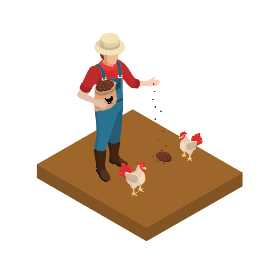
Federal and state regulations govern the use of food waste as animal feed. These rules ensure safety but can also create hurdles for implementation. For example, some states ban food donation for animal feed, while others restrict specific types of food scraps, such as meat or dairy.
Leftovers for Livestock: A Legal Guide for Using Excess Food as Animal Feed(pdf) (7.8 KB), written by the Harvard Food Law and Policy Clinic and the Food Recovery Project at the University of Arkansas School of Law, describes different federal and state laws, regulations and requirements for feeding food scraps to animals.
Alternative Food Waste Solutions
Feeding food waste to animals is a practical option when logistics are straightforward, and the waste can be properly treated to ensure safety. However, if your business is far from a food waste processing facility or farm, this method may not be feasible.
Fortunately, there are several alternative solutions for the disposal of food waste available today. Options like anaerobic digesters, and aerobic digesters provide efficient and environmentally friendly ways to manage food waste. Many organizations opt for onsite food digesters, which break down food waste immediately, eliminating the need for storage, transportation, and sanitation. Aerobic digesters, such as the LFC biodigester, use natural microorganisms and oxygen to decompose food scraps, converting them into grey water that can be safely discharged into the wastewater system. These solutions offer convenient, sustainable alternatives for businesses looking to manage food waste effectively.
Ready to take the next step in sustainable food waste management? Contact Power Knot today to learn how our innovative solutions can help your organization reduce waste, save costs, and meet your sustainability goals.