
Food waste is a critical issue that affects all corners of the globe, but the approach to minimizing it can vary greatly depending on cultural practices and traditions. As global warming increasingly impacts our lives, every culture’s relationship with food waste is scrutinized and redefined. Innovative technologies such as food waste digesters are becoming essential tools in this fight against waste. We explore how different cultures address food waste and how the LFC biodigester is eliminating waste, with a focus on Japan, the United Arab Emirates, Switzerland, and the United States.
Japan: from famine to frugality

Japan’s cultural approach to food waste is deeply rooted in its historical experiences of famine. The most notable of these was the Great Tenmei Famine (1782-1788), which devastated the country’s agricultural output and led to widespread starvation. This period instilled a cultural consciousness around food that persists to this day. Japanese society emphasizes “mottainai,” a concept that expresses regret over waste, encouraging people to appreciate and make full use of resources. In Japan, a blend of traditional practices and innovative technologies has emerged to minimize food waste:
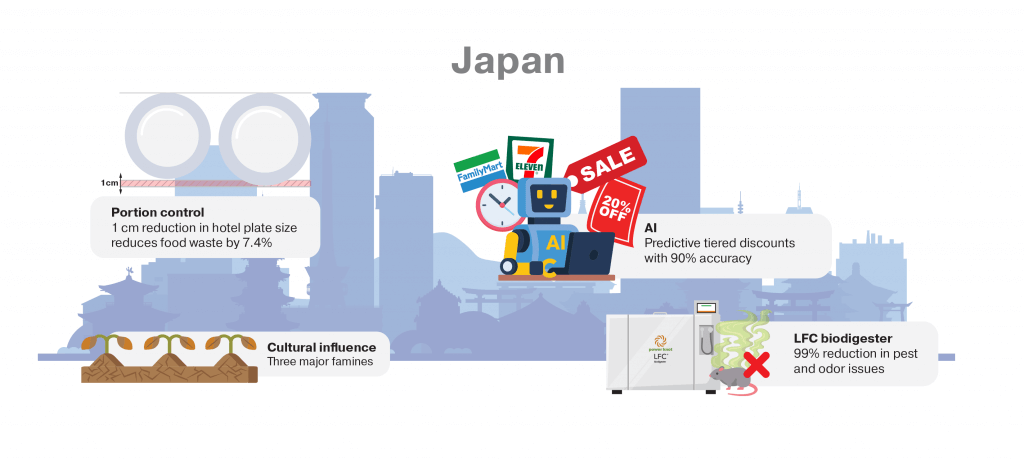
- Portion control and minimalism: Many Japanese meals are designed with balance and moderation in mind, minimizing leftovers. Bento boxes, for instance, are carefully portioned to ensure that no food goes to waste. Researchers found that a 1 cm reduction in hotel plate size reduces food waste by 7.4%.
- Fermentation and preservation: Traditional Japanese foods like miso, soy sauce, and pickles are products of fermentation, a method that extends the shelf life of ingredients, reducing the need to discard them. This can help extend the shelf life of products by six weeks to two years.
- Food waste diversion technology: Japanese convenience stores are utilizing artificial intelligence (AI) to monitor food expiration dates and sales data to notify them on when to discount products in an effort to increase sales and minimize food waste. A mobile App called TABETE, which means “Please eat” in Japanese, was launched in cities like Tokyo and Osaka, aiming to use digital technology to “save” food that might go to waste.
- LFC biodigester adoption: In densely populated urban areas where space is at a premium, such as in the Palette Kumoji department store, the LFC biodigester has become a practical solution for managing food waste. This technology is particularly effective in Japan’s humid climate, where food waste decomposition can attract pests and create unpleasant odors. The LFC biodigester transforms organic waste into greywater, which can be safely discharged or repurposed as a nutrient-rich liquid for urban gardening.
UAE: adapting to scarcity with ingenuity
Located in a desert with harsh environmental conditions, UAE’s cultural heritage is profoundly shaped by a history of scarcity and the necessity to maximize limited resources. The traditional Bedouin culture has long employed sustainable practices to extend the shelf life of food, such as drying meats and dates, reflecting a deep understanding of and respect for resource management.
- Date preservation: Dates are a staple in the Middle Eastern diet, and their preservation is key to ensuring food availability throughout the year. By transforming dates into various forms like date paste and date syrup, Emirate residents have been able to extend the shelf life of this abundant fruit.
- Reusing ingredients: In UAE’s culinary tradition, there is a strong emphasis on reusing ingredients to avoid waste. Stale bread, for example, is often repurposed into Fattoush, a popular bread salad.
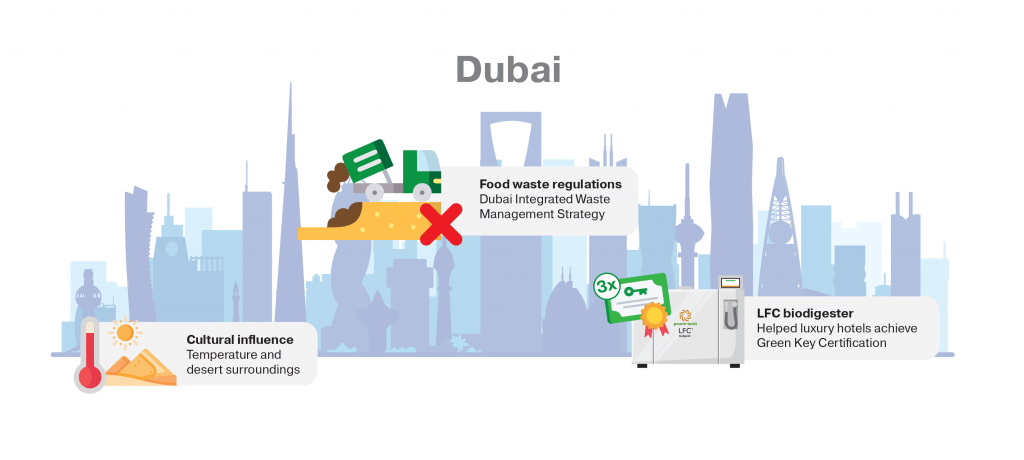
- Food waste regulations: Dubai in particular has started to enforce strict food waste and landfill regulations to minimize environmental impact, notably the Dubai Integrated Waste Management Strategy 2021-2041 which has strict regulations on how waste is regulated.
- LFC biodigester use: The LFC biodigester helps high-end hotels which prioritize sustainability, such as H Dubai and Anantara Palm Dubai Resort to comply with these regulations by converting food waste into greywater that can be safely discharged or used for irrigation. This technology reduces landfill use, lowers methane emissions, and supports UAE’s sustainability goals, reflecting the country’s commitment to resourcefulness and environmental stewardship.
Switzerland: preservation and tradition
Switzerland, a country with a history of frugal living shaped by its mountainous terrain and harsh winters, has developed numerous food preservation methods to minimize waste. The Swiss cultural approach to food waste is heavily influenced by a need to store food for long periods, especially during the winter months.
- Cheese and Curing: Swiss cheeses like Emmental and Gruyère are made using methods that allow for long-term storage, preventing milk waste. Similarly, cured meats like Bündnerfleisch highlight Swiss skills in extending the shelf life of perishables, reflecting strong resource management practices.
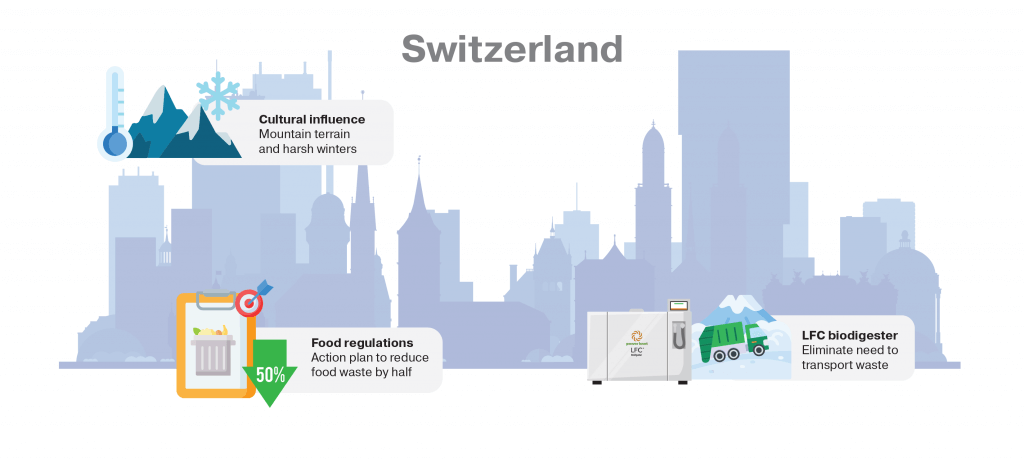
- Notable technology: Nearly a third of the food produced for Swiss consumption is wasted or thrown away unnecessarily. This corresponds to around 330 kilograms of waste per capita per year. On April 6, 2022, the Federal Council adopted an action plan with the aim of halving food waste by 2030 compared to 2017. The federal government entered into a cross-sector agreement with companies and organizations in the food sector that will set clear reduction targets.
- LFC biodigester use: The installation of a Power Knot LFC biodigester in a Swiss Alps resort reflects the country’s focus on sustainability. In regions where traditional waste pickups are costly and inefficient, this on site solution converts food waste into greywater for safe disposal or irrigation, reducing environmental impact and supporting Swiss values of self-reliance and ecological responsibility.
United States of America
The United States, with its diverse geography and climate, has a long-standing tradition of adapting to various environmental conditions through innovation and resourcefulness. American culture emphasizes the efficient use of resources, especially in food preservation and waste management, reflecting a blend of practicality and sustainability.
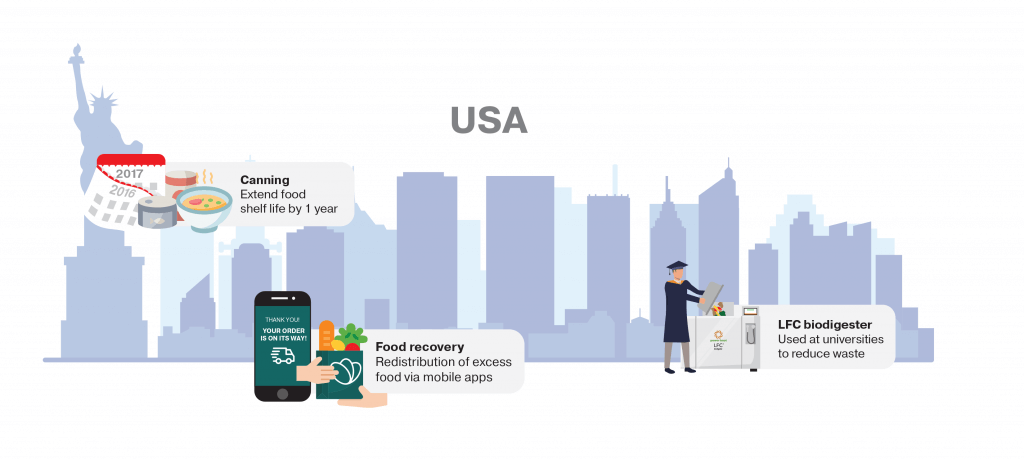
- Canning and preservation: The practice of canning fruits and vegetables has deep roots in American culture, especially in rural and farming communities. This method allows for the preservation of seasonal produce, ensuring food availability throughout the year and reducing waste. Home canning and preservation are not only practical solutions but also reflect a cultural appreciation for self-sufficiency and minimizing food waste.
- Food recovery and donation programs: Across the U.S., numerous organizations are using technology to connect surplus food with those in need, reducing food waste and addressing food insecurity. Apps and platforms like Food Rescue US and Too Good To Go facilitate the redistribution of excess food from restaurants, supermarkets, and events to communities that require assistance.
- LFC biodigester use: Universities in the United States are at the forefront of adopting sustainable waste management practices. Institutions like the University of Nebraska-Lincoln and Chapman University have implemented Power Knot LFC biodigesters to manage food waste more effectively. These biodigesters convert food scraps into greywater, which can be safely disposed of or used for irrigation, significantly reducing landfill waste and greenhouse gas emissions. This commitment to sustainability by American universities showcases a proactive approach to resource management and environmental stewardship, aligning with broader national goals of innovation and sustainability.
The global approach to food waste is as diverse as the cultures that confront this pressing issue. While historical experiences, environmental conditions, and cultural values shape each country’s strategies, a common thread emerges: the commitment to innovation and sustainability. From Japan’s fusion of tradition and technology, UAE’s adaptation to scarcity, Switzerland’s preservation techniques, to the United States’ blend of modern solutions and community driven initiatives, these examples illustrate that reducing food waste requires a multifaceted approach. As the world continues to grapple with the impacts of climate change and resource scarcity, adopting diverse technologies and practices, such as the LFC biodigester, will be crucial in creating a more sustainable and resilient future.