

Food waste in schools is a significant problem that stands to make a powerful impact on efforts to reduce food waste’s impact on climate change. A 2019 report by the World Wildlife Fund (WWF) estimated food waste within U.S. schools to be as high as 530,000 tons each year. WWF translates this waste into 1.9M MTCO2e of embedded greenhouse gasses (GHG). That’s not accounting for an additional estimated 45 million gallons of milk wasted each year.
Arizona State University’s take on the WWF report is that, based on a national average of 76% of food waste ending up in landfills, approximately 402,800 tons of school food waste is being sent to landfills. Once sealed into a landfill, this waste undergoes decomposition in the absence of oxygen which emits damaging levels of methane gas.
However, there’s an even more important reason to address food waste disposal in schools: schools already teach students how to make healthy choices when it comes to food waste. With the disposal of food waste by methods that are friendly to the environment, schools can also teach students to make healthy choices when it comes to the disposal of their food waste.
To raise the next generation of environmental stewards, schools must develop a plan for addressing proper food waste disposal.
Food waste disposal in schools matters
Food waste in schools can happen at a number of different stages. It includes loss during food preparation or cooking, or through spoilage of products. However, several studies have indicated that plate waste is the largest contributor to this problem.
For example:
A study on school nutrition guidelines found that of the 304 meals served to pre-kindergartners and kindergartners in one Virginia elementary school over one-week period, 45% of food served was thrown away.
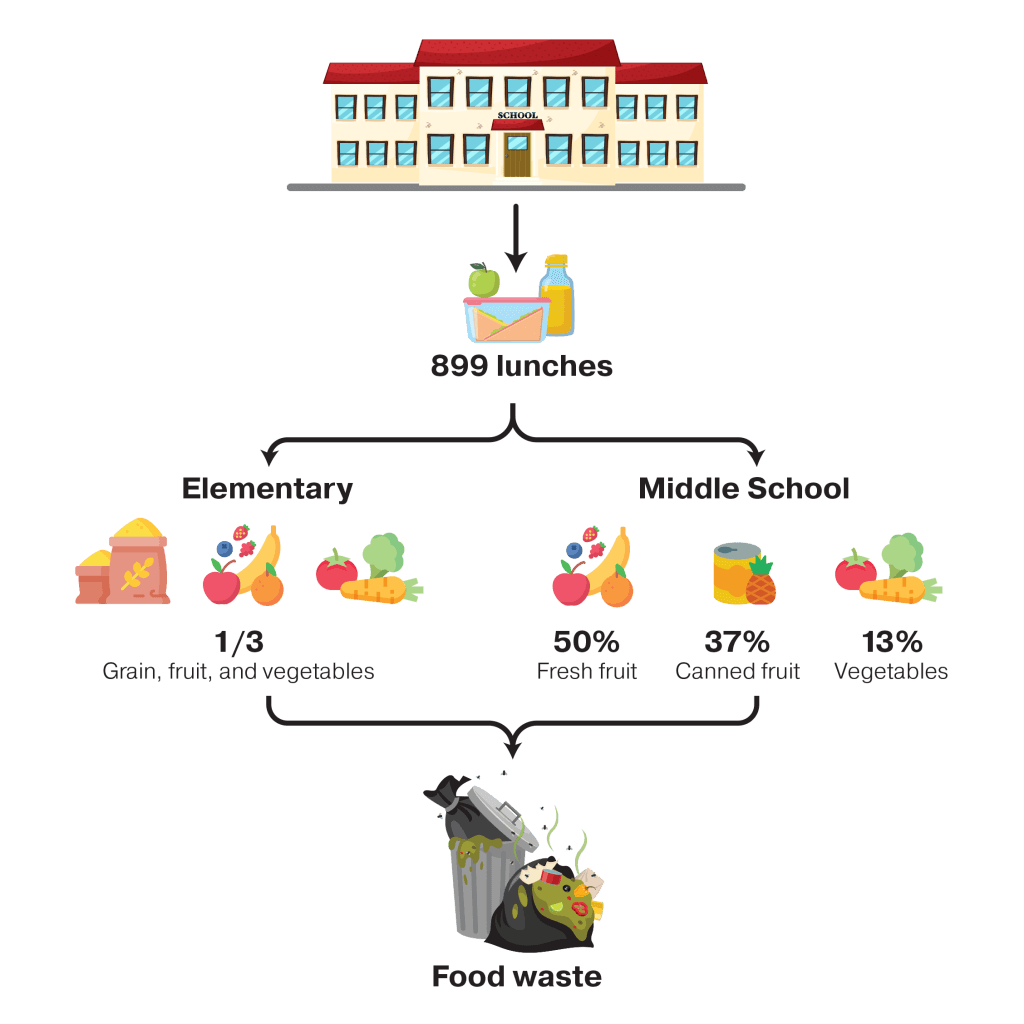
A study on food choices found that among 899 lunches served to elementary and middle school students in Colorado, elementary school students threw away more than a third of their grain, fruit, and vegetables, while middle school students threw out half of fresh fruit, 37 percent of canned fruit, and nearly one third of vegetables.
A study at a private school in Missouri found that its elementary, middle, and high school students wasted between 28% and 53% of their food by weight. This study further broke down the types of waste – primarily fruit and vegetable – and attributed food procurement practices as the cause of 85% of the food waste.
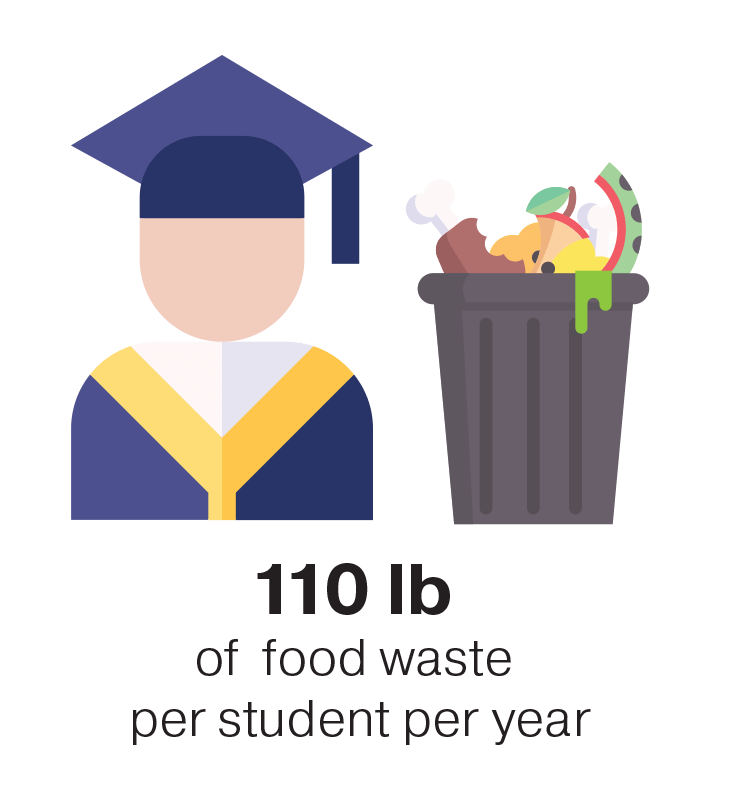
Waste is also a challenge among older students. A study by the National Resource Defense Council estimated that U.S. college students generate approximately 110 pounds of edible food waste per student per year.
There’s more than an environmental impact at play here. The WWF’s analysis of food waste in 46 schools estimated that if schools reduced food waste by a mere 3%, it could save as much as $52 million each year.
7 steps to manage food waste in your school
Food waste is a big problem, but there are a number of strategies schools can use to make this challenge more manageable.

1. Create a baseline. The first step to improvement is to understand the scope of your problem. This can be done by conducting a food waste audit, using any of the many publicly available food waste tracking resources. The U.S. Environmental Protection Agency, the U.S. Department of Agriculture, and the University of Arkansas have created a school-specific guide to conducting a food waste audit.
2. Build awareness among your students. The WWF study noted above found that students want to learn about food waste. At schools where students were educated about the consequences of food waste, waste decreased by an average of 3%. At elementary schools alone, the average decrease in waste was 14%. Creating an awareness program is a good first step for driving changes in behavior.

3. Separate waste streams. Having clearly marked bins for food waste, milk cartons, paper, and plastic can simplify recycling and organic waste disposal. It also helps build awareness. This simple act raises students’ awareness of the types of waste they’re creating, and can have an impact on their future choices.

4. Consider food donations. Not all food waste is inedible. The USD notes that schools that wish to donate food are protected from liability by the Bill Emerson Good Samaritan Food Donation Act. Those unopened milk cartons and sealed granola bars and yogurts can help to feed the more than 13 million children facing hunger in the U.S. Schools can connect with local food pantries or organizations like Food Rescue to determine the best way to donate food – and potentially help students in need.

5. Dispose responsibly. For inedible food waste, schools can implement a disposal solution that reduces their impact on the environment. Some schools are embracing on-site composting as a sustainable use of food scraps. In fact, more than 1,600 New York schools take part in the state’s Curbside Composting program. The state delivers training, equipment, and support to ensure successful composting. Schools are able to use the compost to support gardens and STEM lessons.
For schools short on the space or labor necessary to support intensive hands-on composting, an on-site biodigester provides an easy-to-implement alternative. This sealed equipment is installed directly in the kitchen – reducing the GHG emissions generated by transporting waste off-site. It breaks down food waste in an oxygen-rich process that eliminates the generation of methane. Its byproducts include carbon dioxide and grey water that can be disposed of down the drain.

6. Gather data. Accurate data on the types of food waste being generated can provide powerful insight for guiding future procurement. Schools can gather this data through regular application of a food waste audit. Or, to simplify this process, schools with an LFC biodigester on site can make use of its NFC card reader. The use of NFC cards allows biodigester operators to account for the types of waste entering the waste stream. This data is accessible via the LFC Cloud, which provides visibility into trends in preferred foods over time.
7. Adapt procurement. The most impactful way to reduce food waste’s impact on the environment is through appropriate purchasing. When procurement aligns with students’ food preferences and dietary needs, schools can reduce the upstream impacts of agriculture, food production, and packaging. Non-profits organizations such as Food Corps and The Common Market are available to help guide schools to new procurement strategies.
How you can drive change
Schools already have a full plate when it comes to the roles they’re expected to fill beyond the classroom. However, schools are also uniquely aware of the importance of nutrition in supporting learning. Action around food waste can help schools source food that will leave students feeling full and ready to learn.
Better still, schools have resources available to help them take the next step. In addition to the organizations listed above, schools can talk with vendors about solutions to address this multifaceted problem.
Representatives with Power Knot can help you determine the appropriate equipment for your needs and gauge the return on your investment. With this support, you can build a business case to help secure funds for an environmentally friendly food waste disposal solution. Reach out at any time with questions and to begin moving toward a more sustainable future.