

Kitchen waste can quickly become overwhelming for any organization with a significant amount of food preparation or production. An analysis of the kitchen waste can be even more intimidating. Yet undertaking an analysis of the kitchen waste can give organizations powerful insight into the types of kitchen waste you’re generating. With this understanding, it becomes much more feasible to implement a plan for waste reduction.
The first step to an analysis of kitchen waste is to separate and identify the types of waste being generated. Below, we explain how to separate various types of waste – and the additional benefits kitchen staff can gain through this exercise.
Types of commercial kitchen waste
Kitchen waste includes any type of materials used during food production processes, from purchasing through cleanup, that ultimately ends up in the trash. There are a number of different types of waste generated within most commercial kitchens. Understanding the types of waste generated in your commercial kitchen is an important first step toward reducing waste and your waste management burden.
Common types of kitchen waste include:

Food waste: From the scraps generated during food preparation to leftovers from customers, inedible food waste can add up quickly. Rather than disposing of food waste in the trash, organizations may find they can lessen their waste management burden by disposing of many types of food waste through composting or within an on-site biodigester.
In both cases, it is necessary to further separate food waste. For example, meat and dairy waste should not be composted. While biodigesters are able to break down far more types of materials, some food waste – including shells, hard bones, and large seeds like avocado pits – should not be put in a biodigester.

Fat, grease, and oil waste: This particular category of waste can cause big problems if not disposed of carefully. Residue oils and grease can clog or corrode sewage pipes and lead to costly backups. Instead, leftover fat, grease, and oil, should be wiped and disposed of before dishes are washed. While some organizations collect this waste for recycling, grease and fat can also be safely disposed of within your on-site biodigester.

Dry mixed recycling: Kitchen waste also includes the packaging that contains food products. Many of these materials can be separated for recycling pickup. This includes paper, cardboard, glass, and some plastic and metals.
Chemical waste: In some localities, certain commercial kitchen cleaning products and their containers may be subject to specific disposal requirements. Check the label to determine if your empty cleaning chemicals can be safely disposed of in the trash.
The value of separating commercial kitchen waste
Separating various types of waste makes an analysis of kitchen waste far more manageable. Some organizations opt to weigh each type of waste once a day for a set period of time in order to see which areas need the most attention. There are a number of options available to record this data, from spreadsheets to software designed specifically for the analysis of kitchen waste. Another option is to use technology solutions like the LFC biodigester, which collects and tracks data on the types of food waste ithat is ingested on an hourly basis.
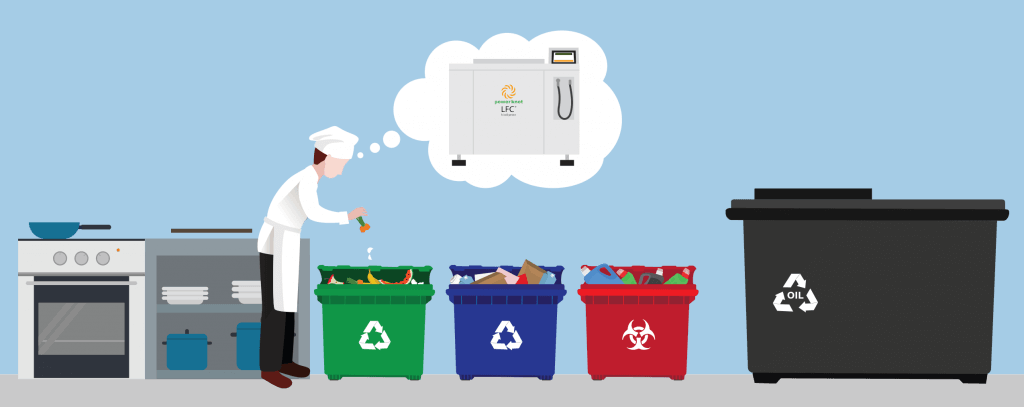
The ability to easily track the reduction in kitchen waste is a significant reason to separate waste types, but it’s not the only one. Additional benefits of separating various types of waste includes:
- Separating your waste can be more cost effective. Waste management can be expensive. Any effort to reduce the number of garbage pickups scheduled during the week can make an impact on your bottom line. By separating kitchen waste, organizations have an opportunity to find more cost-effective opportunities for disposing of certain waste types, from recycling drop-offs to on-site biodigesters.
- Separating waste can prevent cross-contamination. Commercial kitchen staff generally have to be experts at preventing cross-contamination on countertops and cutting boards. However, carefully separating food waste from potentially recyclable materials is also important in increasing recycling rates. Rubicon, a provider of waste and recycling management solutions, explains that some recycling firms will spot-check loads to determine if there are too many contaminants present. Those loads will be diverted to the landfill.
- Separating waste can reduce the risk of unpleasant odors, as well as rodent and insect issues. It doesn’t take long for food waste to begin to smell. To manage these odors, kitchen staff may have to take frequent trips outside to move heavy bags of waste to outdoor bins. Outside, those odors can rapidly attract rodents, insects, and other pests. Solutions like sealed biodigesters that are installed where the waste is generated reduce this risk, as well as the burden on kitchen staff.
Best solutions for reducing kitchen waste
Through the process of separating types of kitchen waste, food preparation staff will quickly learn that organic material makes up a significant amount of daily waste. However, getting clear data as to how much of your total waste is made up of organic waste makes it possible to create a plan for waste reduction and determine metrics by which to judge success.
There are many solutions that commercial kitchens can try to reduce their organic waste, including:
- Identify trends in food waste to guide adjustments to your ordering and meal planning.
- Regularly rotate stock to ensure ingredients are used by their best-by date.
- Donate day-old food to local food banks and related organizations.
- Compost food scraps, where possible, to prevent adding waste to landfills.
- Implement an onsite biodigester to turn food waste into grey water, while generating data to drive more impactful waste reduction areas.
Of these solutions, the clear winner is the option that helps organizations generate more data, and drive more progress – and this is just one of the many benefits organizations are realizing with their LFC biodigesters. This sealed, on-site solution reduces the burden of waste disposal on your staff and the environmental impact of food waste sent to decompose in the landfill.
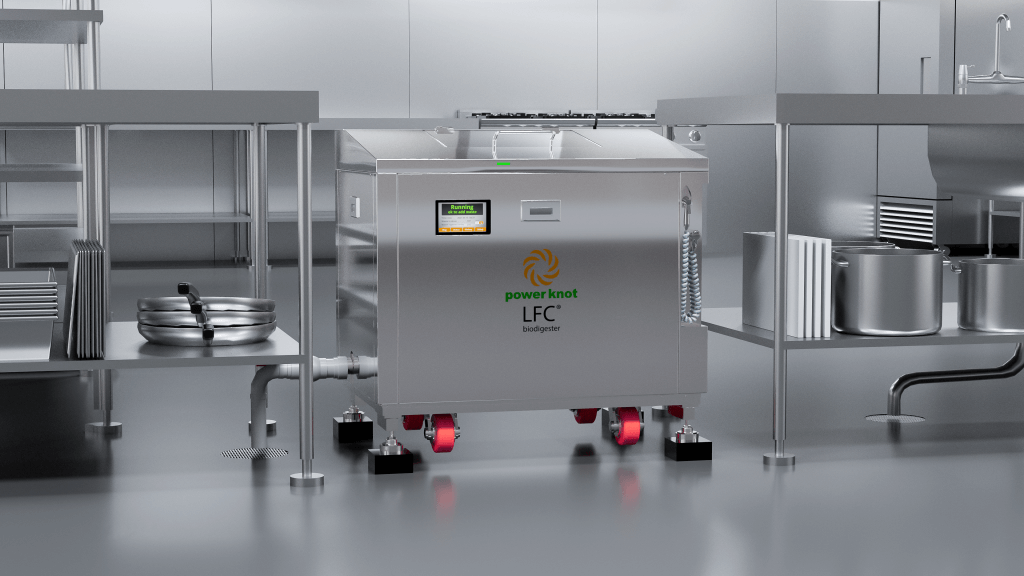
To learn more about how an LFC biodigester can move your kitchen waste management from analysis to action, contact Power Knot today.