

The way corporations approach sustainability is changing. While many companies have taken a stand on environmental sustainability over the last twenty years, today’s initiatives look beyond recycling programs and LEED building certifications. Corporations are recognizing that the core principles of sustainability go beyond the environmental impact and are now accounting for human, social, and economic factors as well. Now, the best corporate sustainability goals aim for a reduction in wasted resources, as well as wasted time and labor.
Below, we explain how corporate sustainability goals are shifting to help ensure companies like yours are leading in this change.
Where food waste reduction fits into ESG commitments
ESG frameworks (environmental, social, and governance) have been used as a tool to evaluate corporate performance and sustainability since at least the 1960s, but this tool’s usage has gained momentum in recent years. In its guide Anatomy of an Effective ESG Program, Gartner predicts that organizations will face broad-based ESG reporting requirements by 2025, as ESG becomes a corporate imperative. Organizations ranging from the U.S. Securities and Exchange Commission to the EU Council have taken a stand on the need for ESG reporting.
With this shift, companies have a choice. They can wait until compliance requirements drive their ESG strategy or they can take time today to dig deeper into their environmental, social, and governance priorities.
Food waste reduction initiatives have not been a leading sustainability priority for corporations as a whole, but these actions can have an impact across each area within ESG commitments.
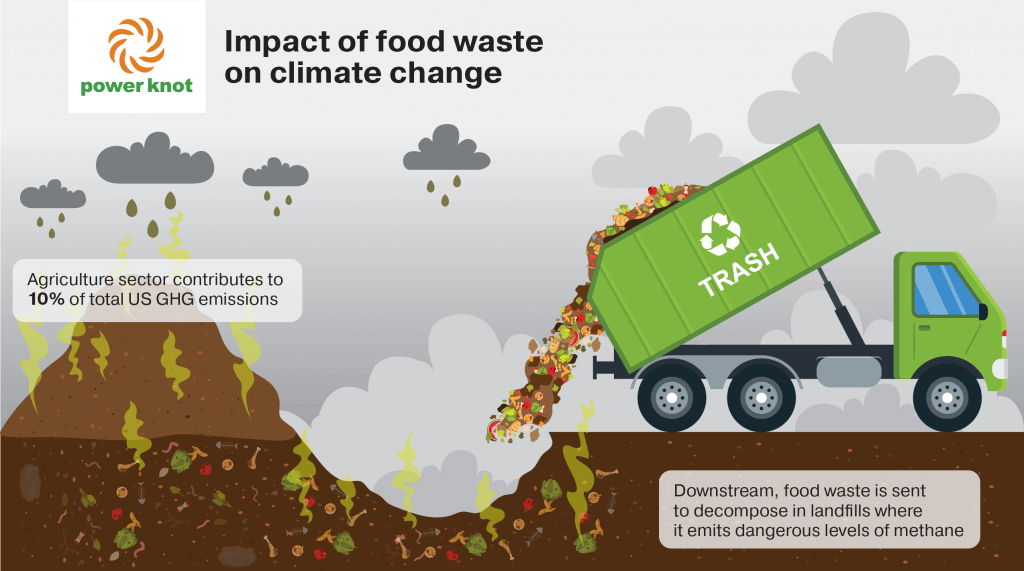
- Environmental: At every phase of production and disposal, food waste has a tremendous impact on climate change. Purchasing more food than is eaten leads to excess agricultural production and associated greenhouse gas (GHG) emissions. In 2021, the U.S. Environmental Protection Agency estimated that the agriculture sector contributed 10% of total U.S. GHG emissions from soil and livestock waste management practices, among other contributors. Downstream, food waste is sent to decompose in landfills where it emits dangerous levels of methane. Implementing responsible food purchasing and disposal strategies can help corporations mitigate their role in climate change.
- Social: Climate change has major health impacts, ranging from respiratory and heart diseases to pest-related illnesses, according to the EPA. Any step taken to mitigate climate change has a direct impact on people’s health and well being. However, there are some food waste disposal strategies that organizations can use that reduce the amount of waste handling performed by staff. For example, a biodigester installed within the food preparation area provides Lean efficiency in waste management by reducing the strain on employees of hauling heavy garbage outside.
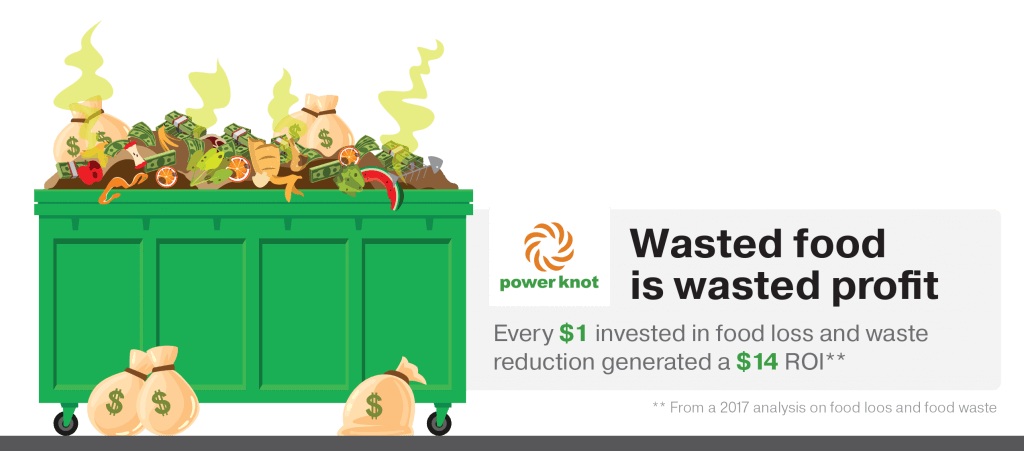
- Governance: Wasted food is wasted profit. In fact, The Business Case for Reducing Food Loss and Waste, Champions 12.3’s 2017 analysis of food waste reduction investments in the UK, found that every $1 invested in food loss and waste reduction generated a $14 return on average. Adjusting purchasing and reducing the cost of food waste disposal demonstrates good governance practices to your corporate stakeholders.
Corporate strategies that can reduce food waste
Taking the first step toward a broader commitment to sustainability can be difficult. Fortunately, today, a number of popular corporate sustainability tools and standards are incorporating food waste reduction commitments. Organizations that have already made commitments to more sustainable construction or operations may find it a particularly easy step to expand their focus to include work to reduce food waste.
A few of these tools include the following:
- LEED Certification: The longstanding standard for green buildings now includes a focus on operational sustainability. LEED O+M offers credits for solid waste management and sustainable purchasing. It also encourages organizations to conduct a waste stream study to better understand how much waste is generated during typical operations.
- Lean management: Lean methodology is all about minimizing waste in a production environment, making this a perfect tool for corporations ready to reduce food waste. Lean encourages businesses to eliminate anything that doesn’t add value to the customer, and food waste certainly fits that bill. In fact, researchers have demonstrated how Lean concepts, including value stream mapping, have been used to reduce waste in the poultry industry.
- Government-led waste reduction programs: Many governments are putting waste reduction programs in place. Examples include the U.S. Department of Energy’s Better Climate Challenge, USDA’s Food Loss Champions, and the Scottish government’s Zero Waste Scotland, among many others. These voluntary programs give corporations a framework for moving forward and, in some cases, provide funding support.
- Zero Waste to Landfill validation: Any organization that is committed to removing waste from their organization must have a plan in place to eliminate food waste sent to the landfill. The challenge here is that organizations taking this step must ensure they understand the environmental implications of any waste reduction strategies. Zero waste-to-landfill programs sometimes send waste to incinerators rather than landfills. However, this solution also emits pollutants. Guidelines such as UL 2799A, the Standard for Environmental Claim Validation Procedure (ECVP) for Zero Waste Classification, require at least 90% of waste diversion be through methods other than waste-to-energy.
Find the right equipment to support your commitment
Once a framework for food waste reduction is in place, corporations will find they have many tools and solutions available to help them achieve their goals. However, the most effective tools include solutions like the LFC biodigester, which can help keep food waste out of landfills while reducing waste management costs and optimizing operations. This is what Gartner calls a win-win goal in its Anatomy of an Effective ESG Program. The LFC biodigester can help companies address stakeholder concerns, while making a positive long-term impact on profit margins.
To learn how an LFC biodigester can help you, contact Power Knot today.