

The Impact of Food Waste
Food waste is the act of sending uneaten food to the landfill. It is a global problem with tremendous environmental implications. Fortunately, it’s also a challenge that has never been easier, or more profitable, to address.
In this article, we’ll explain what food waste is and why it’s an issue, what to do with unusable food instead of sending it to the landfill, and the business case for taking action to reduce your food waste.
What is food waste?
Food waste occurs at every single stage of food production. Food waste can be as simple as throwing uneaten food away at home or at dining establishments, but it can also be the result of over-purchasing food that will never be prepared or is damaged in some way during storage. It can happen in transport of goods to the retail stages or at the farm level, when food is exposed to insects, rodents, bacteria, water damage and more.
In the U.S., this waste impacts a staggering 30% to 40% of the food supply, based on estimates from the U.S. Department of Agriculture (USDA). Not knowing what to do with food waste has led to unnecessary disposal of 133 billion pounds or $161 billion worth of food, according to USDA’s 2010 research.
Why is food waste a problem?
Food waste has far-reaching implications, beyond even the ethical problem of wasting food while 38 million people go hungry in the U.S. alone, according to the USDA’s 2020 Household Food Insecurity in the United States report. That’s roughly equivalent to the entire population of California.
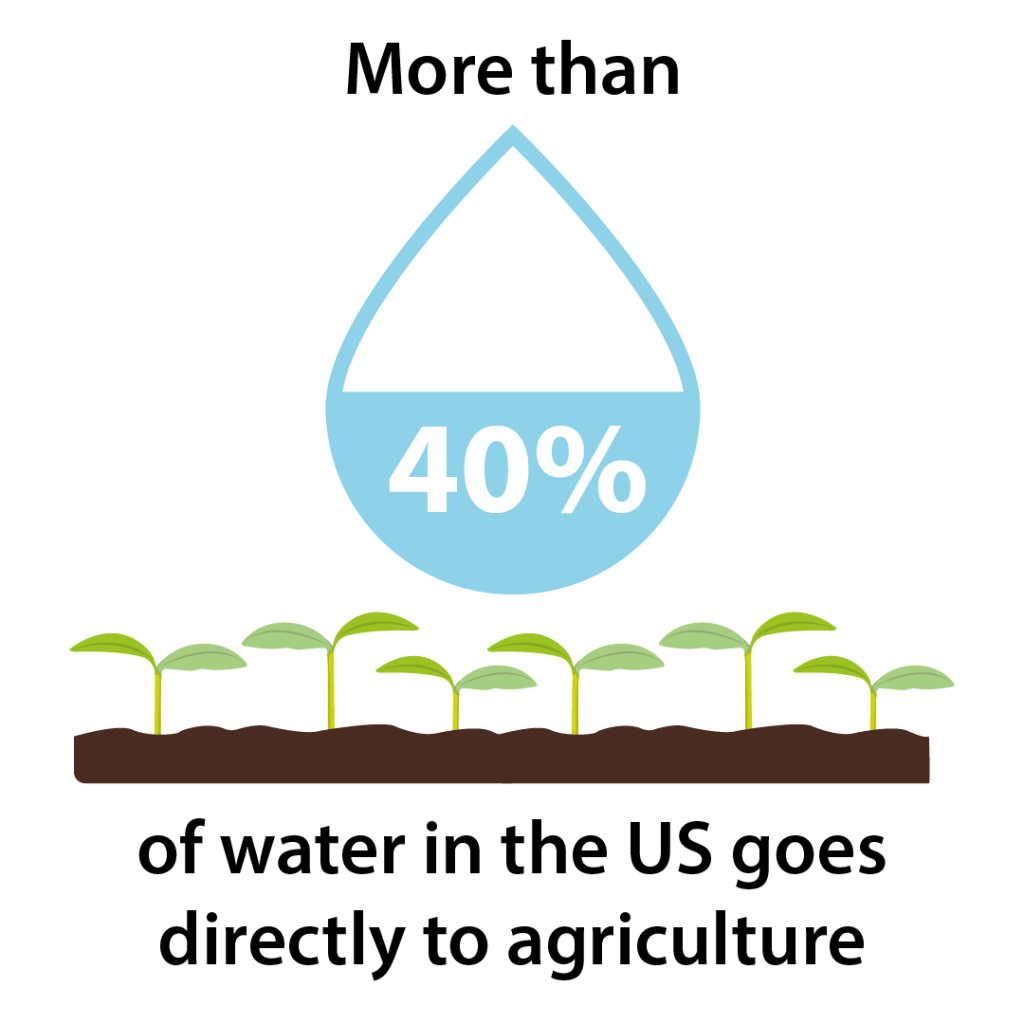
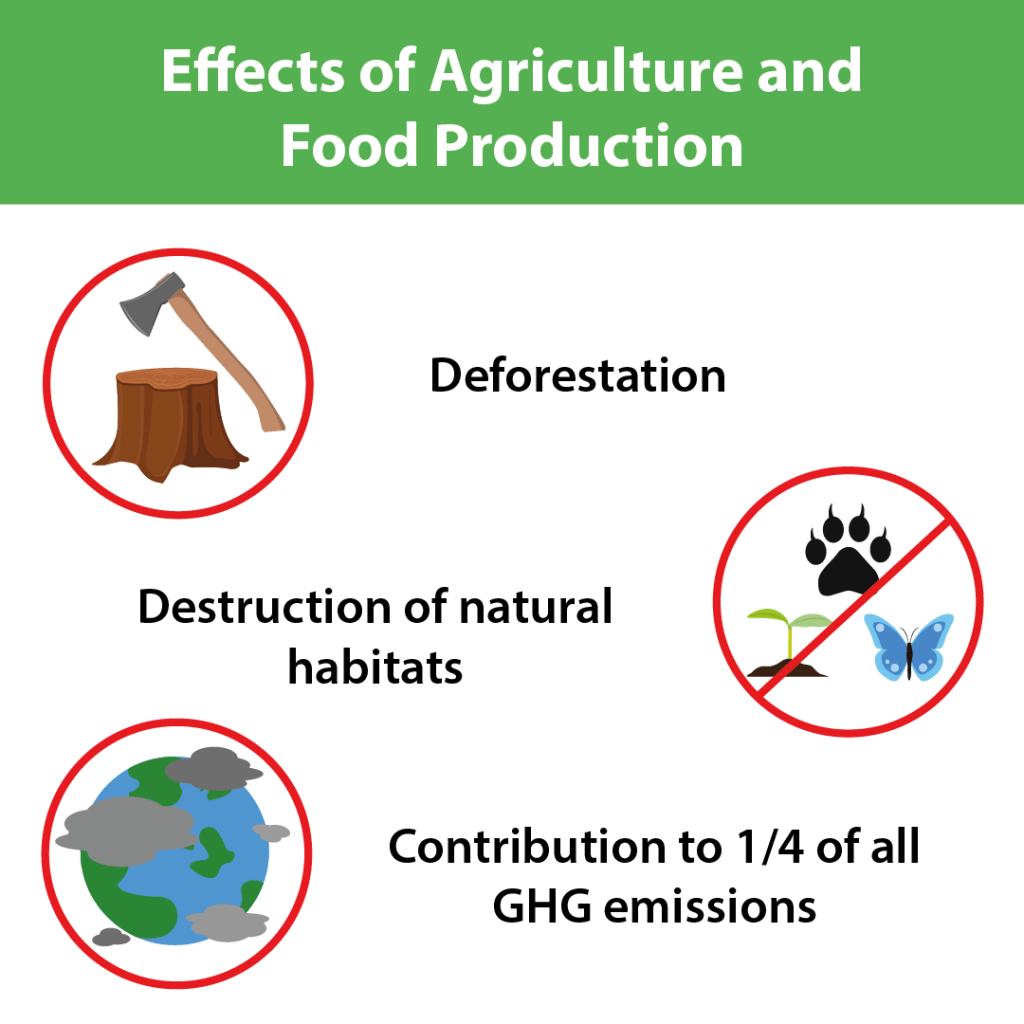
More than 40% of water used in the U.S. goes directly to agriculture. Significant amounts of land must be cleared to support crops, destroying wildlife habitats and reducing biodiversity. Food production accounts for a quarter of all global greenhouse gas emissions. Yet, a significant portion of this valuable water and energy usage goes to waste. However, this is just the beginning of the problem.
Most food waste is transported to landfills, where it is left to decompose through an anaerobic process, that is, without oxygen. As this organic material begins to degrade, it releases methane gas, a greenhouse gas that is 87 times worse for the atmosphere than carbon dioxide. That effect may fade somewhat after 20 years, but every day each person in the U.S. reportedly adds another one pound of food waste in a perpetual cycle of waste.
However, there’s an opportunity hiding here. Because methane is so damaging to the atmosphere in the short term, reducing methane emissions from landfills presents the biggest opportunity we have to dramatically decrease the risk of global warming in the short term. Finding an environmentally friendly solution for what to do with your food waste can make a tremendous impact on greenhouse gas reduction.
The business case for alternatives for food waste
Admittedly, it can seem challenging from a business perspective to drive the process changes needed to make a difference in climate change. Part of the problem here comes from a lack of transparency into data that many organizations could use to drive concrete solutions. With clear data, organizations can gain a sense of how food waste is impacting them on a business level.
Tracking food waste can be as simple as logging waste through a food audit or harnessing the data analytics available on alternative means to dispose of food waste such as biodigesters. Companies that have tracked this waste have found the following business advantages:

Convenience: Aerobic biodigesters don’t smell so they can be installed in the kitchen or warewashing area. This allows the disposal of waste where it is generated and as it is generated, without needing buckets and plastic bags.

Cost savings: The cost for transporting food waste to landfills grows each year. Businesses in more remote or rural areas often find waste management to be one of their highest expenses.

Regulatory compliance: To help combat climate change, many local jurisdictions are now enforcing environmental laws that limit the amount of food waste going into landfills. Six states have passed laws to keep food out of landfills, and some cities are following suit. If your locality is not enforcing landfill alternatives for food waste yet, now might be the time to prepare.

Convenience: The process of disposing of food waste is so entrenched in most food-based businesses that few stop to think about just how labor intensive it can be. Some facilities require time to separate waste into bins for food waste, recycling, and trash. Then there is the daily transport of food waste to the correct bin. Finally, a contracted firm transports the food waste. It amounts to hours of labor that could be put to better use.

Cleanliness: As food waste decomposes, it produces methane as well as other smelly gasses. The strong odors are disgusting for your employees, can deter your customers, and may attract unwanted guests such as insects and pests.
What to do with food waste instead
Fortunately, there are a number of ways to dispose of food waste instead of sending it to the landfill. The most effective strategies begin by harnessing insight around food waste to better understand the scope of your specific problem. This can help reduce food purchasing or production.
Ultimately, however, every business should identify an appropriate food waste alternative to landfills. While most businesses will find there is room to reduce their waste, altogether eliminating food waste is improbable. Fortunately, there are many options available. It’s just a matter of choosing the best solution for your organization’s food waste disposal.
Many businesses are finding that an onsite aerobic biodigester can best address each of the four business challenges noted above. Biodigesters break down organic materials through the use of microorganisms and enzymes. The byproduct of this process is gray water that can be discharged directly into the drain or, if filtered, be used for onsite irrigation. These systems eliminate odors, reduce steps needed to dispose of trash due to a location directly in the kitchen, help businesses comply with landfill regulations, and have demonstrated an ROI in as little as 18 months.
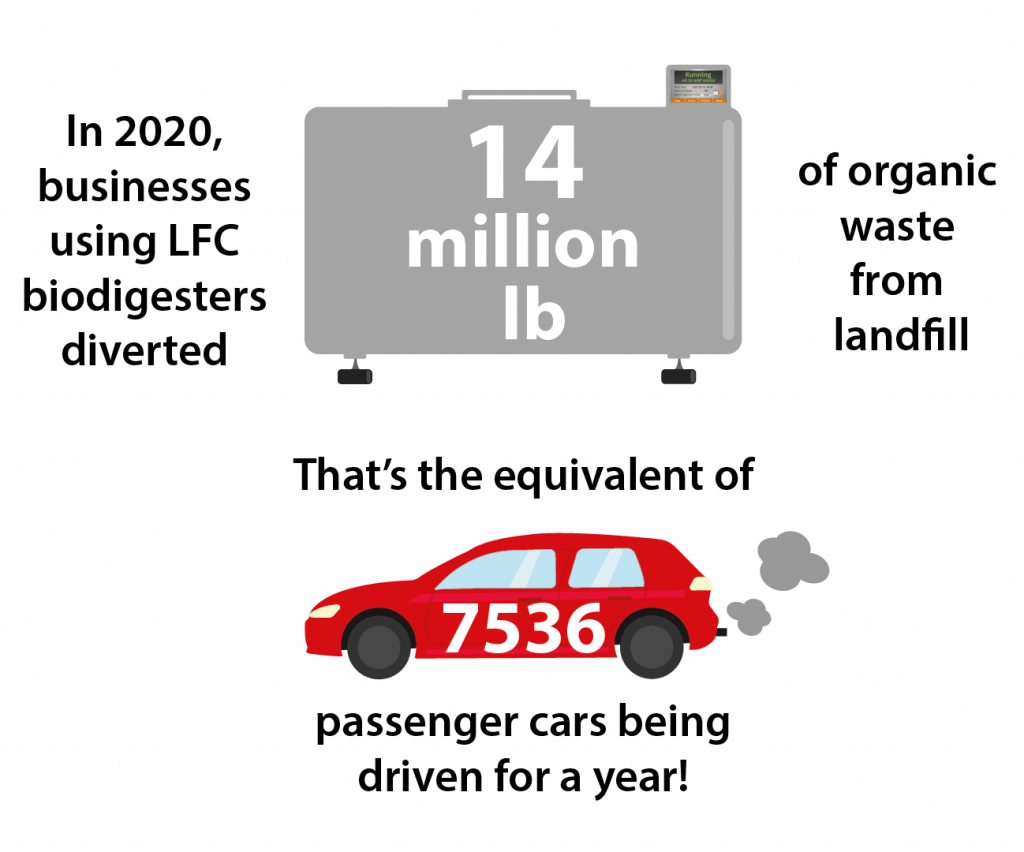
In 2020, businesses using LFC biodigesters diverted 14 million pounds of organic waste from landfills, making a tremendous impact on the food waste problem. If you’re ready to take action on reducing your food waste, contact Power Knot today.