

Food is as much a part of the amusement park experience as thrilling rides and engaging entertainment. At some parks, food is central to guest experience through its food and beverage-themed events and signature offerings. With this focus on food as an attraction, more amusement parks are emphasizing sustainable food disposal.
Approximately 246 million people visited the top 25 amusement parks around the world in 2024 – and each of those guests generated approximately 1 lb (500 g) of food waste each day of their visit. That’s a lot of waste for any organization to manage. Fortunately, new solutions exist that allow amusement park operators to simplify waste hauling that can contribute to a positive guest experience and reduce operational costs.
The Impact of Food Waste
Food waste is a global problem, but it has a unique impact on the amusement park industry. Amusement parks feel the pain of wasted food through its impact in the three following areas.
1. Environmental Impact
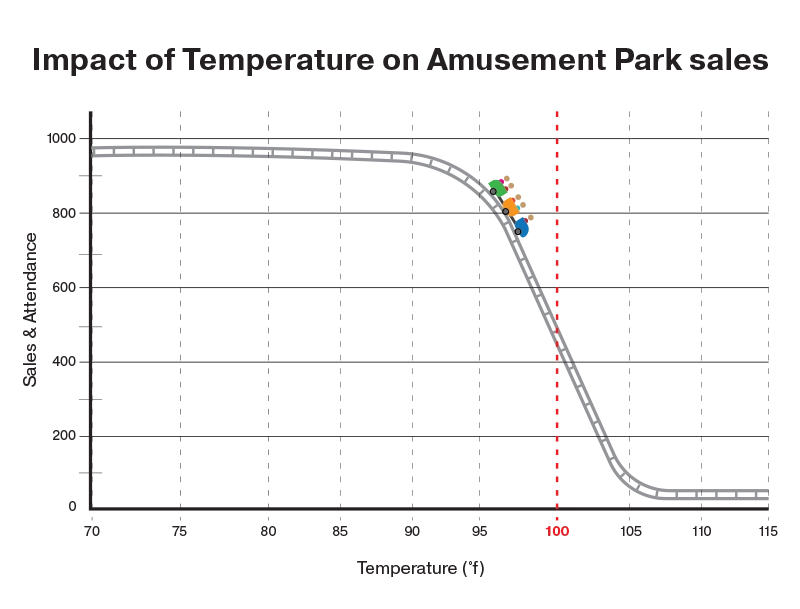
The Eric Friedheim Tourism Institute points out that rising temperatures due to climate change create health risks and deterrents for attendance at leading amusement parks in Florida. SeaWorld reported a decline in attendance in 2023 in large part due to adverse weather that included heavy rainfall and wildfires. Six Flags cited severe weather—including higher rainfall, wildfires, and temperatures—as cause of disruption to 2025 operating performance.
Food waste plays a damaging role in climate change. When food waste is sent to landfills, it is left to decompose in a sealed, oxygen-free environment. This results in the creation of methane. This greenhouse gas (GHG) accounts for approximately 20% of global GHG emissions. With a global warming potential 84 to 87 times greater than carbon dioxide over a 20-year period, methane packs a far more potent punch than carbon dioxide. By diverting food waste from landfills, amusement parks can mitigate this damage.
2. Guest Experience
Park aesthetics have an outsized impact on the guest experience. It’s why many amusement parks prioritize a clean environment with attention to waste management. When park operators simplify waste cleanup for guests and employees, they free employees up to add value in other guest-facing interactions.
Moreover, guests are increasingly demonstrating that they want evidence of sustainability in their amusement parks. Ticketing specialist ROLLER has found that 79% of guests account for sustainability in their decision to visit an amusement park, with many willing to pay more for an eco-friendly experience. Evidence of waste reduction in food areas – from multi-stream waste bins to signage about food waste improvements – can invite guests to become part of parks’ sustainability initiatives.
3. The Bottom Line
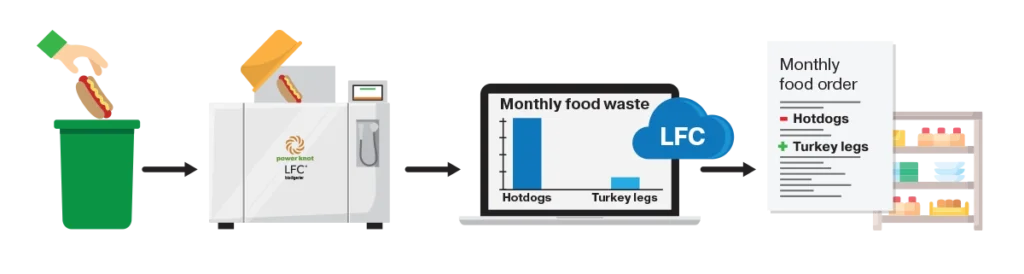
Sustainability doesn’t have to add to your expenses. The right solutions can help your bottom line. When it comes to food waste, park operators can benefit from technology that delivers data to shape food purchasing and serving suggestions. For example, the LFC biodigester easily breaks down food waste onsite and returns real-time data that operators can use to identify waste trends. This can help operators identify opportunities to adjust their food spending for more attractive items.
From a big picture perspective, sustainability solutions are also good for business. Leisure industry advisor Philip Shepherd notes that one large North American park operator found that its high Environmental, Social and Governance (ESG) rating kept investment steady even in years when their credit rating decreased. New park operators may find it easier to secure investment dollars when they can demonstrate attention to ESG commitments.
Where Amusement Park Food Waste Happens
With food taking center stage at many amusement parks, it’s important to consider all of the areas where waste is generated. A food waste audit can help identify high-waste generators and potential solutions.
Serving areas park operators should evaluate include:
- High-volume concession stands: From snack standards to signature treats, concession stands are beloved by guests. IAAPA surveys have found a majority of park visitors (94%) have a favorite amusement park food. These popular indulgences generate plenty of waste.

- Sit-down restaurants: Themed dining experiences and pre-paid meal plans continue to drive big traffic to sit-down restaurants. Guests ready to get back to rides or meet reservations are prone to leave ample food waste behind.

- Employee cafeterias: These backstage dining areas provide a central spot for cast to grab a bite to eat. Employees on a schedule have a tendency to leave food behind.

- Food and beverage events: Food-related festivals have become a big attendance booster. The Eric Friedheim Tourism Institute reports that one park reported seeing food and beverage revenue climb by tens of millions in a year with ample event programming. Epcot leveraged events like its International Food & Wine Festival to boost attendance by nearly 20% in 2024, even as other parks saw attendance drop. With more menu items available, waste management demands become more intense.

Amusement park operators are increasingly turning to predictive modeling and warehouse inventory management solutions to help right-size purchasing and reduce spoilage. Portion control can help reduce waste across each of these channels. Donations can keep uneaten food out of landfills. Once these avenues are exhausted, park operators must identify opportunities to sustainably dispose of waste.
Mitigate the Damaging Impact of Amusement Park Food Waste
Some amount of waste remains unavoidable. A solution that can both dispose of waste and deliver the data that informs strategy provides a bigger return on the investment. This is where a solution like the LFC biodigester comes in.
Sealed, odor-free biodigesters can be installed directly in food preparation or storage areas to simplify waste disposal for employees. Biodigesters are available in a range of sizes to fit small spaces or accommodate large amounts of waste – up to 13,200 pounds (6000 kg) of waste per day. This equipment breaks down waste in an environmentally friendly process that mimics natural decomposition. It emits a grey water that can be harnessed for landscaping or disposed of down the drain. Moreover, operators can generate reports that include data from machines of every size across the park. This cross-section of data can help spur new waste reduction efforts for a stronger ROI.
Centralized dining, in employee cafeterias and sit-down restaurants, provide a prime location for the installation of equipment for the disposal of food waste. With multi-stream bins at each of these locations, park operators can easily dispose of food waste in an environmentally friendly way. To identify the equipment size that might be right for your food service areas, connect with a Power Knot representative today.