

Managing food waste remains one of the most pressing challenges for organizations in hospitality, healthcare, education, and commercial kitchens. As part of their ESG and sustainability goals, many are investing in biodigesters to reduce landfill use, cut carbon emissions, and lower waste disposal costs.
However, selecting the right biodigester can be difficult. While many brands market themselves as the most efficient solution, not all deliver on performance, reliability, cost of ownership, or long-term value. When comparing options, the LFC biodigester clearly stands out and offers significant advantages over alternative food digesters.
Here’s a breakdown of the most critical areas where the LFC biodigester outperforms competitors:
1. Digestion Process: Real Digestion vs. Maceration
True biodigesters use aerobic digestion, where naturally occurring microorganisms break down food waste in the presence of oxygen.
- LFC biodigester: Uses a smart, programmed system that balances mixing with rest periods where microorganisms cover waste for digestion. The paddles inside the drum turn backwards and forwards direction to enable full waste coverage. The turning is just for a quarter of the total time.
- Other digesters: Continuously turns the paddles in one direction all day every day which prevents the microorganisms from being able to digest the food waste. Instead, the waste is macerated, which creates sludge and slurry with high solids content which is forced out of the machine.
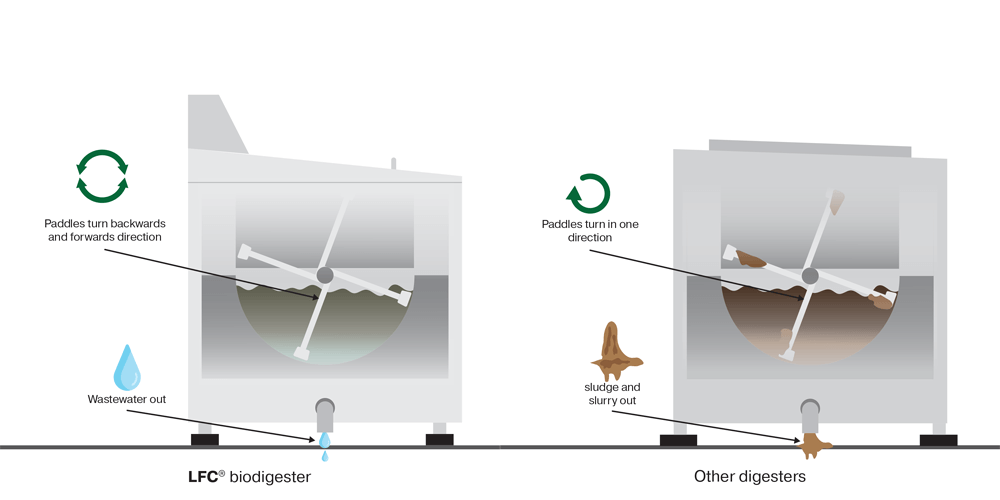
Bottom line: The LFC biodigester performs true digestion. Other digesters mostly grind and flushes macerated waste.
2. Microorganism Use: Sustainable vs. Constant Dosing
- LFC biodigester: Maintains an optimal internal temperature that encourages natural regeneration of microorganisms, significantly reducing the need for replenishment. Microorganisms only need to be supplemented once a year under normal operating conditions.
- Other digesters: Requires continuous dosing of enzymes and microbes, often requiring a service call (that you have to pay for). The machine may use only cold water which is not optimal for the microorganisms to thrive, resulting in increased cost of ownership.
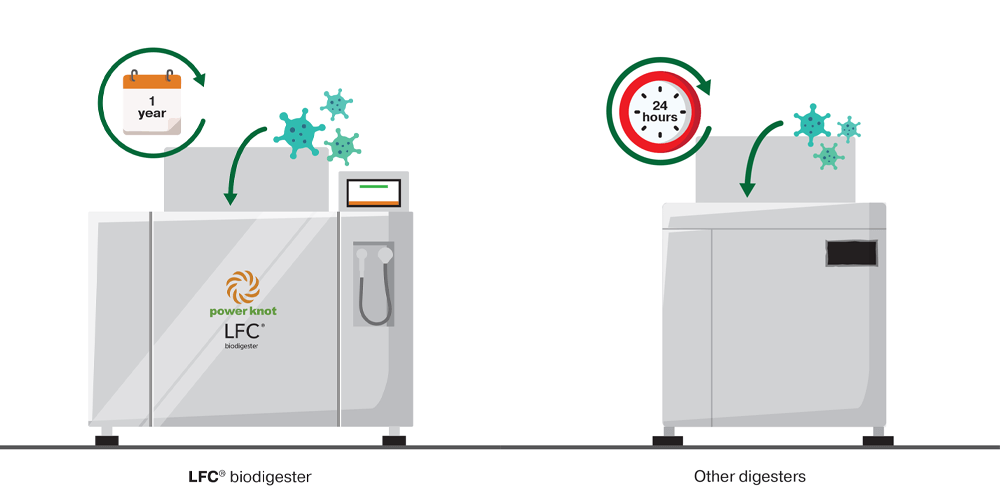
Bottom line: The LFC biodigester minimizes ongoing inputs; other digesters depend on them.
3. Machine Capacity: True Sizing vs. Misleading Specs
- LFC biodigester: Rated to hold 100% of its specified daily capacity, with the ability to process up to 100% more depending on load frequency and waste type.
- Other digesters: Often sold with the holding capacity to be far less than the claimed daily processing capacity. Further, the machine may be sold with significantly overstated daily processing capacity which forces users to load food waste continuously throughout the day—an unrealistic expectation for most operations. Under typical usage, a user may expect to process only half what the manufacturer may claim.
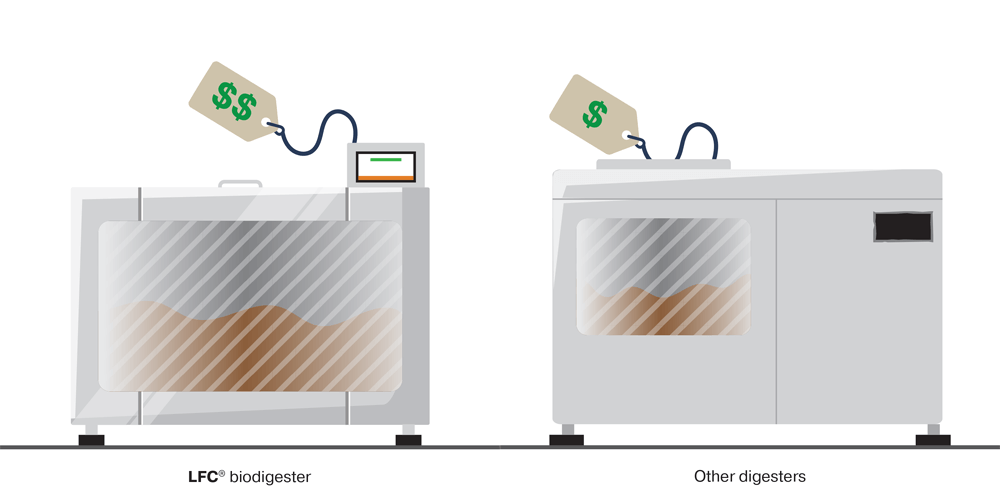
Bottom line: The LFC biodigester handles more food waste with fewer headaches.
4. Build Quality: Long-Term Durability
- LFC biodigester: Built entirely of stainless steel in a mirror finish, ensuring long-term durability and high resistance to corrosion in humid or salty environments.
- Other digesters: Uses a mixture of some stainless steel and painted steel and may include coated or plastic parts that degrade over time.
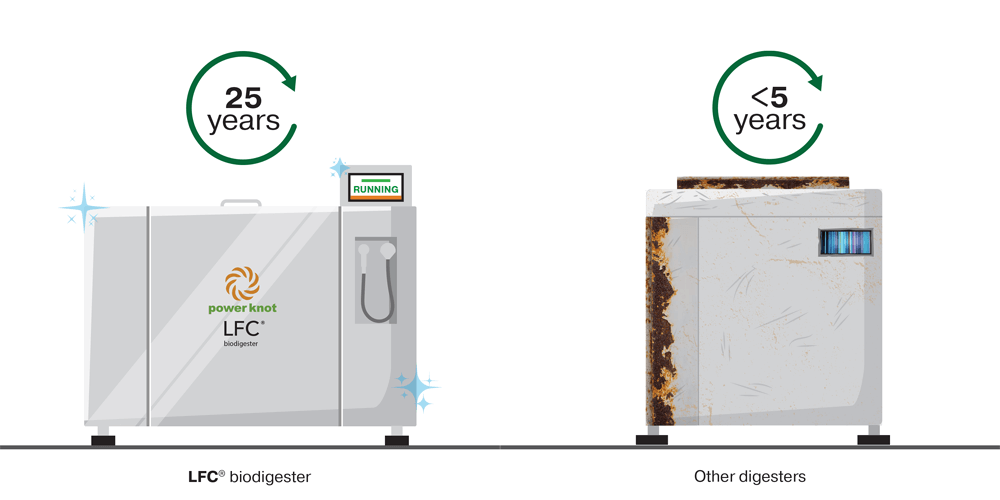
Bottom line: The LFC biodigester is engineered for industrial strength and longevity.
5. Innovation and Product Evolution
- LFC biodigester: Released its ninth generation in early 2025, featuring enhancements like CO₂ emissions tracking, advanced diagnostics, and real-time data integration.
- Other digesters: Lacks consistent updates (if any at all in the last decade) and is often shipped with outdated software or hardware.
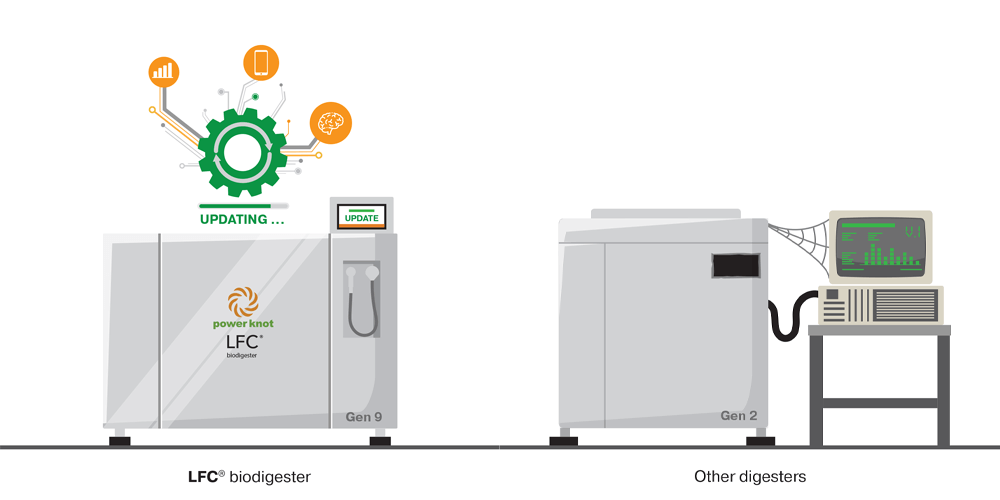
Bottom line: The LFC biodigester evolves with your sustainability needs. Other digesters fall behind on modernization.
6. Size Selection
- Power Knot: offers nine different sizes of LFC biodigesters to digest anywhere from 10 kg to 6000 kg (25 lb to 13,200 lb) per day.
- Other manufacturers: some may have only one or possibly three of four different sizes, without the capacity range to match Power Knot
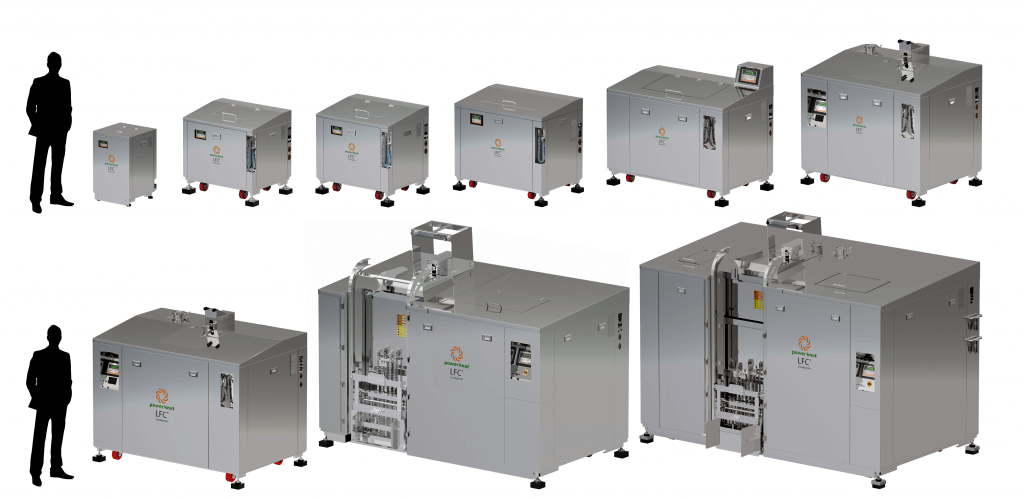
Bottom line: With its wide range of products, one LFC size will be right for your organization.
7. Wastewater and Drainage
- LFC biodigester: Outputs low-PPM grey water that can flow directly to a standard drain. In most jurisdictions, a grease trap is not required. The water contains active microorganisms that continue to break down residual waste in the drain lines.
- Other digesters: Often requires a grease trap due to high levels of undigested solids in its wastewater, increasing installation complexity and ongoing costs.
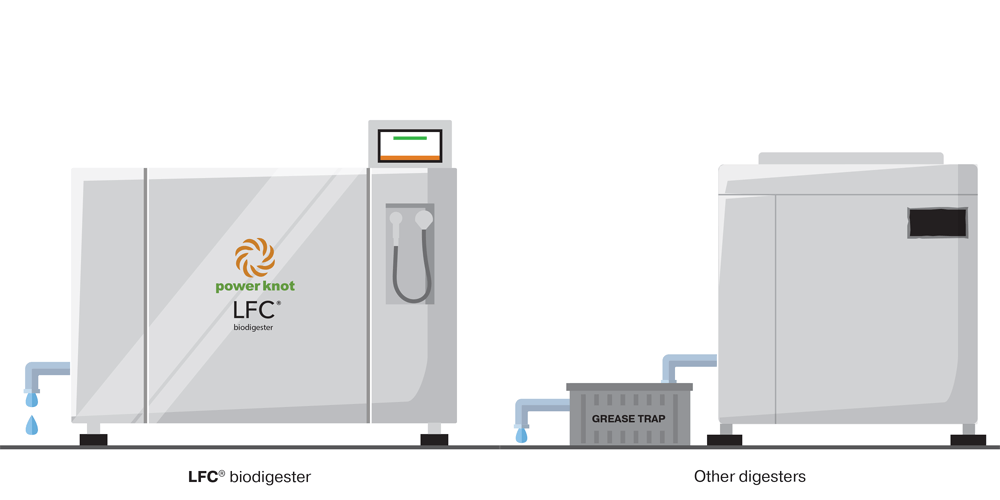
Bottom line: The LFC biodigester is cleaner and more compliant with fewer infrastructure requirements.
8. Diagnostics and Uptime
- LFC biodigester: Equipped with over 60 smart sensors, it detects faults, wear, or anomalies in real time. Automated alerts and remote diagnostics via email and dashboards help minimize downtime.
- Other digesters: Requires manual inspection and service technician visits to diagnose and resolve issues, increasing downtime and operational interruptions.
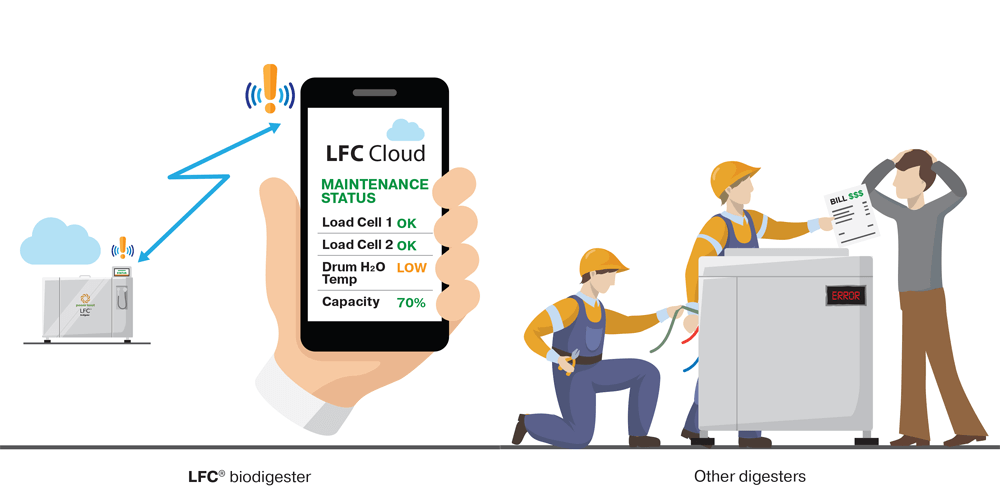
Bottom line: The LFC biodigester keeps your operation running smoothly. Other digesters don’t.
9. Waste Data and Reporting
- LFC biodigester: Tracks comprehensive data on food waste volumes and CO₂ reductions. It can break down data by department or waste source, supporting internal audits, ESG reporting, and municipal compliance. Free lifetime access to the LFC Cloud which tracks real time data analytics from the LFC biodigester.
- Other digesters: Provides only basic cumulative totals with limited granularity. Requires a monthly subscription to view waste metrics.
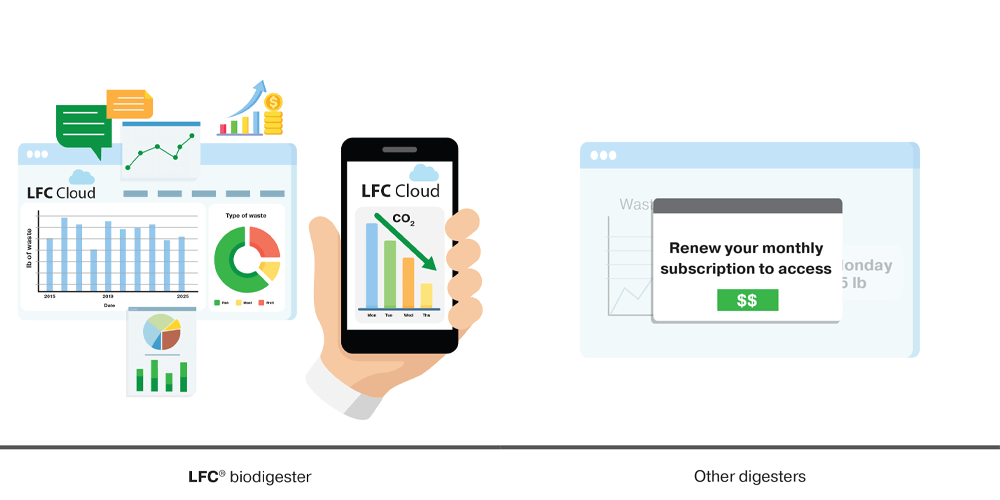
Bottom line: The LFC biodigester gives you actionable insights; other digesters offer limited data.
10. Weighing the Waste
- LFC biodigester: Weighing system is certified by NTEP so you can be assured that the weights of the waste ingested are true and accurate.
- Other digesters: Un-certified weighing system means that any weights of the waste ingested are suspicious. As a result, you should not use such statistics in any public document.
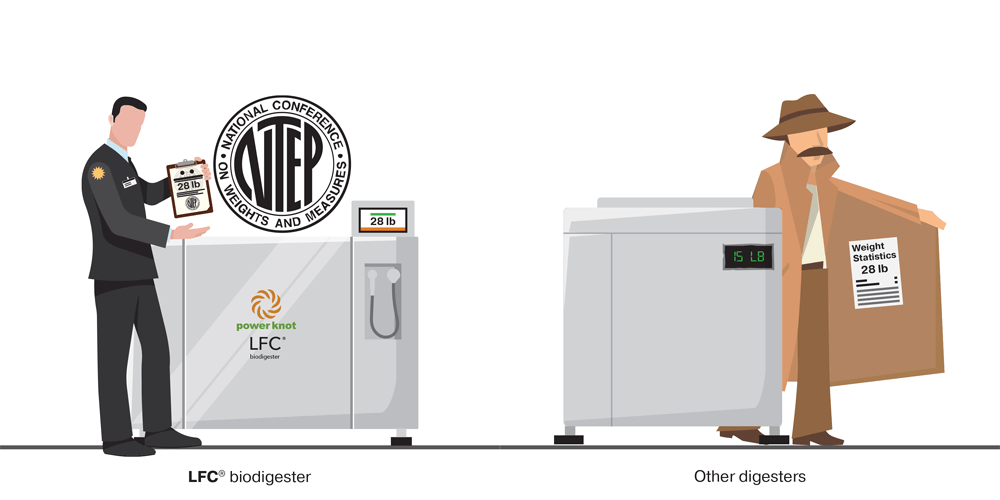
Bottom line: The LFC biodigester gives you accurate data; other digesters may as well make up the data.
11. The Complete Solution
- Power Knot: Offers multiple bin tippers, effluent pumps, lug carts, and GSM modems to enable you to move, digest, pump, and report your waste.
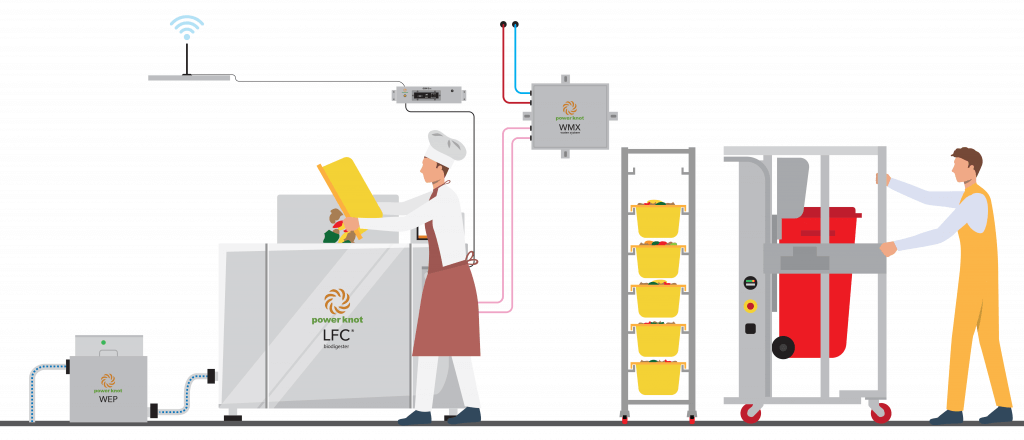
- Other manufacturers: Just the biodigesters.
Bottom line: With its wide range of products, Power Knot can offer a complete solution; others cannot.
LFC Biodigester vs. Other Digesters
| Feature | LFC biodigester | Other digesters |
| Digestion Method | Aerobic | Aerobic and maceration-style grinding |
| Microorganism Use | Supplemented once/year | Daily and weekly enzyme dosing |
| Capacity | True to specification | Often undersized |
| Build Quality | All stainless steel, mirror finish | Mixture of stainless steel, painted steel, and plastic parts |
| Wastewater Output | Low PPM, grease trap often not required | High PPM, grease trap usually required |
| Fault Detection | 60+ sensors, automatic and remote alerts | Manual troubleshooting |
| Waste Data | Detailed, department-level | Basic, limited |
| Product Evolution | 9th-gen, ongoing innovation | Outdated technology |
If your organization is looking for a reliable, data-driven, and truly sustainable food waste solution, the LFC biodigester is the clear choice. With smarter digestion, lower total cost of ownership, and robust performance, it provides a long-term solution aligned with modern operational and environmental goals. Contact Power Knot today to learn how the LFC biodigester will transform your food waste management.