

Organic waste management infrastructure can play a sizable role in mitigating climate change, and municipalities around the world are beginning to recognize this. Through regulatory rulemaking around the disposal of organic waste, cities, states, and countries are driving action on food waste. While these efforts remain largely fragmented, they demonstrate how organic waste management infrastructure can succeed in driving change.
Organic waste is a global problem
Organic waste has a two-pronged impact on climate change. Upstream, it is responsible for an excess in agricultural and food production activities that generate greenhouse gas (GHG) emissions. Downstream, food waste creates problems when disposed in landfills. As waste is buried on landfills, organic waste breaks down by anaerobic decomposition. A byproduct of this oxygen-free process is methane, a greenhouse gas that is 87 times more potent than carbon dioxide.
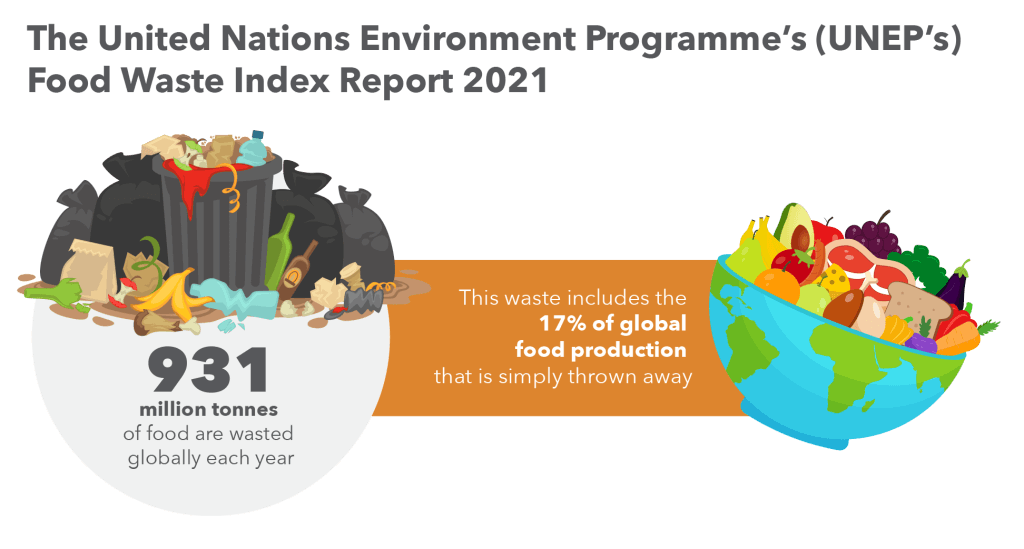
The amount of organic waste still generated globally is massive. The United Nations Environment Programme’s (UNEP’s) Food Waste Index Report 2021 reported that 931 million tonnes of food are wasted globally each year. This waste includes the 17% of global food production that is simply thrown away, according to the UNEP report.
Reducing the amount of food waste sent to landfills can achieve methane reductions that are essential for achieving the long-term objectives of the Paris Agreement. In its 2022 report Zero Waste to Zero Emissions, the Global Alliance for Incinerator Alternatives (GAIA) projects that the widespread adoption of source-separated collection and treatment of organic materials can reduce methane emissions from landfills by 62%.
Evidence that organic waste management infrastructure can help
The problem can seem insurmountable in areas, like the United States, where nearly 40% of all food is wasted. However, there are regions that are proving implementation of organic waste management infrastructure can significantly mitigate organic waste.
South Korea
In South Korea, homes and businesses have been prohibited from sending food to landfills since 2005. Today, 95% of food waste is recycled. This is possible in part through work to reduce production. As HuffPost reports, Seoul alone has reduced the amount of food waste produced by 400 metric tons each day.
In 2013, the South Korean government added a requirement to dispose of food waste in biodegradable bags. Sales of these bags serve as a food waste tax that covers the cost of collecting and processing organic waste. The bags also provide clarity around how much waste a person or family is producing. This visual helps serve as a social driver of change, encouraging more facilities to compost food at home and support urban farming.
Chile
In February 2021, Chile approved a National Organic Waste Strategy that sets a goal of increasing municipal organic waste recovery from 1% to 30% by 2030 and 66% by 2040. Composting and food waste reduction efforts are central to this plan. This is done through both public education and higher fees for the disposal of waste. The strategy aims to gradually increase fees on household waste collection and tax industrial waste disposed at landfills. In addition to composting initiatives, the country is deploying anaerobic digesters at landfills coupled with biogas capture solutions.
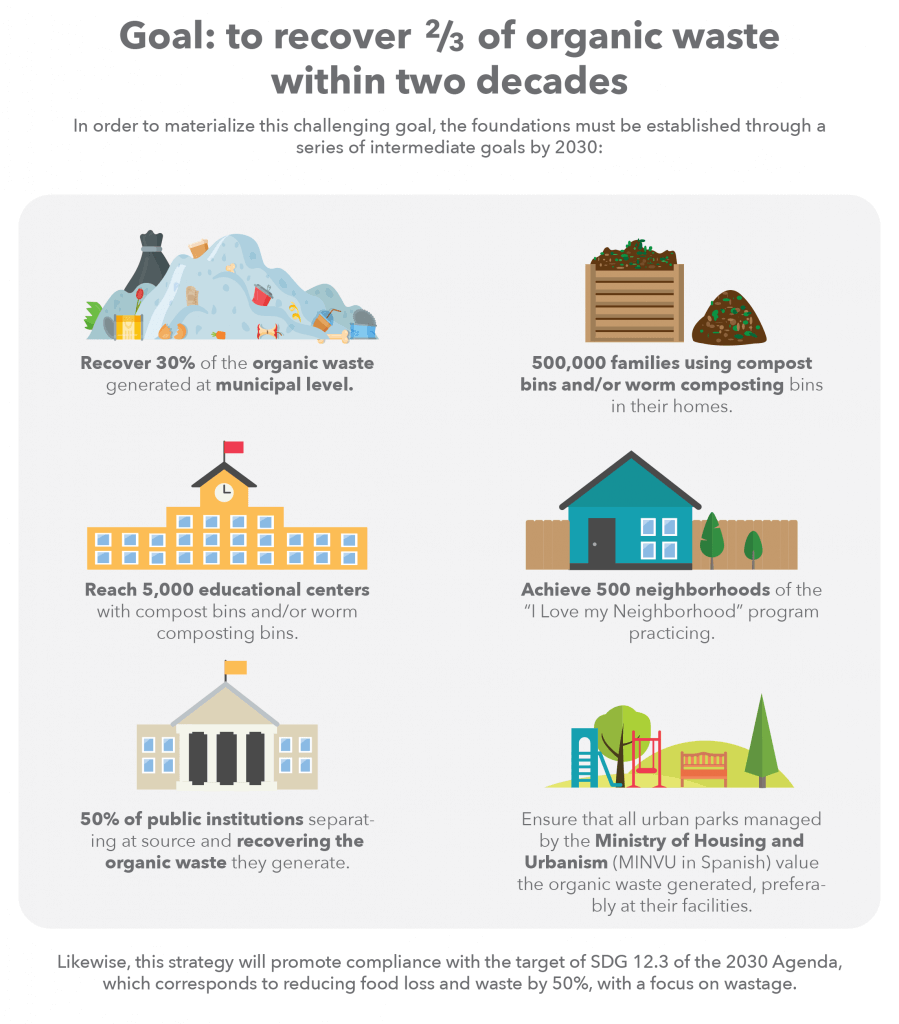
While the national impacts of the program are still to be seen, it has driven some international success. As a result of Chile’s strategy, neighboring Peru has now built its own framework for improving organic waste management infrastructure. The model is being viewed as a catalyst for change across South America.
Bandung, Indonesia
Indonesia has garnered a reputation as one of the world’s top garbage-producing countries, but some cities here have set out to make a change. This began in 2005, when a landslide at a landfill serving Indonesia’s third largest city, Bandung, led to explosions triggered by the release of methane. At least 140 people were killed and many more injured. This tragedy set off a creative push to reduce waste across the city.
Today, the city has adopted a circular waste system that reduced the volume of trash sent to landfills by nearly a third from 2019 to 2021, reports Vice. A part of this system includes the segregation of waste types. Organic waste is processed through shredders and then fed to maggots. Dried dead maggots are later used as an organic fertilizer or food for livestock. This program, in combination with at-home composting and other actions, is also working to reduce the cost of waste management in the city.
Finding an approach that fits
These and other regions around the world show that there’s no approach to organic waste management infrastructure that suits every location. However, they are also generating evidence of what solutions work and what may lead to new problems.
Regulatory drivers to improve organic waste management are moving into the United States as well. In 2021, more than 50 different food waste management bills were introduced across 18 states. Municipalities are mandating separation of organic waste and solutions such as off-site composting, which does little to bring down the cost of waste management. As a result, municipalities and independent organizations are still evaluating easy-to-use solutions that can increase support for organic waste disposal alternatives.
Many companies are finding that onsite biodigesters present a cost-effective solution for compliance with the regulations for disposal of organic waste. Biodigesters break down organic waste through the introduction of all-natural microorganisms in an environmentally friendly process. The only byproduct is grey water that can be harmlessly disposed of down the drain. This sealed equipment is installed within food production areas, thereby eliminating the cost of offsite hauling and the challenges associated with on-site composting. They also lower overall waste management costs through less frequent pickups and smaller bin use.
By adopting proven technology, more organizations and regions can ease the pain that comes with regulation of organic waste disposal. Making it easy to dispose of organic waste through alternatives to landfills can also speed the pace of change needed to drive significant reductions in damaging greenhouse gas emissions.
To learn more about how an LFC biodigester can help you reduce your carbon footprint, contact Power Knot.