

Food waste regulations are gaining traction across the United States as an essential tool for reducing the environmental and economic impacts of food waste. Each year, approximately 30% to 40% of all food is wasted, typically sent to landfills where it breaks down in a process that releases damaging methane emissions. Without federal action, states and municipalities have established stringent food waste regulations. In 2026, many states are building on the success of these laws.
In 2026, organizations can expect to see states and municipalities expand enforcement and lower thresholds for compliance with food waste disposal regulations. States are no longer piloting diversion—they are normalizing it. While not every state uses the same language, the outcome is the same. Municipalities, commercial generators, and haulers are being pushed to get food waste out of landfills.
In 2026, organizations can expect to see:
- Greater scrutiny of the organic waste transported to landfills.
- Increased justification for expanding organics collection programs.
- Stronger coordination between waste management, sustainability, and climate planning teams.
Preparing for these changes today will help organizations of all sizes ensure cost-effective and timely compliance with future regulations.
Key State Examples of Food Waste Laws
Wondering which states have new food waste laws in 2026? Below, we outline the changes in key states that will shape the future of food waste laws nationwide.
California: Full-Scale Organics Enforcement and Food Waste Prevention
California continues to lead the nation in food waste regulation through SB 1383, part of the state’s Short-Lived Climate Pollutant Reduction Strategy. Under SB 1383, jurisdictions are required to operate fully integrated organics programs that:
- Provide organics collection services.
- Reduce contamination across all waste streams.
- Support edible food recovery programs.
- Track compliance across residential and commercial generators.
Since SB 1383 was implemented in January 2022, 97% of California jurisdictions governed by SB 1383 reported having residential organics collection in place. In that same time, approximately 700 million unsold meals were donated to Californians in need.
Standardized Food Date Labeling Takes Effect in 2026
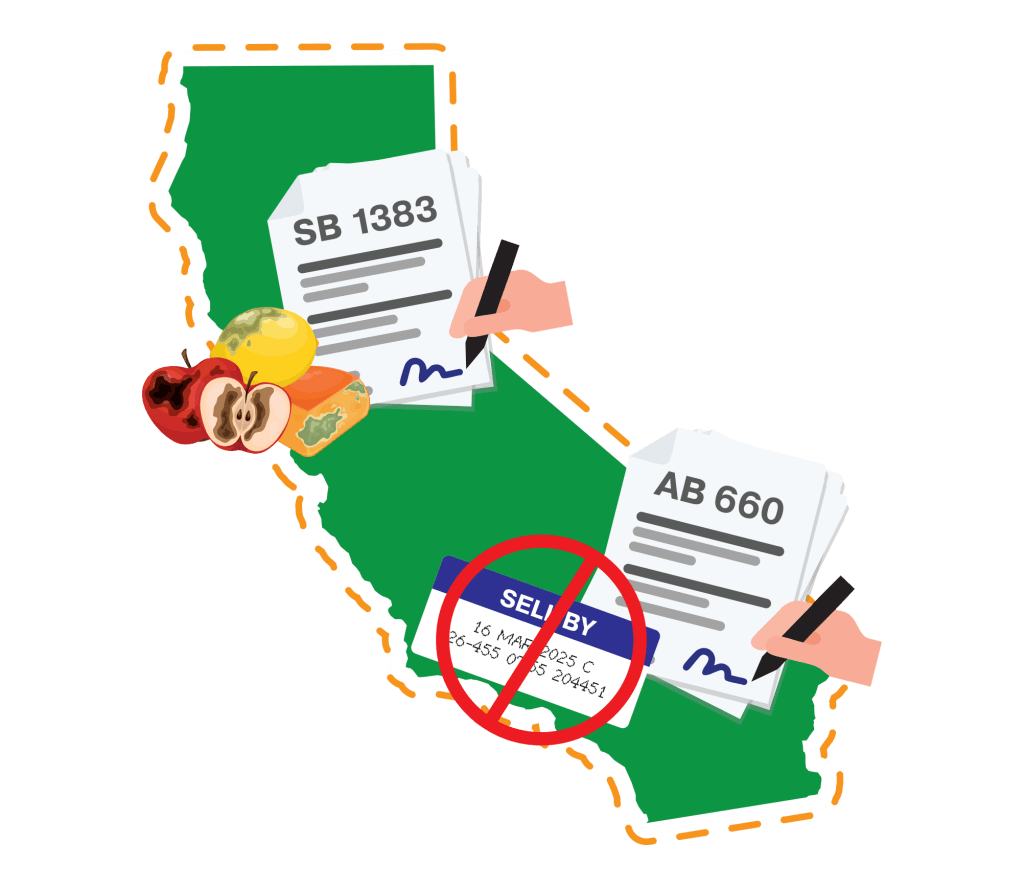
Building on this success, California is breaking new ground as new provisions within the state Food and Agricultural Code take effect on July 1, 2026. AB 660 is a new law for food waste management in California, the first in the nation to mandate standardization of consumer-facing date labels on food products. This law targets one of the leading causes of preventable food waste: consumer confusion.
Key provisions of AB 660 include:
- Prohibition of “sell by” dates on consumer-facing packaging, eliminating language that often leads shoppers to discard safe, wholesome food
- Mandatory use of standardized terminology, including:
- “BEST if Used By” or “BEST if Used or Frozen By” to indicate peak quality
“USE by” or “USE by or Freeze by” to indicate food safety
- “BEST if Used By” or “BEST if Used or Frozen By” to indicate peak quality
By creating clarity and consistency across food packaging, the law is expected to significantly reduce household food waste and reinforce California’s broader organics diversion goals.
Local Ordinances Reinforce Statewide Policy
In addition to statewide mandates, municipalities across California are adopting ordinances that support organic diversion upstream. For example, as of January 1, 2026, the City of Burbank prohibits food service businesses from using non-recyclable and non-compostable polystyrene containers for take-out service.
Together, state and local actions reinforce a clear message in California: the most effective environmental protections prevent the disposal of waste in landfill.
New York: Prepare for More Stringent Food Waste Requirements in 2027
New York’s food donation and food scraps recycling law, NY S759, was signed into law in 2025 to expand the statewide food donation and food scraps recycling program. Since 2022, stat businesses and institutions generating an annual average of two tons or more of wasted food per week have been required to donate excess edible food. Organizations within 25 miles of an organics recycler have been required to and recycle all remaining food scraps.
In 2026, organizations should begin preparing to meet tighter restrictions. Effective January 1, 2027, businesses and institutions that generate an annual average of 1 ton of wasted food per week or more must donate excess edible food and, if within 50 miles of an organics recycler, recycle all remaining food scraps.
By January 1, 2029, all business and institutions generating an annual average of 0.5 tons of wasted food per week or more will be required to donate excess edible food.
Municipalities are using 2026 to:
- Expand outreach to smaller waste generators.
- Improve organics collection access.
- Strengthen partnerships with processors.
Waiting is risky. Impacted food processors should consider treating 2026 as a transition year.
Massachusetts: Food Waste Disposal Ban Success Points to New Opportunities
Massachusetts’ long-standing commercial food waste disposal ban continues to serve as a model. Implemented in 2014 and expanded in 2022, the ban requires businesses and institutions that generate more than 0.5 tons of organic material each week to divert it from disposal. Now, the success of this measure has reportedly prompted the state Department of Environmental Protection (MassDEP) to consider expanding the program.
In an October 2025 presentation, MassDEP officials reported exploring the ability to lower the commercial organics ban to zero waste, requiring that commercial generators divert all organic material as early as November 1, 2028. A future expansion, not expected before November 1, 2030, would expand the food waste diversion regulation to residents.
The lesson for other states and municipalities is clear:
- Diversion requirements are enforceable.
- Markets adapt.
- Compliance becomes operational, not aspirational.
Impacted organizations may consider taking steps today to reduce waste in preparation of more severe food waste regulations.
Maine: New Food Waste Disposal Ban Offers Time to Adapt
In June 2025, Maine became the last New England state to pass legislation creating a food waste ban. While the ban won’t impact organizations until 2030, preparing today can reduce the cost of adapting tomorrow. LD 1065, An Act Regarding the Reduction and Recycling of Food Waste, requires organizations that generate more than 2 tons of food waste per week, on average, to stop disposing of food waste in landfills or through incineration. The ban impacts organizations within 20 miles of an organics recycling facility with the capacity to accept the food waste. With the law going into effect by July 1, 2030, Maine’s food waste generators and its limited number of organics recycling facilities have five years to come into compliance.
How Other 2026 Waste Laws Reinforce Organics Diversion
In 2026, states also introduced new laws for battery and electronics recycling, and consumers’ right-to-repair. These policies indirectly support food waste programs by reinforcing a broader shift away from landfill disposal.
Expanded producer responsibility programs and landfill reporting requirements increase attention on what ends up in disposal facilities. As landfill operations face more emissions oversight, keeping organic material out of landfills becomes even more critical.
What States Should Focus on in 2026
1. Access to Organics Collection
Residents and businesses cannot comply if collection options are limited. Expanding curbside, drop-off, or commercial organics service is foundational.
2. Contamination Reduction

High contamination undermines composting and anaerobic digestion systems. Education, clear rules, and enforcement matter more than program expansion alone.
3. Food Donation Infrastructure
Donation is the first step in most organics hierarchies. Municipal support for food recovery partnerships can significantly reduce the volume of organic waste needing processing.
4. Scalable Processing Solutions
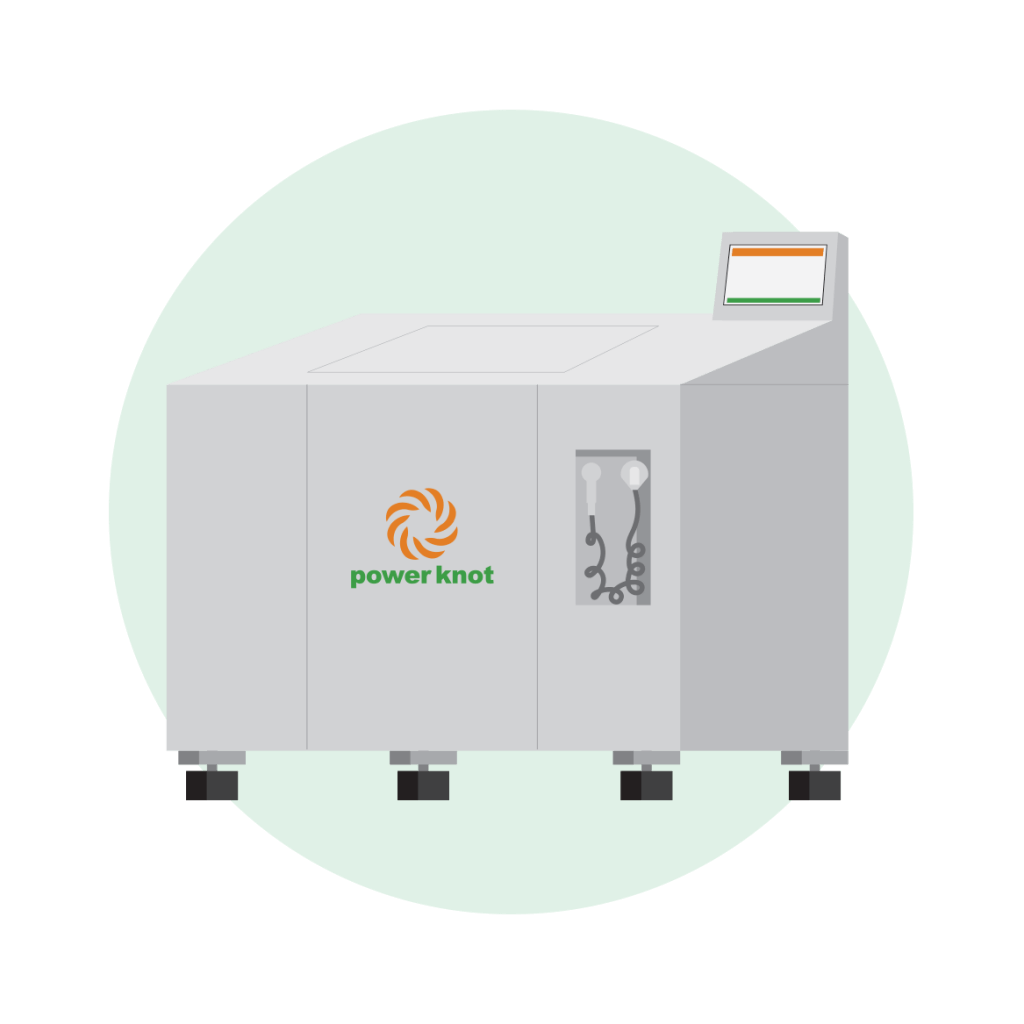
Composting remains effective for many organic streams, while anaerobic digestion can sometimes handle wet, heavy, or packaged food waste. The right mix depends on local material profiles and infrastructure.
5. Data and Documentation
States are increasingly asking municipalities to demonstrate diversion, not just promote it. Tracking participation, volumes, and contamination is becoming a baseline expectation.
2026 is the Year to Explore Food Waste Disposal Alternatives
As this flurry of new regulatory action indicates, food waste disposal is rapidly becoming the norm. Each year brings with it new buy-in to the value of limiting food waste in landfills. In states not yet impacted by food waste laws, organizations should watch state and municipality action even broadly related to recycling and waste disposal for hints of future changes.
For forward-looking organizations, 2026 is the year to investigate food waste disposal options, and prepare for deeper accountability. Organizations that commit to alternative food waste disposal as part of their core infrastructure will be best positioned to meet future regulatory challenges and achieve sustainability goals.
Alongside traditional collection and off-site processing, on-site solutions are becoming an important part of the compliance toolkit. Technologies such as the LFC biodigester allow any organization generating food waste—including food service operations, hospitality businesses, and educational institutions—to manage food waste where it is generated. By using aerobic digestion to break down food waste on site, these systems can significantly reduce landfill-bound organics, lower hauling frequency, and help municipalities and businesses meet diversion targets more reliably.
As food waste regulations tighten and accountability increases, organizations that take action to reduce food waste disposal will be positioned to succeed in 2026 and beyond. Contact Power Knot to close the gap in your food waste program today.