
More companies than ever have proven their desire to tackle climate change through public declarations about the actions they are taking to lower their carbon footprint. However, there are two challenges that companies must address when making these commitments. First, they must take steps to make any work to lower their carbon footprint transparent, so that stakeholders can trust that climate pledges are backed up by action. To do this, they must use language and metrics for tracking their carbon reduction journey that are accurate and consistent with how others in their industry are tracking progress.
Data provides a useful common language for delivering visibility into the internal work being done to lower greenhouse gas emissions (GHG. Yet, when it comes to measuring the work being done to reduce food waste and its related GHG emissions, this leads many companies to another question: how can you ensure that the measurements you’re using are accurate and consistent?
For food production organizations using an on-site biodigester to measure their food waste, National Type Evaluation Program (NTEP) certification provides this assurance. By using an NTEP-certified biodigester, organizations can trust they’re using accurate metrics to track their food waste reduction progress – and share their progress with the world.
What is NTEP certification?
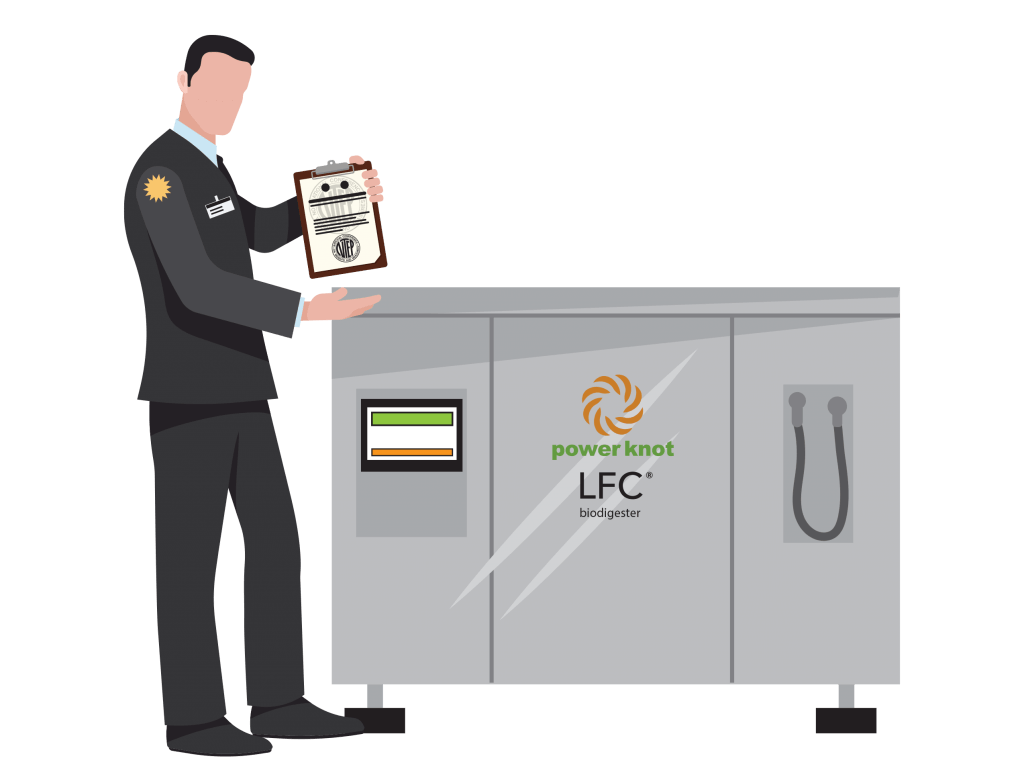
NTEP certification is the method used in the United States to demonstrate that a measuring device has proven its ability to meet the specifications outlined in the National Institute of Standards and Technology’s Handbook 44. This certification is a way to demonstrate consistent measurement and fair competition among manufacturers of weighing devices. It also lets end users know they are using accurate equipment. The National Conference on Weights and Measures (NCWM) is the agency that issues NTEP certificates of conformance.
For any commercial measuring devices, NTEP certification is required. This lets consumers know, for example, that produce will be measured in the same way at every grocery store and that a truck on our roads is not overloaded. However, not every measuring device is required to be NTEP certified.
Why NTEP certification is important
Sustainability promises are not new, but the demand for data-driven progress on work to reduce GHG emissions and carbon footprints is comparatively new. This demand has grown as it has become clear that tough action is required to drive progress on climate change. It also comes due to the sustainability movement’s legacy of “greenwashing” – that is, making claims about or using language related to sustainability without the evidence to back it up. Companies committed to sustainability today risk their reputations when unable to provide consistent, accurate data to support their sustainability claims.
Without NTEP certification for your biodigester, reporting the weight of food waste diverted from a landfill in your corporate report is akin to fabricating the figures.
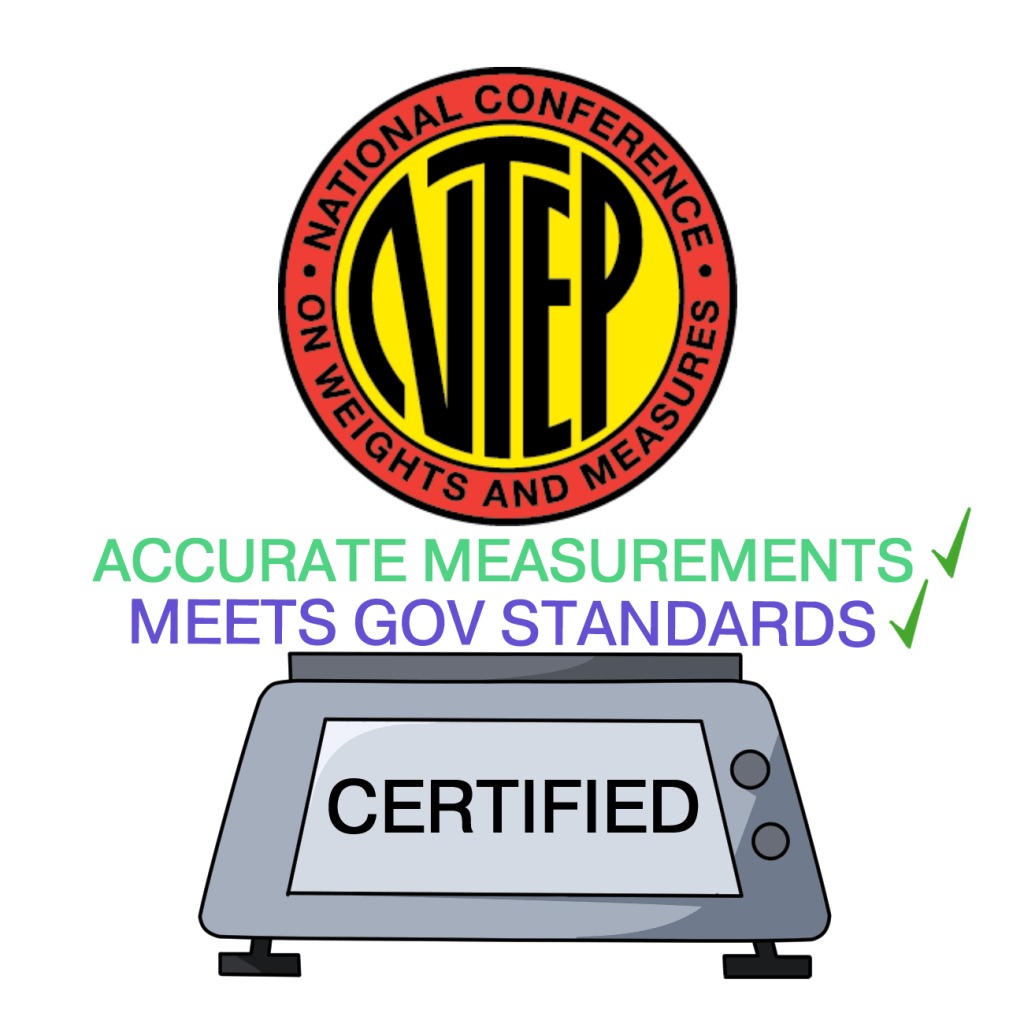
Many sustainability pledges and requirements today demand some form of measurement. By using an NTEP-certified device to perform that measurement, companies can demonstrate their commitment to providing accurate data.
And by pursuing NTEP certification for their devices – a lengthy and expensive process –manufacturers can demonstrate their determination to ensure consistently accurate measurements.
Do I need an NTEP-certified biodigester?
Food waste reduction and management plays an essential role in mitigating the impacts of climate change. While food waste generates GHG emissions at every stage of its life cycle, its biggest impact comes through the decomposition process it undergoes once at the landfill. In this oxygen-free environment, microorganisms break down organic waste anaerobically which is a process that generates methane. Methane is roughly 87 times more damaging than carbon dioxide in terms of its climate change impact. As a result, any measure to reduce food waste can make a significant impact on climate change.
When organizations can track their food waste, they’re able to establish a clear baseline for how much food is wasted. This provides metrics to demonstrate progress toward food waste or broader GHG reduction goals. It can also help begin to craft a stronger national picture of food waste trends and progress.
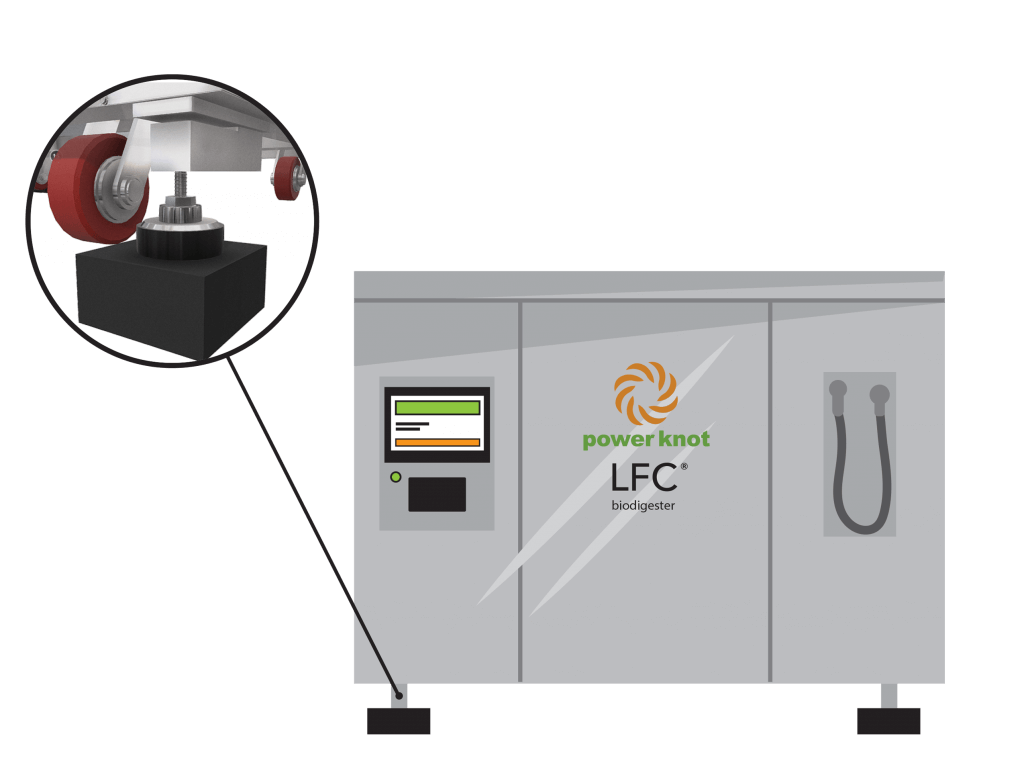
While various tools exist for tracking food waste data, the LFC biodigester can weigh the amount of waste, track the type of waste, and dispose of it in one machine. With its connection to the LFC Cloud, the LFC biodigester also delivers insight into trends over time and simplifies reporting. By using an NTEP-certified biodigester, food production organizations can trust in the accuracy of the food waste data they are sharing with stakeholders.
How to find an NTEP-certified biodigester
Despite the value of NTEP certification, not all food waste digesters carry this valuable credential. Power Knot became the first biodigester manufacturer to take this step, making the LFC biodigester the first NTEP-certified food waste biodigester in the world. No other machine reporting the amount of waste ingested has the NTEP certification to prove that the weight of food waste that it reports is accurate.
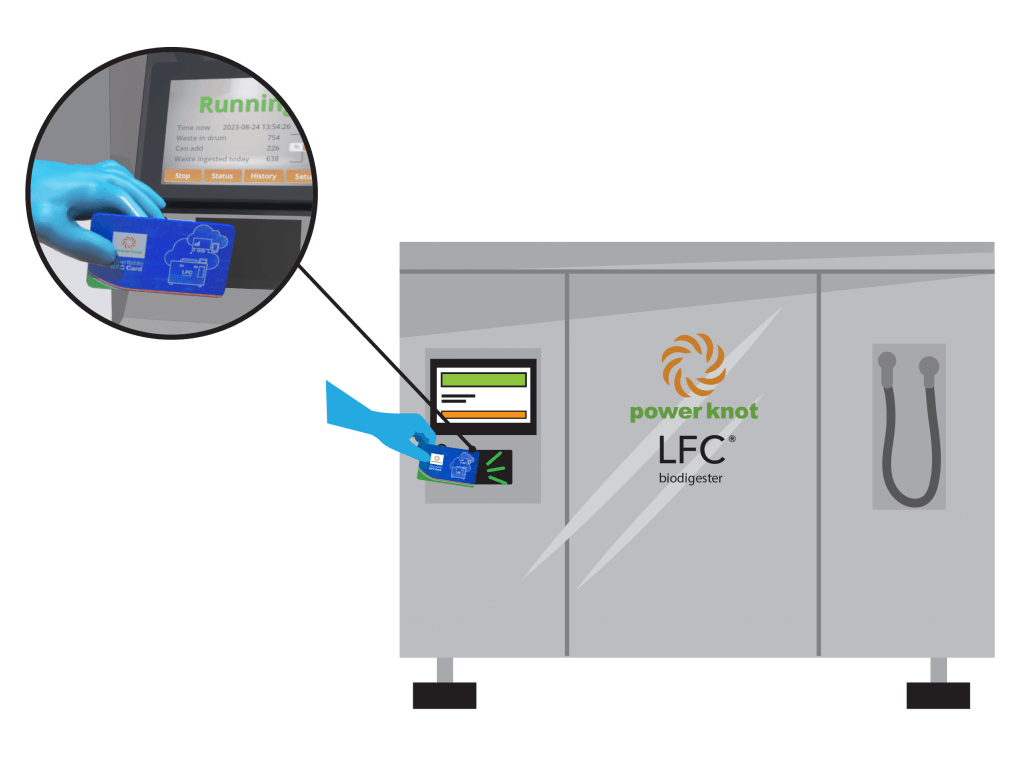
LFC biodigesters weigh the amount of waste ingested and track this data, on touchscreen and the LFC Cloud, by the hour, day, week, month, and year. Larger LFC models are equipped with NFC card readers that can categorize this waste by type or by source. This allows food production companies to track how much fruit, meat, or vegetables were ingested, for example, and adjust procurement as needed. Alternatively, organizations can see which kitchens are producing the most waste and make desired changes.
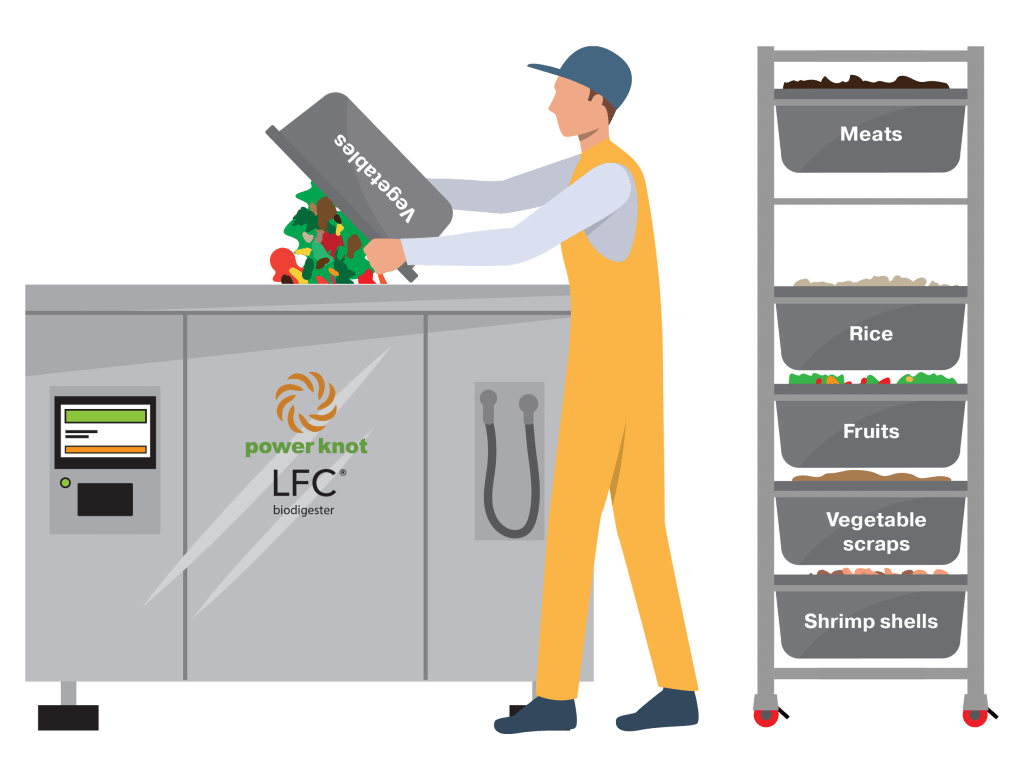
With an NTEP-certified LFC biodigester installed in their food production area, organizations can get the data needed to improve procurement and reporting, satisfy compliance requirements, and secure consumer trust. Better still, they can begin to make real progress on their climate change goals.
To learn more about Power Knot’s commitment to supporting customers’ sustainability, download the LFC NTEP data sheet or contact our team with questions.